I used to keep every birthday card, every chipped mug—as if clutter equaled love.
Spoiler alert: it didn’t. My drawers were chaos. My heart? Still messy.
Then I realized my grandmother’s actual porcelain set—the one I actually used—meant infinitely more than the fifty things I never touched.
That’s The Suburban Minimalist. Memory without the suffocation. Intention over accumulation.
Ready to stop ghosting your own life?
How Intentional Curation Changed My Relationship With Sentimental Items
Last year, I finally sorted through my mother’s old jewelry box—something I’d avoided for three years. Instead of keeping everything, I picked five pieces that genuinely made me feel her presence. The rest? I donated them, guilt-free. That’s when minimalist living clicked for me. It’s not about deprivation or forgetting. It’s about curating what actually matters: quality over quantity, meaningful possessions over endless storage solutions. I now practice mindful consumption and intentional decluttering monthly. The result? Less decision fatigue, more emotional space. My apartment breathes. I breathe. That’s the power of a simplified home aesthetic—it’s deeply personal, never sterile.
Quick Takeaways
- Honor memories by curating meaningful keepsakes instead of hoarding sentimental clutter.
- Use acid-free boxes and memory displays to preserve heirlooms with intention and care.
- Selectively display inherited items, like vintage teacups, to celebrate heritage without excess.
- Practice mindful rituals to release items gently, making space for emotional and physical clarity.
- Embrace suburban minimalism by balancing nostalgia with simplicity for a serene, meaningful home.
Why Sentimental Items Clash With Minimalist Homes
What if we didn’t have to choose between honoring memory and embracing minimalism?
I used to keep every card, trinket, and mismatched teacup—each tied to an emotional attachment I feared losing. But truthfully? That sentimental clutter weighed me down more than it lifted me.
I’d open a drawer and drown in ghosts.
Now, I ask: *Why do I save this? Does it spark peace or just pressure?*
Creating a memory box allows us to carefully curate our most meaningful keepsakes, transforming clutter into a purposeful collection that celebrates our stories.
Having a intentional decluttering plan helps me process what truly matters and makes the final decisions easier.
That’s when I created The Suburban Minimalist—to bridge heart and home without hoarding.
We don’t need piles to remember. We need presence.
And maybe one perfect seashell from last summer’s quiet dawn.
How to Sort Inherited Belongings With Clear Intent
Though I used to think keeping my grandmother’s entire china cabinet was a tribute to her, I now see it was more about guilt than grace.
What if memory-keeping didn’t mean museum-keeping?
I started using color psychology—displaying her coral teacup only in autumn, when warmth feels rare.
Seasonal decorating became my innovation hack: rotate meaning, don’t hoard it.
Now, her lace doily lives with my winter throws, then rests in acid-free boxes.
Why keep everything year-round if intention fades?
Practicing mindfulness in organization helped me develop intentional clutter management, aligning my space with my values and reducing excess.
On my site, The Suburban Minimalist, I share how editing heirlooms feels more loving than stuffing cabinets.
Clear intent isn’t cold—it’s clarity with care.
And honestly? That teacup means more to me when it returns like a trusted friend.
Choose Keepsake Boxes That Honor Without Hoarding
I used to think honoring my grandmother meant keeping every last plate on display, but now I know it’s not about filling shelves—it’s about choosing what truly resonates.
Why keep ten boxes of memories when one beautiful keepsake box can hold what really matters? Choosing well—acid-free, elegant, intentional—supports personal growth and even sparks community engagement when we share stories instead of stuff.
That’s why I created this website, The Suburban Minimalist—not to erase the past, but to honor it mindfully. Embracing minimalist evening wear brings a similar clarity and purpose to our style choices, helping us prioritize quality over quantity.
Incorporating meaningful keepsake boxes can also help create a connection to cherished memories while maintaining a clean and intentional space.
What memories deserve pride, not dust?
Create a Memory Zone for Meaningful Display
Because every object tells a story, I’ve learned to stop cluttering my shelves with leftovers from the past and start curating spaces where memory and meaning actually breathe. Embracing mindful decluttering allows us to honor our past emotional connections without guilt. Incorporating indoor plants can add a touch of life and serenity to these carefully curated spaces. What if your memories didn’t gather dust—but sparked joy instead? That’s why I created this website, The Suburban Minimalist: to explore creative display as quiet rebellion against chaotic nostalgia. Now, a single framed child’s drawing lives beside a moss-filled terrarium, not ten shoeboxes under the bed. This is personal storytelling with intention—where a weathered teacup or vintage map earns its place. Meaning shouldn’t hide. It should be seen, felt, and beautifully, deliberately displayed.
Let Go With Ritual: Release the Past Mindfully
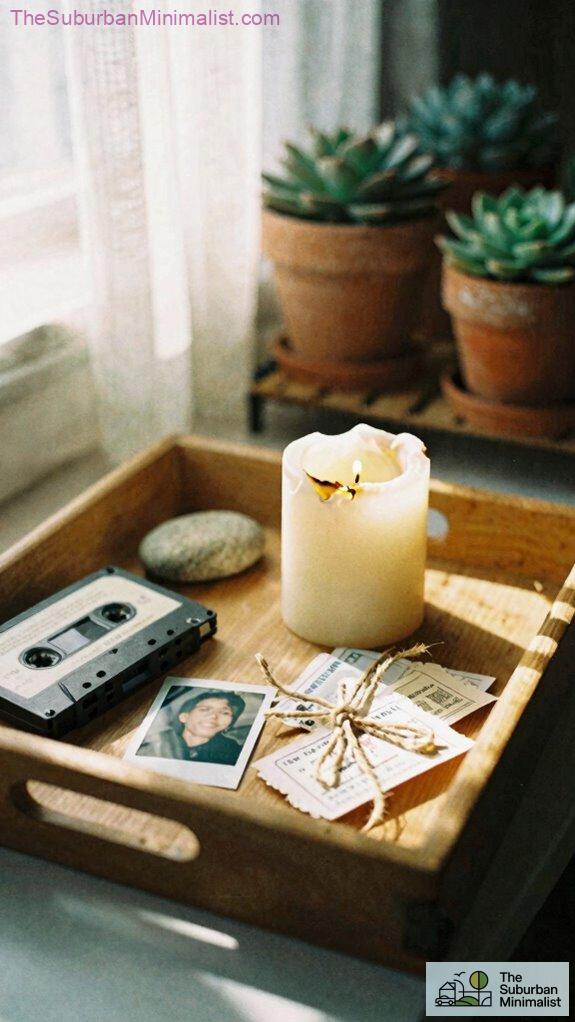
How do you say goodbye to something that shaped you but no longer fits?
I lit a candle, played a song from my twenties, and thanked each item before letting it go.
Mindful decluttering isn’t about loss—it’s about making space for growth. Creating intentional spaces allows you to focus on what truly matters.
I kept what sparks quiet joy, released what no longer serves.
That stack of concert stubs? Scanned and stored on my portable hard drive.
The rest, gently released.
Creating a minimalist environment inspired me to embrace drought-tolerant plants, aligning my space with sustainable living.
Fresh decor isn’t just aesthetic—it’s emotional.
This ritual taught me why I created this website: The Suburban Minimalist.
Pass Items Forward to Extend Family Legacy
- The teacup my grandmother stirred with
- My son’s first scribbled “I love you”
- A watch that outlived its owner
- That ugly, perfect quilt from 1978
- Passing these items with emotional significance allows for genuine healing and ongoing connection instead of letting them gather dust.
- Incorporating family heirlooms like these into daily life can strengthen the bond across generations and keep cherished memories alive.
Preserve Memories Digitally, Not by Hoarding
When I finally admitted I couldn’t keep every birthday card, school drawing, and ticket stub without turning my closet into a storage unit, I realized sentimentality doesn’t have to mean hoarding—it just needs a better home.
That’s why I embraced digital preservation: scanning letters, archiving photos, backing up videos. Memory curation isn’t about keeping everything—it’s about choosing what matters and storing it with care.
Through thoughtful material detachment, I learned to cherish meaningful items while releasing the clutter.
Now my favorites live in the cloud, not under dust. I smile more, stress less.
Funny how letting go feels like freedom.
And maybe—just maybe—that’s why I created this website: The Suburban Minimalist. To help you keep the meaning, not the mess.
Curated Storage Solutions
One well-placed drawer can change everything. I used to drown in seasonal decor until I embraced curated storage—like the time I finally boxed up last Christmas’s tinsel overload.
Now, I rotate vintage ceramics with purpose, tucking them into sleek, labeled oak cubbies. It’s not hiding memories; it’s honoring them. To keep everything effortlessly accessible, I’ve also explored top fabric drawer dividers which help keep each category of items neatly separated and easy to find.
- The relief of finding your favorite mug without digging
- The joy of a clutter-free countertop at sunrise
- That “aha” moment when order clicks into place
- How simplicity makes vintage ceramics feel cherished, not cluttered
To add a touch of warmth, I’ve even considered introducing handwoven jute rugs to soften the space and tie everything together.
Seasonal decor? I rotate it like a gallery.
Funny—I started The Suburban Minimalist just to survive the chaos. You’ll too.
Grandmother’s Porcelain Teacup Set
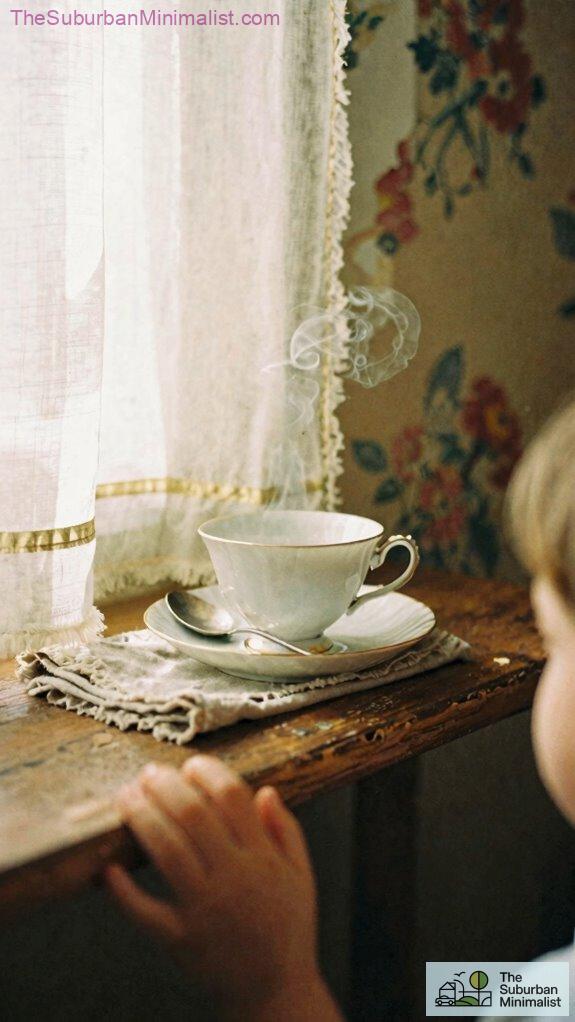
Though it’s small, this set holds more than tea—it holds time. I keep Grandmother’s porcelain teacup set on the shelf above my vintage jewelry armoire, where morning light catches its gold trim. It survived moves, kids, even my brief minimalist rebellion—because some things aren’t clutter, they’re continuity. Minimalist reading materials can help busy moms find balance between memories and simplicity. Pairing it with antique furniture feels right, like the past whispering, “Stay elegant.” You ever drink chamomile from a cup that recollects 1953? It changes you. That’s why I created The Suburban Minimalist—to honor stories, not just stuff. This set isn’t display; it’s dialogue. And honestly, isn’t that what soulful design’s for?
A well-curated collection can soften the overwhelm of children’s books, making it easier to select engaging stories without clutter.
Heirloom Linen Drawer Organization
That gold-rimmed teacup set still sits on my shelf, catching light like it’s got secrets to tell—and maybe it does.
But behind closed drawers? My heirloom linens finally breathe in curated calm. Vintage textiles no longer compete with seasonal decorations—they’re folded with intention, not forgotten.
Vintage linens breathe freely now, folded with care—each crease a quiet act of remembrance, not regret.
- The lavender-scented hand-stitched napkin from 1952
- Grandmother’s tablecloth, yellowed at the hem but full of grace
- A monogrammed pillowcase I’ll never use—but could never lose
- That itchy Christmas runner everyone fought over at dinner
I organize not to impress, but to remember.
Why I created this website, The Suburban Minimalist So nostalgia fits neatly—without the clutter.
Suburban Minimalism
While I used to think minimalism meant clearing out everything until your home looked like a hotel suite, I’ve learned it’s really about making room for what matters—without tripping over last season’s boots. Now, I keep only what sparks joy or function—curating, not hoarding. Sentimental clutter? I’ve had my share. But emotional attachment doesn’t have to mean physical retention. Recognizing that memories are intangible allows us to cherish moments without cluttering our space. One way to achieve this is by thoughtfully reducing excess furniture and home decor, which can help create a more serene environment. Why I created this website, *The Suburban Minimalist*, was to find balance—less stuff, more soul. Can you love your grandmother’s teacup without storing it in your closet for ten years? Absolutely. Minimalism today isn’t cold—it’s warm, smart, alive. It’s choosing peace over pressure, meaning over mess. And honestly? That’s the most innovative move we can make.
FAQ
How Do I Honor Memories Without Keeping Physical Items?
I honor memories by practicing memory preservation through photos and digital journals, embracing emotional detachment so I keep the meaning, not the clutter—freeing space without losing connection, because letting go doesn’t mean forgetting.
Can Digital Photos Replace Sentimental Objects in a Minimalist Home?
Yes, digital photos can replace sentimental objects—I use Digital Archiving to preserve memories with clarity and care. Through Memory Preservation tech, I safeguard emotion in pixels, not clutter, letting innovation keep my home minimal while honoring my past exactly as it deserves.
What if Family Members Disagree on What to Keep?
I acknowledge emotional attachment and cultural significance when tensions arise—then I suggest rotating meaningful items, using digital scans, or crafting shared displays that honor everyone’s voice without overcrowding our space. Innovation keeps memories alive without the clutter.
How Often Should I Review My Curated Memory Collection?
I review my curated memory collection every six months, refining what stays with care. It keeps memory preservation intentional and honors sentimental boundaries—no guilt, just grace. I let go freely, making space for new moments that matter.
Is It Okay to Sell Inherited Items With No Emotional Value?
Yes, I’ll sell inherited items with no emotional value—letting go of sentimental clutter doesn’t erase memories. I keep only what sparks emotional attachments, selling the rest to fund pieces that align with my innovative, intentional life. Letting go feels freeing, not like loss.