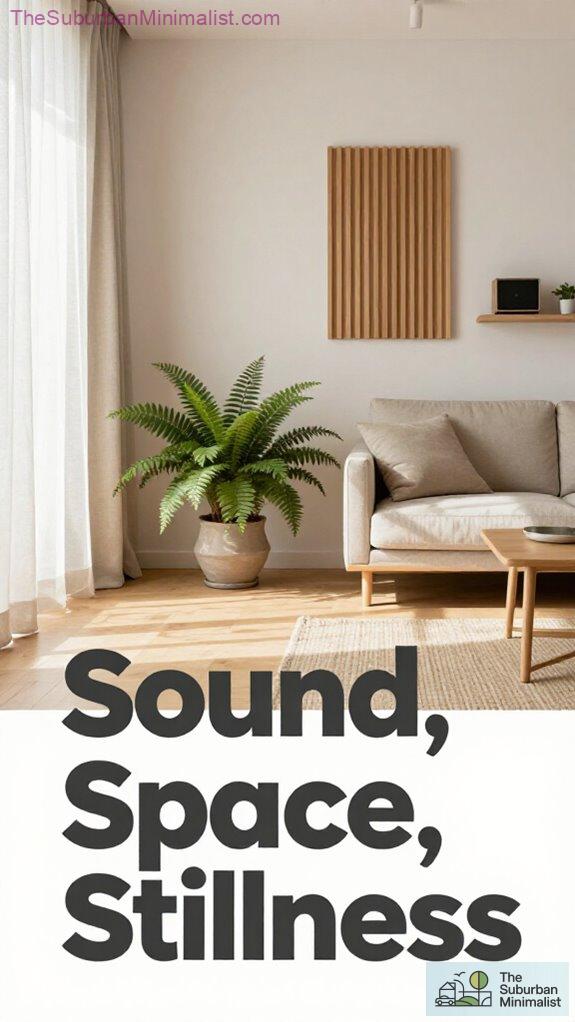
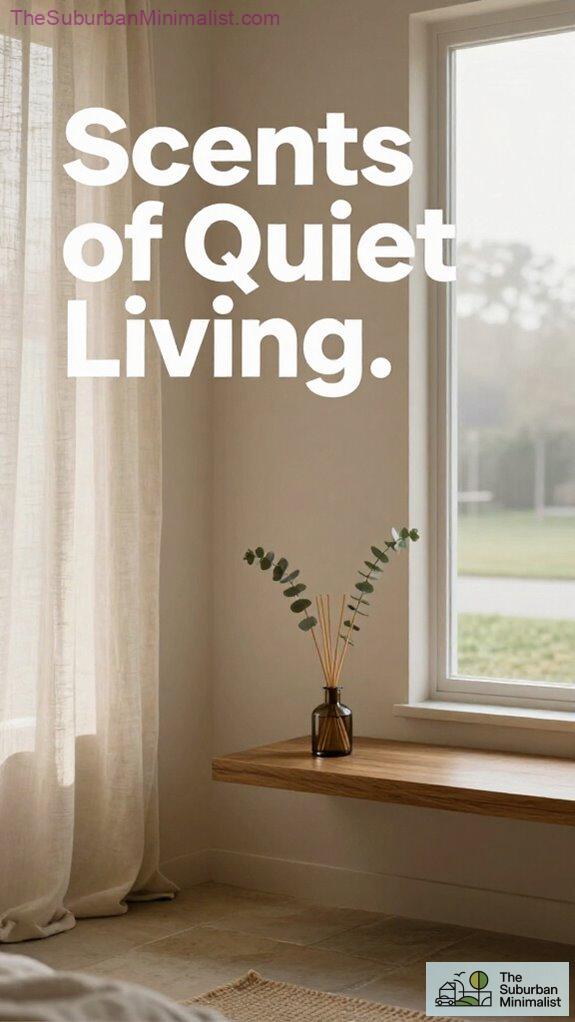
My apartment was basically a echo chamber masquerading as a home.
I’d come back from the city, desperate for quiet. But nope—every footstep ricocheted off the walls like I was living in a parking garage. That’s when I got weird with it: felt tiles, layered rugs, acoustic curtains. Suddenly? Peace.
Turns out you don’t have to pick between minimalist vibes and actually feeling calm. I built The Suburban Minimalist because that balance—clean lines plus genuine quiet—changed everything for me.
Ready to stop choosing between beautiful and peaceful?
How Acoustic Design Transforms Your Minimalist Space
Last winter, I obsessed over sound dampening without cluttering my space. Turned out, minimalism and noise control aren’t enemies—they’re soulmates. I layered cork panels with felt wall treatments, added peace lilies and snake plants for natural air purification. My bookshelves became acoustic interruptions. The result? My studio felt intentionally designed, not sparse. Acoustic rugs, strategic plant placement, and thoughtful material selection created this serene sanctuary vibe. It proved that sustainable living and noise reduction go hand-in-hand when you’re intentional about every piece.
Quick Takeaways
- Use felt, cork, or organic textured wall panels to absorb sound and add warmth while supporting suburban minimalism.
- Install acoustic curtains and strategic bookshelves to reduce noise reflections and enhance visual calm.
- Incorporate broadleaf plants like snake plants and peace lilies for natural sound dampening and air purification.
- Choose minimalist furniture with soft edges and sound-diffusing features to reduce noise and clutter.
- Apply warm, auto-dimming LED lighting and eco-friendly materials to promote tranquility and sustainable serenity.
Use Felt Wall Tiles for Natural Sound Absorption
Though I never thought I’d say this, the walls in my house have started talking back—and not in a charming, haunted-mansion kind of way. Instead of ignoring the echoes, I leaned into bio-minimalism and pinned soft felt tiles where sound bounces hardest. They don’t just absorb—they *tame*, transforming amplifying ambient noise into hushed calm.
In fact, using felt wall tiles optimized for sound absorption can turn your home into a truly quiet sanctuary. I chose sculptural, charcoal-hued panels that act as decorative soundscatter, blending function and art. Who knew quiet could look this sleek? It’s the kind of fix I’d share on The Suburban Minimalist—because why let noise clutter your peace?
Seriously, have you ever just *heard* how much your home over-talks?
Add Layered Organic Rugs to Reduce Floor Echoes
Because hard surfaces give sound nowhere to go but around and around, I finally admitted my living room wasn’t echoing—it was auditioning for a podcast studio. Now, layered organic rugs hug my floor like quiet, earth-toned whispers. I started with a jute base, then topped it with a hand-loomed wool for texture and soul. Instantaneously, the space softened—both acoustically and emotionally. Layered textiles don’t just absorb sound; they invite bare feet and deeper breaths. Additionally, elevated pet feeding bowls can help reduce noise and mess during mealtime, contributing to a quieter environment. Paired with soft lighting, the room feels like a slow exhale. Color palettes can also influence the overall serenity of a space, making it a perfect complement to textured layers. Funny how stillness can be designed, right? That’s why I created this website: The Suburban Minimalist—to share how small, intentional changes create spaces that finally listen.
Hang Acoustic Curtains in a Minimalist Style
When your home starts sounding more like a cave than a sanctuary, you know it’s time to get clever about noise.
I used to think heavy drapes were my only option—until I discovered acoustic curtains with fabric curtain weights that actually work without the drama. Paired with sleek minimalist curtain rods, they glide like quiet thoughts across the wall, softening both sound and sight.
A well-chosen cotton rope storage baskets can also contribute to an organized and serene environment, reducing clutter noise and visual chaos. Incorporating sound-absorbing elements like acoustic curtains can further elevate tranquility in your space.
Why I created The Suburban Minimalist? To prove quiet luxury isn’t about stuffing rooms—it’s about solving problems with grace.
These curtains don’t shout; they listen. And suddenly, your space breathes again—clean, calm, deeply intentional.
Place Bookshelves to Diffract and Block Noise
Since sound travels like gossip—fast, messy, and through every open path—my secret weapon isn’t another set of heavy doors or foam panels, but something much smarter: bookshelves.
Sound spreads like whispered secrets—so I fight noise with bookshelves, not walls, turning gossip into grace.
I place mine strategically—not just for looks, but to diffract noise and create calming color contrast. Mix in warm library lighting, and suddenly your walls aren’t just pretty, they’re functional sound barriers.
- Use staggered heights to scatter sound waves
- Combine deep wood tones with bold paint for visual pop
- Add soft-back LED strips for library lighting that sets the mood
- Style with texture to enhance color contrast and depth
Funny—I didn’t plan this when I started The Suburban Minimalist, but life loves a good echo. Adding concrete geometric planters can also enhance the aesthetic while subtly affecting sound absorption and diffusion in your space. Incorporating sound-absorbing materials can further optimize your home’s acoustic comfort.
Choose Quiet Plants for Natural Sound Dampening

Turns out, plants do more than just survive my half-hearted watering schedule—they *listen*.
I never thought my snake plant was silently buffering hallway noise until I stood barefoot in the living room and noticed the quiet.
Broadleaf greens like peace lilies and dracaenas don’t just boost indoor air quality—they break up sound waves like natural baffles.
And let’s be real: if a plant’s tough enough to handle my “water every three weeks” rhythm, it’s earning its place.
Low plant maintenance, high acoustic return? Yes, please.
Funny how the same leaves that clean the air also soften the chaos.
Plus, sound absorption characteristics of plants can significantly enhance a home’s sense of calm and privacy.
Makes you wonder… why I created this website.
Organic Texture Wall Panels
Though I once thought bare walls were the pinnacle of clean design, I’ve learned they’re not quiet—they’re just holding their breath.
Now, I let them speak—through organic texture wall panels made of eco friendly materials and shaped by handcrafted designs. Why just decorate when you can innovate? These aren’t cover-ups; they’re quiet statements.
Each panel feels alive, subtly shifting in light, turning air into art.
- Mimics bark, stone, and wind-worn clay in unexpected ways
- Made from rapidly renewable plant-based composites
- Each piece slightly different—no two panels are twins
- Installed with hidden clips, so walls remain clutter-free
Creating these textured accents aligns with the principles of minimalism, emphasizing quality and natural beauty over clutter.
In practicing gradual release of keepsake clutter, these panels serve as an inspiring reminder that less can be more and that intentional spaces foster peace.
I created The Suburban Minimalist to share this truth: stillness has texture.
Sound-Dampening Ceiling Baffles
When the house settles into that late-night hush, you’d think silence would feel peaceful—but if your ceilings are hollow, it’s less “serene” and more “waiting for the next creak to startle you awake.” I used to lie there, listening to footsteps echo like distant drumbeats from the floor above, wondering why no one talked about how loud quiet homes actually are. Incorporating sound dampening ceiling baffles can significantly reduce the noise transmission overhead, creating a truly peaceful environment. They are especially effective in homes with hollow ceilings prone to transmitting sound more easily. Now, I swear by sound-dampening ceiling baffles—sleek, sculptural, and surprisingly stylish. They absorb impact far better than just soundproof flooring or clunky electronic noise canceling devices.
Funny how peace starts overhead. That’s actually why I created this website: The Suburban Minimalist—to share the quiet innovations no one’s talking about.
Textured Cork Wall Panels
You’d think stopping noise meant chasing silence, but after testing everything from foam tiles to ceiling baffles that looked like spaceship leftovers, I learned something unexpected: real quiet isn’t about blocking sound—it’s about warming it up.
That’s why I turned to cork wall panels—innovative, sustainable, and surprisingly stylish. They’re not just sound absorbers; they’re textured wall treatments that add depth and warmth to any room. I used them in my home office, and suddenly, calls sounded clearer, and my focus sharpened. This acoustic solution not only improves sound quality but also creates a more inviting space.
Why I created this website *The Suburban Minimalist*? To share these quiet revolutions. Cork panels are an eco-smart acoustic solution that also serve as a decorative element.
Suburban Minimalism
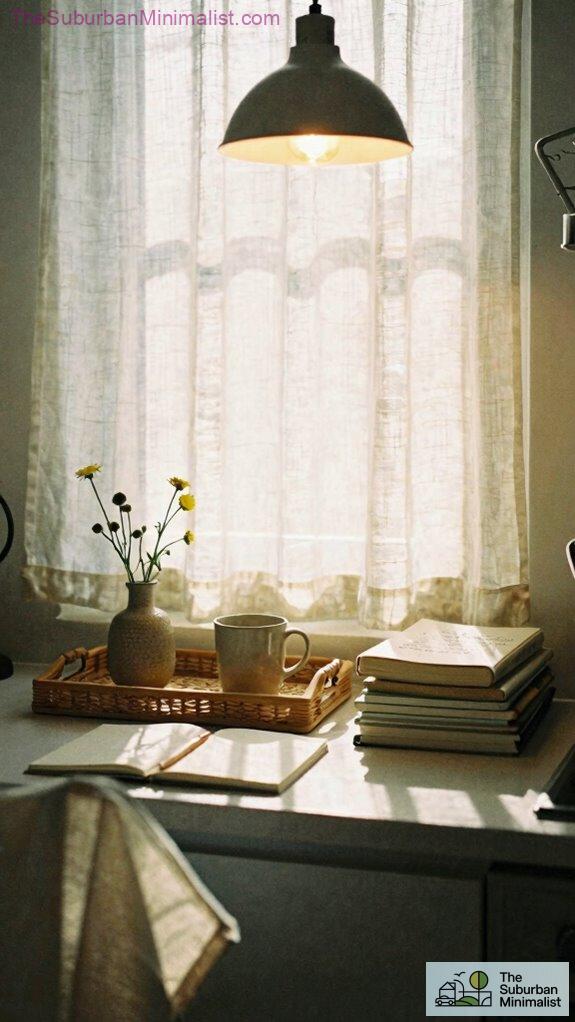
There’s a quiet revolution happening behind white picket fences, and it’s not about stuffing more into already-busy homes—it’s about stripping back the noise, both literal and visual, to find something softer, smarter, more *us*. Using proper storage techniques can help maintain the neatness and longevity of your seasonal decorations. Why I created this website, *The Suburban Minimalist*, was simple: I was tired of choosing between style and sanity. Now, I let smart lighting shift with the sun’s rhythm and line my cabinets with eco friendly materials that breathe as clean as they look. Incorporating minimalist reading materials into your daily routine can also create a calm, clutter-free environment that nurtures your well-being.
Who says practical can’t be poetic? You can keep joy without the junk—like swapping plastic bins for woven oak ones, or trading harsh fluorescents for warm, auto-dimming LEDs. It’s not less—it’s *better*.
FAQ
Can I Paint Felt Wall Tiles Without Losing Sound Absorption?
Yes, I can paint felt wall tiles without losing sound absorption if I use a permeable, acoustic-safe paint—this maintains their function while expanding my wall treatment options. It’s one of my go-to soundproofing techniques for innovative, quiet spaces.
Do Organic Rugs Work in High-Traffic Suburban Entryways?
Yes, I’ve installed organic rugs in my entryway that laugh in the face of durability concerns—think sisal and wool hybrids—because smart material choices make them tough enough to stop a stampede while looking effortlessly innovative.
Are Acoustic Curtains Machine Washable for Easy Maintenance?
Yes, I choose acoustic curtains with machine-washable fabric because they streamline my cleaning schedules without sacrificing sound absorption. Their fabric durability surprises me—washing them weekly keeps them fresh, and they still block noise brilliantly, blending innovation with practicality in my busy suburban home.
Can Bookshelves Be Used in Small Suburban Bedrooms?
Yes, I use bookshelves in my small suburban bedroom all the time. Smart bookshelf placement boosts bedroom organization, and I love how floating oak shelves save space while keeping my favorites close—functional, clean, and totally me.
Will Quiet Plants Survive in Low-Light Bathrooms?
Yes, I keep quiet plants like snake and ZZ in my low-light bathroom—they thrive with minimal sun. I prioritize plant placement near vents for humidity and check light requirements, choosing species that adapt, ensuring my space stays fresh, calm, and quietly innovative.