I used to shove my dog’s bowls behind the sink like they were some dirty secret.
Yeah, that wasn’t minimalism. That was just denial.
Real minimalism? It’s intentional. It’s those terracotta bowls sitting in a designated kitchen corner—elevated, visible, *part* of the space. I started The Suburban Minimalist because I got tired of hiding life behind closed doors. Your pet’s feeding station shouldn’t feel like an afterthought.
Beauty and function can actually coexist.
Designing Functional Pet Spaces in Minimalist Home Interiors
Last spring, I finally admitted my apartment felt off. My golden retriever’s feeding area was chaos—mismatched bowls, scattered toys, that depressing corner behind the fridge. I spent a weekend redesigning it: concrete floor mat, two matching ceramic dishes, a simple storage basket for supplies. Suddenly, the entire kitchen felt calmer. That’s when I realized sustainable living isn’t about deprivation—it’s about intentional choices. Minimalist home design works when every object has purpose and placement. Small spaces benefit most from this philosophy. Your pet deserves thoughtful organization too. It’s not just aesthetic; it’s about creating peaceful living environments where both humans and animals thrive together.
Quick Takeaways
- Position pet feeding stations in the kitchen’s wellness zone for mindful, convenient dining.
- Use elevated ceramic or copper bowls to support health and complement minimalist aesthetics.
- Incorporate hidden, modular storage to maintain clean lines and reduce visual clutter.
- Choose non-porous, eco-friendly surfaces like recycled glass for easy cleaning and serene design.
- Establish calm routines with slow-feed bowls and pre-meal grooming in a decluttered space.
Place the Feeding Station in Your Kitchen’s Wellness Zone
While I used to think my dog’s food bowl belonged tucked away in the laundry room like some dirty secret, I’ve learned the hard way that banishing the feeding station doesn’t make mealtime messes disappear—it just means I’m constantly ferrying bowls through three rooms while my puppy judges me with his sad, hungry eyes. Now, I keep his feeding zone right in the kitchen, nestled beside my wellness station. It’s not just convenient—it supports better pet nutrition and makes vet checkups easier to track. When your dog eats in a clean, mindful space, you notice changes in appetite or energy fast—key for proactive veterinary care. Funny how designing for calm led me here. (Why I created this website? This stuff matters.) Incorporating seasonal houseplant arrangements can add a touch of serenity to your pet’s dining area, creating a calming environment that benefits both you and your furry friend. Recognizing the importance of material detachment, I’ve come to see how a simplified environment encourages mindfulness and promotes a healthier relationship with our belongings.
Design Principles for Bio-Minimalist Pet Stations
Because our pets are part of the family, not afterthoughts, their spaces deserve the same thoughtfulness we give to our own—so why on earth would I hide my pup’s bowls in some dingy corner like last week’s forgotten laundry?
I didn’t create The Suburban Minimalist to just survive domestic chaos—I did it to design *around* it.
Think vintage rugs for softness and definition, layered with wall mounted planters that climb upward, not outward. They free up floor space while bringing life to the walls.
Your pet’s station shouldn’t feel like a pit stop. It should feel intentional, dignified—like everything else we carefully curate.
Choose Elevated Bowls in Ceramic or Copper
When your dog’s dinner setup looks like an afterthought, it’s not just about the mess—it’s about the message.
Why settle for plastic when elevated bowls in ceramic or copper bring real design to the everyday? I switched to ceramic with a custom color scheme that matches my kitchen’s earthy tones—game-changer. These aren’t just pretty; they’re made from eco friendly materials, so I’m not feeding my pup from something that’ll leach chemicals.
Copper adds a luxe touch and naturally resists bacteria—smart *and* stylish. Considering how patio cooling fans can improve outdoor comfort, elevating your pet’s dining area can also make your outdoor space more inviting and functional.
Honestly, that’s why I created this website: The Suburban Minimalist—to show how small, thoughtful swaps balance beauty, function, and sustainability in real homes. Incorporating minimalist folding guest beds can also simplify overnight hosting while maintaining a sleek look.
Hidden Storage for Food and Treats
I used to keep my dog’s kibble stacked in the original bag on the floor—right next to the elevated bowls, like the whole setup was auditioning for a reality show called “Chaos in the Kitchen Corner.” But once I started treating pet prep like part of my kitchen’s design rhythm instead of an eyesore to shove into the pantry, everything changed.
Now, my space uses *Customizable storage solutions* that blend right in—like furniture with secret compartments for leashes and *Eco friendly packaging*. It’s why I created this website: The Suburban Minimalist. You want form *and* function, right?
Here’s what works:
- Lift-top cabinets for quick treat access
- Modular canisters that match your kitchen
- Compostable food liners
- Drawer dividers sized for training snacks
Additionally, incorporating hidden storage is essential for maintaining a clean and organized look, especially when storing childhood games or toys.
Non-Porous, Style-Forward Surfaces for Spill-Proof Feeding
Even if you’ve mastered the art of concealing kibble in sleek canisters and tucking leashes into built-in cubbies, one truth remains unshakable: pets don’t do elegance.
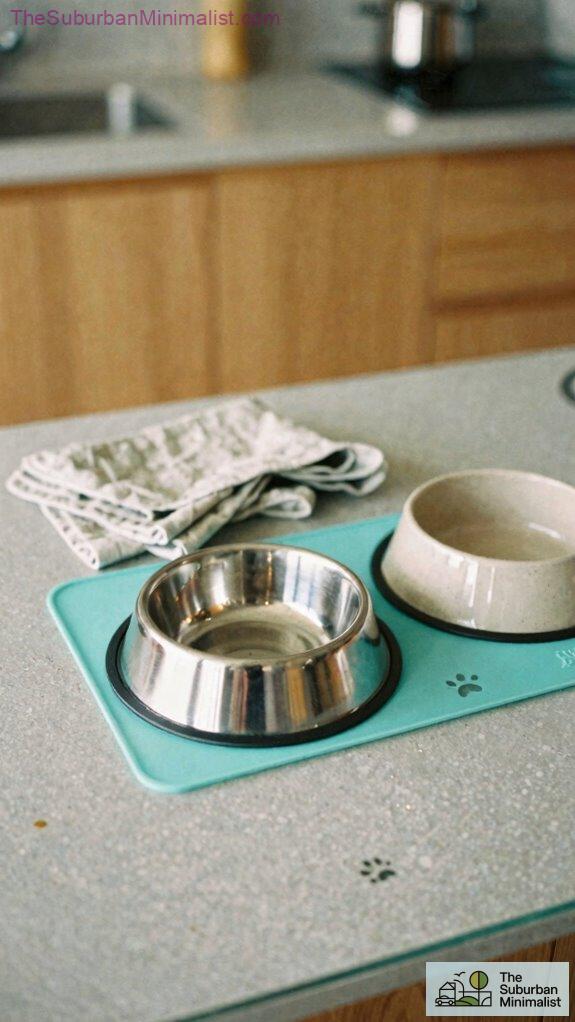
So why fight it? I opted for non-porous, style-forward feeding surfaces that laugh at slobber and survive paw prints. Think matte-finish recycled glass—eco friendly materials that feel luxe but clean up in seconds.
A pop of color? Yes, please. Playful accents like turquoise silicone feeding mats tuck neatly under stainless steel bowls, because who says function can’t flirt with fun?
It’s these small rebellions against mess that inspired me to create The Suburban Minimalist—where real life meets refined calm, without losing your soul to scrubbing. Incorporating durable, non-porous surfaces can also help ensure your setup remains pristine and stylish over time.
Using ceramic elevated dog bowls ensures durability and a sleek look that complements modern, minimalist interiors.
Calm Dining Rituals for Dogs and Cats
Because our pets don’t read minimalist manifestos, I stopped trying to hide the chaos and instead designed a routine that brings calm to the very moments that used to drive me nuts—dinner time.
Now, I sync meals with pet grooming prep and veterinary routines—turning feeding into a sensory anchor to create a sense of stability. Calm isn’t found in silence; it’s built intentionally.
- Feed at the same two times daily
- Use slow-feed bowls to curb anxiety
- Wipe paws before eating—hello, hygiene + grooming win
- Check body condition during serving—spot changes early
- Practice emotional healing through decluttering by organizing pet supplies and personal memories to create a space of clarity and calm
This ritual? It’s why I created The Suburban Minimalist—to share how small, smart systems create space for what matters: peace, health, and that goofy head tilt when dinner’s finally served.
Match Your Pet Station to Kitchen Materials
When your dog’s food bowl clashes with your matte-finish cabinetry like a neon sign in a zen garden, you know something’s off—design harmony doesn’t stop at the human dining table.
Why *wouldn’t* your pet’s station echo the same white oak as your shelves or the brushed steel in your faucet? Mine didn’t—until muddy paws from outdoor play tracked chaos into my kitchen.
Now, a sleek feeding nook with matching materials ties everything together. Even pet grooming feels seamless with a bamboo tray that echoes my bamboo cabinet pulls.
Switching to minimalist pet essentials not only declutters your space but also aligns with a minimalist lifestyle that emphasizes purpose and simplicity, making both your home and pet care effortless.
And if you’re considering ergonomic solutions, a dedicated, well-designed station minimizes stress and promotes comfort for both you and your furry friends.
You think I’d have figured this out sooner—guess that’s why I created The Suburban Minimalist.
Silk Wrap Dresses for Petite Frames
Indoor plant shelves designed for low light must incorporate essential tips to ensure healthy growth and aesthetic appeal. Choosing plants with adaptable color palettes can enhance the overall look and make maintenance easier.
Elevated Ceramic Pet Bowls
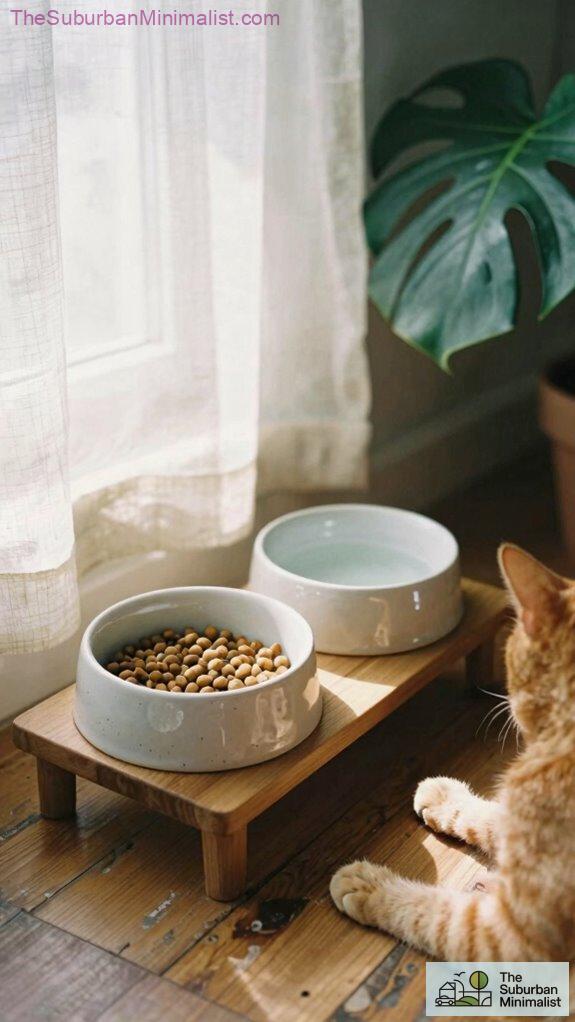
While I didn’t think much about where my dog ate until I caught him waddling away from his bowl like a disgruntled food critic, I’ve since learned that feeding time is design time.
Why settle for plastic when elevated ceramic pet bowls blend form, function, and a touch of rebellion against mess? They’re stable, chic, and—bonus—help with allergy prevention by resisting bacterial buildup.
To keep my pet’s dining area feeling as curated as my own space, I prefer eco-friendly materials that are both stylish and sustainable.
I even find they make pet grooming less frequent; less spilled food means less sticky fur around the face. Incorporating minimalist design principles helps maintain a serene and clutter-free environment, even at pet’s paw level.
I designed The Suburban Minimalist to celebrate these small upgrades—because true elegance lives in the details, even if they’re at paw level.
Ceramic Pet Feeding Station
Elevated ceramic pet bowls did more than tidy up my dog’s dinner routine—they sparked a full-blown feeding zone renovation, which, honestly, I didn’t see coming.
Why *wouldn’t* your pet’s dining area reflect the same care as your kitchen? Mine didn’t—until I treated it like part of the home’s design ecosystem.
Now, my ceramic feeding station isn’t just pretty; it supports real wellness.
- Easy-to-clean surfaces that simplify pet grooming
- Non-toxic glaze, vet-approved for daily veterinary care alignment
- Integrated mat storage for mess-free meals
- Modular base that fits under standard cabinetry
- Incorporating thoughtful fabric drawer dividers can help organize and optimize the storage space around your pet’s feeding area, ensuring that your setup remains clutter-free and easy to maintain.
Turns out, I created The Suburban Minimalist not just for me—but for my dog, too.
Suburban Minimalism
Where did all my stuff go?
Where did all my stuff go? Edited, not erased—each piece chosen, every space intentional.
I’ll admit, I used to cram every corner with decor—until I saw how Urban architecture blends space and light like poetry. Now, I edit. A vintage textile here, a clean line there. Not empty—elegant.
Why I created this website? To prove minimalism isn’t sterile. It’s a mood: calm, capable, quietly bold.
My beige sectional? Paired with indigo-dyed pillows from Morocco. My walls? Blank, then one, a painted scroll. Embracing decision-making simplicity has helped me focus on what truly matters, reducing overwhelm and promoting clarity.
Suburban minimalism isn’t less; it’s more deliberate. Like choosing stillness over noise. Like knowing when to fold, and when to let go. This approach also emphasizes intentional space management to create a balanced environment.
Less clutter. More breath. More me.
FAQ
Can I Use Marble Surfaces for Pet Feeding Stations?
I’d avoid marble for pet feeding stations—while it’s got aesthetic appeal, marble durability can’t withstand water rings or pet claws. I use honed matte porcelain instead; it mimics marble but handles spills, scratches, and paws without stress.
Are Copper Bowls Safe for Daily Pet Use?
I’ve got bad news—copper bowls aren’t safe for daily use. I’d hate to burst your bubble, but copper toxicity risks make them a no-go. Stick to stainless steel or ceramic to keep pet safety front and center while still embracing innovative design.
How Do I Clean Ceramic Pet Bowls Daily?
I clean my ceramic pet bowls daily by rinsing them first, then loading them in the dishwasher—they’re dishwasher safe, so I skip scrubbing. For stain removal, I soak them in baking soda and vinegar weekly to keep them fresh and sleek.
Do Elevated Bowls Help With Digestion in Cats?
I’ve found elevated bowls really help my cat’s pet digestion by aligning her spine and reducing strain. They’re a smart, sleek upgrade that supports her health while fitting perfectly into our innovative, clutter-free home design—function and beauty in one.
Can I Match My Pet’s Mat to My Kitchen’s White Oak?
Yeah, I match my pet’s mat to the kitchen’s white oak—all part of my feeding decor flow. The pet bedding blends right in, like a well-timed cassette in a streaming world, seamless and surprisingly now.