I used to shove my yoga mat under the bed like it was contraband.
My “curated” living room couldn’t handle the visual chaos. So I did what any anxious NYC transplant would do—I fixed it. White oak cabinets. Cork floors. A climbing wall that masquerades as art. Suddenly, my workout space actually breathed.
That’s why I created The Suburban Minimalist. Not to own less. But to choose better. To make movement feel less like chore, more like ritual.
Ready to stop hiding your fitness gear?
How One Closet Purge Changed My Relationship With Home Fitness
Last spring, I gutted my bedroom closet. Thirty percent of what hung there? Never worn. That same weekend, I moved my resistance bands and dumbbells from the hallway into a designated corner with bamboo shelving and soft lighting. The shift felt minor. It wasn’t. When your workout equipment lives somewhere intentional—not crammed behind jackets—you actually use it. That’s sustainable minimalism. Not ascetic deprivation. It’s about creating a functional home gym that supports your wellness routine without cluttering your mental space. I started strength training more consistently. My cortisol dropped. My apartment stopped feeling like a storage unit.
Quick Takeaways
- Use natural materials like cork, wool, and white oak to create calm, acoustically comfortable exercise spaces.
- Incorporate foldable, space-saving fitness gear stored in bio-minimalist cabinets to reduce clutter and maintain serenity.
- Design indoor climbing walls with modular, textured panels that blend challenge, safety, and aesthetic simplicity.
- Integrate plants like snake plants and monstera as living focal points to enhance mood and connect movement to nature.
- Prioritize natural light, sustainable flooring, and quiet luxury to align workouts with mindful, ecological routines.
Design Your Space With Bio-Minimalist Principles
While I used to think a clean house meant an empty one, I’ve learned that true calm comes not from stripping everything out, but from inviting the right things in—like light, texture, and a little bit of wild beauty.
Now, I design with bio-minimalist principles: think sustainable materials underfoot, organic textures on display. A reclaimed wood bench here, a hemp curtain there—simple, soulful, smart. Incorporating mindful family traditions can also foster a sense of connection and continuity, enriching your space with meaningful moments.
Why I created this website? To share how quiet spaces can still pulse with life. You don’t lose depth by paring down—often, you gain it. Embracing decision fatigue reduction through minimalism can help streamline choices, creating a more intentional environment that supports mental clarity.
Pick Space-Saving Gym Furniture That Blends In
Because my home doubles as a haven, classroom, and yes—sometimes a midday spin studio—I’ve learned that fitness furniture doesn’t have to shout for attention.
Why should my weights dominate the living room? They don’t. I use portable equipment that tucks into slim consoles or slides under the console table like a secret.
My folding treadmill? It leans like modern art when not in use.
Aesthetic storage isn’t just practical—it’s peace. I keep resistance bands in a woven oak box (the same one holding my throws), and my yoga mat rolls neatly into a felt sleeve that hangs by the door.
This is why I created The Suburban Minimalist—to blend function with calm, not compromise it. Incorporating minimalist linen bath towels enhances the serene atmosphere and simplifies the space further.
Use Cork, Wood & Wool for Quiet Workouts
I used to wince every time I stepped onto my yoga mat in the living room—partly because of my tight hamstrings, partly because of the echo that bounced off the hardwood like I was performing in a gymnasium.
Now? I work out on warm cork tiles over a wool underlayment—quiet flooring that feels kind underfoot and actually absorbs sound. Who knew natural materials could be this quiet? Including minimalist design, which emphasizes simplicity and tranquility in the space.
I chose them not just for noise control but for joy: the grain of wood blocks under my dumbbells, the soft hush when I jump during HIIT. Plus, soundproof materials don’t have to mean rubber mats in a dungeon—why do you think I created this website?
Serene movement starts with what’s beneath you.
Store Equipment in Bio-Minimalist Cabinets
When your yoga mat starts doubling as a rug sample in a gallery of household chaos, you know it’s time to stop hiding your equipment like it’s part of a domestic witness protection program.
Why I created this website? Because smart storage shouldn’t mean sacrificing style for function. I swapped flimsy bins for bio-minimalist cabinets—warm white oak with felt-lined drawers that whisper *clutter control* without yelling it.
My resistance bands tuck neatly beside cork blocks, and foam rollers vanish into slatted compartments. Incorporating vacuum storage bags can help preserve delicate textiles and keep your space organized, even in small or cluttered areas.
Beautiful design meets practicality—imagine cabinets that breathe with your routine, not against it. Isn’t that the quiet luxury we’re chasing? Incorporating textile color palettes can elevate the calming atmosphere of your space even further.
Bring in Light & Plants to Guide Movement
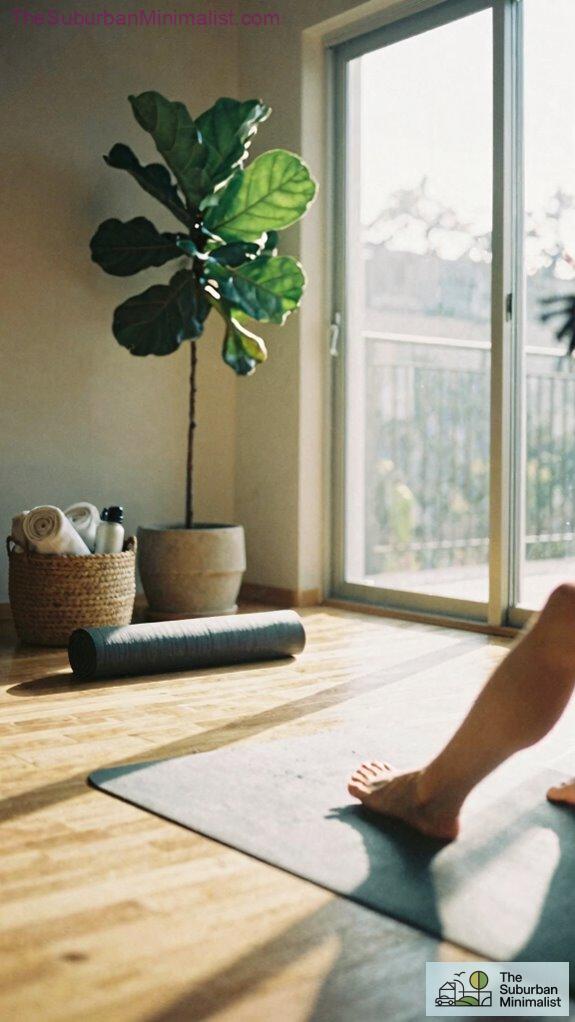
Sun floods in, plants reach toward it, and suddenly your body follows—like you’re part of the choreography.
Why fight inertia when light pulls you into motion? I didn’t think I’d crave mornings until I laid sustainable flooring—soft underfoot, kind to the planet—and watched how it glowed in the dawn. Now, my routine bends with the sunlight, guided by leafy silhouettes stretching across the room. Incorporating natural light can boost your mood and motivate your movement.
Ambient lighting takes over at dusk, warm but focused, like nature’s dimmer switch.
You ever notice how plants don’t rush, yet they grow stronger every day? That’s the pace we’re after.
Funny—I built this space to move, but really, I stayed for the calm.
(That’s why I created this website, The Suburban Minimalist—to help you find yours.)
Living Art Installations
A potted monstera doesn’t just sit in the corner—it *performs*. It’s part of my artistic feng shui, guiding energy with leafy grace. I don’t just decorate; I design for sensory integration—texture, sound, even the whisper of vines growing. Incorporating carefully curated minimalist document collection helps maintain a clutter-free and serene environment, emphasizing intention and simplicity in every element of my space. Utilizing modern rain barrels for efficient rainwater harvesting can further enhance this eco-friendly aesthetic and sustainable mindset. My snake plant? A silent guardian by the yoga mat. The fig tree by the window? That’s my morning meditation anchor.
Why did I create The Suburban Minimalist? Because living art isn’t for galleries—it’s for us, in our sunlit nooks, reminding us we’re part of nature, not just owners of it.
Real beauty moves. And breathes.
Foldable Peloton Workstation
Though my home isn’t huge, I’ve learned that smart design means everything can pull double duty—even my Peloton. I fold it flat against the wall after sunrise rides, where it blends into my living space like a piece of sculptural utility. The matte-black frame aligns with my color harmony, matching oak shelves and woven baskets. Material durability? Non-negotiable. I wanted something sleek but tough—something that could handle daily sweat sessions and still look curated. This isn’t just fitness gear; it’s functional art. To keep my space clutter-free, I also regularly ditch outdated tech and chargers that no longer serve a purpose, ensuring my home remains serene and streamlined. Incorporating effortless style in my athletic equipment helps me maintain a minimalist aesthetic without sacrificing function. Why I created this website? To share how innovation like this keeps suburban life sane, beautiful, and effortlessly mine—one fold at a time.
Indoor Rock Climbing Wall
You’d think my love affair with folding fitness gear had peaked with the wall-mounted Peloton, but then I went and turned my garage gym into a vertical playground with an indoor rock climbing wall.
Why build it? Because climbing safety matters—and I wanted control over every grip and surface. I chose modular panels with varied wall textures to challenge my daughter and me differently each week.
Because safety shapes how we play—I built it to control every grip, every texture, every challenge we conquer together
It’s not just exercise; it’s problem-solving in silk pajamas. Additionally, selecting the right wooden insect houses can enhance your garden environment by supporting local ecosystems, just as proper safety and surface choices support an optimal climbing experience.
If you’ve ever wondered why I created this website, The Suburban Minimalist, it’s moments like these—where function, safety, and joy climb the same wall.
Suburban Minimalism
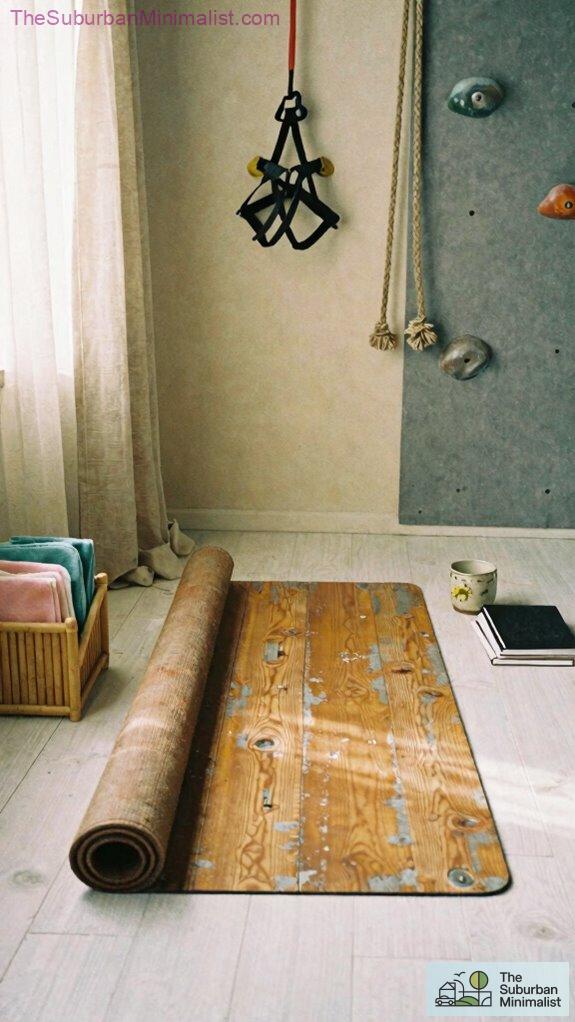
What ever made us think that a home had to be either sleek or cozy, but never both?
I used to crave urban aesthetics but hated how cold they felt—until I discovered suburban minimalism. Now, my space breathes: white oak floors, felt wall tiles, and functional decor that hides chaos but keeps warmth. I paired matte ceramics with bamboo organizers, blending calm with purpose. Incorporating emotional attachment to possessions can make decluttering challenging, but focusing on mindful decisions can ease the process.
Why I created this website, *The Suburban Minimalist*? To prove simplicity isn’t sterile—it’s smart. My rock-climbing wall fits neatly beside oak plant shelves, proving form and function coexist. You don’t lose personality—you refine it. Want joy without clutter? Try curated quiet. It’s not less. It’s more of what matters.
FAQ
Can I Incorporate Bold Colors in a Bio-Minimalist Exercise Space?
Yes, I use bold colors in my bio-minimalist exercise space by anchoring them in color harmony and visual balance, letting vibrant accents energize the room without chaos—innovative, intentional, and alive, just like me.
How Do I Maintain Cork Floors After Sweaty Workouts?
I wipe my cork floors right after workouts—you know, to protect that sweat-resistant finish. For cleaning, I stick to a damp microfiber mop; it keeps my space fresh without risking damage. Smart maintenance makes all the difference in long-term care.
Are Wool Exercise Mats Suitable for High-Intensity Training?
I’ll cut to the chase: wool mats aren’t ideal for high-intensity workouts. I’ve found they lack the durability concerns of sweat-heavy routines, and the material differences make them better for gentle practices, not my HIIT sessions where I need grip and resilience.
Where Should I Store Water Bottles in a Minimalist Gym?
I store water bottles on wall-mounted bamboo racks near my workout zone—simple storage solutions that support clutter management. These sleek, sustainable holders keep hydration visible and handy, blending function with clean design, so my minimalist gym stays smart, serene, and ready for movement.
Can Smart Fitness Tech Fit a Bio-Minimalist Aesthetic?
Yes, I’ve found smart fitness tech that blends seamlessly—sleek sensors tucked into eco friendly materials—surprising how well my home’s smart integration hums in silence, like a quiet breath. Innovation feels natural, not cold. Design and data coexist in warmth.