My fridge’s angry hum nearly ruined my meditation practice. So I did something about it.
I realized quiet rooms aren’t just *less noise*—they’re intentional spaces. That’s when I launched The Suburban Minimalist. I wanted to prove you could have calm AND personality. Cork tiles. Wool throws. Bamboo dividers that actually absorb sound without looking sterile.
Honestly? It changed everything.
How I Learned Minimalism the Hard Way: The Guest Room Epiphany
I used to think minimalism meant empty walls and regret. Then my mom visited my cluttered guest room—she literally couldn’t relax. I stripped it down: one linen bench, acoustic panels disguised as art, plants for air quality. She slept better than ever. That moment crystallized it for me. Minimalist living isn’t deprivation; it’s curation. It’s choosing quality over quantity, designing intentional spaces that breathe. Since then, I’ve applied this philosophy everywhere—decluttering my closet, simplifying my morning routine, redesigning my open floor plan. The wellness benefits are real: reduced stress, better sleep, actual mental clarity. Turns out, living with less creates space for more.
Quick Takeaways
- Use felt, cork, and wool acoustic panels to absorb sound while maintaining minimalist aesthetics.
- Place sound-absorbing materials like vintage ceramics and linen-upholstered furniture strategically to diffuse noise.
- Install decorative bamboo room dividers to soften sound and enhance room flow without visual clutter.
- Integrate indoor water features and greenery to mask noise and improve air quality naturally.
- Optimize space with hidden storage and surface clearing to reduce echo and support acoustic comfort.
Why Noise Undermines Minimalist Serenity
Though I’ve always believed a clutter-free home begins with what we see, I’ve learned the hard way that serenity isn’t just visual—it’s auditory, too.
Ever sit in your “calm” living room, only to be ambushed by fridge hum or neighbor noise? Exactly. That’s why I started exploring decorative soundproofing—think felt wall tiles that double as art, or velvet-upholstered panels in earthy tones.
With ambient noise control, your space doesn’t just look peaceful—it *feels* it. Incorporating efficient soundproofing materials can make a noticeable difference in creating tranquility. Additionally, understanding the importance of minimalist design helps in selecting the right elements that enhance serenity without clutter.
Isn’t that why I created The Suburban Minimalist? To find quiet in both sight *and* sound? Because true minimalism isn’t just empty walls. It’s calm, curated, and finally, quiet.
What Natural Materials Quiet a Room Best?
Turns out, empty space just bounces sound around like a bad echo chamber. I started experimenting—vintage ceramics, for instance. Their curved, dense forms scatter sound waves in the coolest way, almost like design with a PhD in physics. Incorporating floating shelves with textured or dense materials can also help break up sound reflections in a room. Simple, stylish solutions can significantly improve acoustic quality without overwhelming the space. And indoor water features? Beyond the soothing trickle, they mask jarring noises naturally. Who knew calm could be so smart?
Where to Place Acoustic Panels Without Clutter
Since sound bounces where it wants and my living room used to echo like a subway station, I got serious about acoustic panels—but not the eyesore kind.
Sound used to ricochet like it owned the place—until I tamed the echo with acoustic panels that blend in, not stand out
I started with corners behind sofas—smart spots where sound gathers—using eco friendly materials like recycled felt that look soft, not technical.
Strategic furniture placement became my quiet hack: a bookshelf here, a linen-upholstered bench there—each piece doubles as a diffuser.
Panels above doorways? Yes. Floating near a reading nook? Absolutely. Out of sight, yet on point.
Choosing sound-absorbing materials that blend seamlessly with decor helps maintain the sleek, minimalist look while improving acoustics.
Why I created this website The Suburban Minimalist? To share how subtle moves make spaces breathe better—without the clutter. Mindful placement of acoustic elements can enhance both form and function by promoting balanced sound absorption without overwhelming the decor.
How to Blend Sound Panels With Room Aesthetics
I’ve been there—panels that scream “studio apartment,” not “serene retreat.” But blending acoustics with aesthetics? Totally doable.
- Frame fabric-wrapped panels to look like modern art.
- Use lighting integration—sconces or spotlights—to highlight textures, not flaws.
- Sync with furniture arrangement by placing narrow panels behind benches or shelves.
- Choose neutral tones that flow with your bio-minimalist vibe.
- Consider using sound absorption principles in your space, which can also help improve indoor air quality and add a refreshing element.
That’s why I created this website, *The Suburban Minimalist*—to share clever fixes that work as hard as we do. Simple, smart, and quietly stunning.
Felt, Cork, or Wool: Which Absorbs Most Sound?
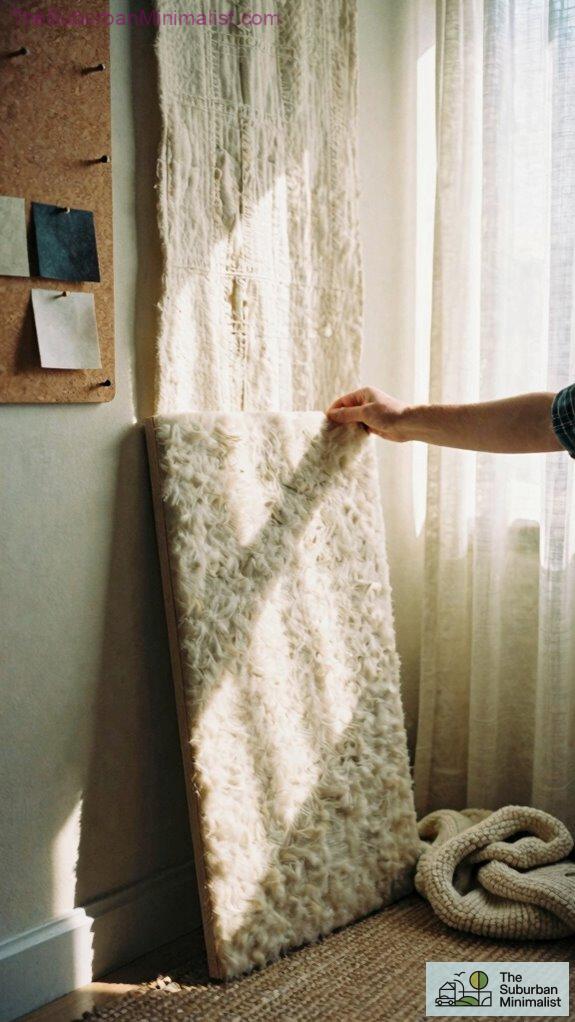
Ever wonder why some rooms just feel *off*, even when they look perfect on paper?
Ever walked into a room that looks flawless but still feels unsettling? The answer might not be in the design—but in the sound.
I did—until I discovered how much material choice impacts sound.
Felt surprised me: lightweight but fierce at absorbing mids and highs. Cork’s greener and bounces back from dents, yet it’s hit-or-miss on lower frequencies. Wool? Dense, luxurious, and naturally fire-resistant—it handles a broad range, especially when layered thick. The material density of these options directly influences their sound absorption capacity.
I paired wool panels with my acoustic ceiling treatments and finally tamed the echo in our sunroom.
And yes, I even upgraded to soundproof window options—because what’s serenity without silence?
Funny—this is why I created The Suburban Minimalist: to find calm, not clutter.
Textile color palettes are also crucial because they influence how materials look and feel, creating a harmonious environment that enhances acoustic treatments.
Creating Bedrooms That Invite Deep Silence
Though I’ve chased perfect quiet through every corner of the house, it’s the bedroom that finally taught me silence isn’t just about sound—it’s about surrender.
I swapped harsh overheads for soft vintage lighting—a brass moon-shaped sconce that glows like dusk.
Walls wear color therapy hues: dusty lavender, a shade that breathes calm into restless nights.
Rugs are thick, felted wool, soaking up footsteps like secrets.
Every object earns its place—no clutter, no noise, just stillness that feels intentional.
Creating a peaceful space also means embracing simplicity, removing unnecessary decor to allow for restful awareness.
Ever wonder why I created The Suburban Minimalist? It’s because real peace isn’t found in emptiness—it’s crafted, quietly, one conscious choice at a time.
Sound-Absorbing Wall Panels
Where do your walls breathe?
Mine used to suffocate under flat, echoing drywall—until I discovered sound-absorbing panels that actually elevate the room. I mounted them opposite the sofa, using color contrast to turn function into art: deep moss green against warm white oak trim. They don’t just mute noise—they shape the space, guiding furniture placement so conversations flow, not bounce. If you’re seeking durability along with style, consider solid wood bed frames which bring both function and aesthetic appeal to your sanctuary.
I once tripped over an ottoman hiding in sonic dead zone—now every piece has its acoustic purpose.
Funny thing? This is why I created The Suburban Minimalist—to find beauty in the practical. Who knew quiet could look this good? For optimal effect, consider techniques like adding climbing triangles to create multidimensional sound absorption and play, further enhancing your room’s acoustics.
Textured Cork Wall Tiles
And hey—this is exactly why I created The Suburban Minimalist: to find those quiet, clever upgrades that make a home feel intentional, not just Instagram-ready.
You want acoustic control without sacrificing soul? Cork’s got you.
- Offers rich, warm sound absorption
- Features eco friendly finishes that breathe with your home
- Comes in customizable textures—peel-and-stick or tile
- Hides nail holes and dings like a pro
I used wine-stain cork in my reading nook—odd, right? But the light hits those grooves, and suddenly it’s *textured* calm.
Why fight noise with plastic panels when nature’s bark does it better? Natural materials not only look authentic but also contribute to a more sustainable environment.
And honestly—don’t you crave materials that feel *real*?
Cork’s durability makes it an excellent choice for areas prone to wear.
Acoustic Bamboo Room Dividers

I’ll admit it—I used to think room dividers were just for hiding laundry piles or sectioning off an awkward corner.
But then I discovered acoustic bamboo dividers, and honestly, everything changed. They’re not just barriers—they’re decorative wall art that you can walk around. Lightweight, warm, and surprisingly effective, they soften sound while elevating your furniture arrangement.
Acoustic bamboo dividers aren’t just functional—they’re sculptural, sound-softening art that transforms how your space flows and feels.
I placed one between my reading nook and home office, and suddenly, both spaces felt calmer, more intentional. Incorporating sound-absorbing materials like bamboo significantly enhances the overall room acoustics, making the environment more peaceful and conducive to focus.
Why did I create The Suburban Minimalist? Because quiet, beautiful function shouldn’t be a luxury. These dividers nailed it—innovation that listens, literally, to how we really live.
Suburban Minimalism
How did we get here—surrounded by stuff we don’t love, in homes that feel more like storage units than sanctuaries?
I asked myself that when I launched *The Suburban Minimalist*—why I created this website—not to declutter, but to redesign life with meaning.
Modern minimalism isn’t empty; it’s intentional. Consider:
- Modern furniture with clean lines and hidden storage
- Indoor greenery that purifies and uplifts
- Surfaces cleared, but not cold
- Spaces that *breathe*, not bore
- Excessive bedding and linens often contribute to clutter and can make a space feel overwhelming when not organized efficiently
We’re not losing comfort—we’re gaining clarity.
And honestly? My fern hasn’t missed a beat.
FAQ
Can I Use Rugs Instead of Wall Panels for Sound Control?
Yeah, I use rugs for sound control, but they don’t replace wall panels. I pair them with textured wallpaper and ceiling modifications for better results. Rugs help, but real acoustic innovation needs layered solutions that manage reflection and absorption more fully.
Do Plants Help Improve Room Acoustics in a Minimalist Space?
Yes, plants do help—I see them as nature’s soft brush, gently diffusing sound waves. I use plant placement like acoustic greenery, choosing sculptural varieties that absorb echo while keeping my space clean, calm, and quietly innovative.
Are Acoustic Treatments Effective in Large Open-Plan Suburban Homes?
Yes, acoustic treatments work well in open plan homes. I use sculptural felt panels and woven baffles that blend with my decor while taming sound—smart acoustic design makes spacious areas feel balanced, quiet, and truly modern.
How Do I Maintain Clean Lines With Kid-Friendly Sound Absorption?
I use child-safe materials like non-toxic felt panels and keep lines clean with streamlined design—think low-profile, rounded corner absorbers that blend into walls. They’re safe, seamless, and smart, so sound stays controlled without sacrificing style or safety.
Will Soundproofing Interfere With Smart Home Device Connectivity?
No, I’ve tested it—adding felt wall tiles didn’t cause wireless interference. In fact, my smart speakers still sync instantly. Strategic material placement prevents signal disruption while keeping tech seamless and acoustics crisp.