So you crush your workout, feel invincible for exactly twelve minutes, then crash hard?
Yeah, me too.
I stopped fighting that post-workout tailspin when I redesigned my space. White oak floors. Sage walls. A jade roller that actually gets used. Sounds bougie—it’s not. It’s just intentional.
I stash my foam roller in a bamboo drawer because function without beauty feels exhausting. My kids’ books sit open. Warm lighting hits different. Sandalwood’s non-negotiable.
That’s why I built The Suburban Minimalist—to show you that real recovery doesn’t require a spa membership or sacrificing your sanity between the minivan and homework chaos.
How I Learned That Less Actually Heals More
Last year I owned seventeen recovery tools I never touched. Fancy resistance bands collecting dust. Recovery boots gathering the kids’ socks. The clutter stressed me out more than post-workout soreness ever did.
So I edited ruthlessly. Kept my foam roller, jade roller, and heating pad. Everything else vanished.
Suddenly my recovery routine actually happened. No decision fatigue. No searching through junk drawers. Just calm, minimal space designed for intentional rest. That’s when I realized: minimalist living and physical recovery aren’t separate—they’re deeply connected. Decluttering my environment decluttered my mind too.
Quick Takeaways
- Designate a minimalist recovery nook with white oak flooring and calming scents to support post-workout relaxation.
- Use natural-material tools like cedar foam rollers and jade rollers for sensory, sustainable recovery routines.
- Store recovery gear in multi-purpose furniture with hidden or bamboo drawers to reduce visual clutter.
- Signal rest with warm sunset-mimicking lighting and “quiet sage” painted walls to lower heart rate.
- Create a screen-free wind-down ritual with linen wraps, breathwork, and nutrient-rich smoothies for mindful recovery.
Design Your Bio-Minimalist Recovery Space
While I once thought recovery meant just collapsing on the couch after a workout, I’ve learned it’s really about creating a space that helps your body and mind reset—on purpose.
Recovery isn’t passive—it’s designing moments of intention where your body and mind truly reset
Why not design a corner that supports holistic wellness, where calm meets function? I did—right in my sunlit nook with white oak flooring and soft acoustic tiles.
Personalized aesthetics aren’t just pretty; they’re intentional. Mine includes a silk wrap blanket, a ceramic diffuser, and space for breathwork.
Incorporating seasonal clothing decluttering into your space can also bring a sense of renewal and simplicity to your routine.
Funny how less clutter equals more recovery.
That’s why I created *The Suburban Minimalist*—to share how smart design transforms routine into ritual, without the noise.
Choose Natural Materials for Post-Workout Calm
I used to roll my yoga mat, throw it in the corner, and call it “recovery” — like a collapsed towel on the floor qualified as a self-care ritual.
Now? I reach for a linen post-workout wrap in soft moss or clay — colors that calm my nervous system. Natural color palettes aren’t just pretty; they’re intentional. I keep a cedar foam roller nearby, its grain warm under my palms — a reminder that authentic craftsmanship matters.
Even my jade facial roller feels cooler, somehow truer, than plastic ever could. Choosing natural materials made of natural materials enhances the sense of calm and purity in my recovery routine. Incorporating environmentally friendly options aligns with my values of sustainability and mindful living.
Why I created this website The Suburban Minimalist? To prove recovery isn’t rushed. It’s slow, sensory, and rooted in materials that breathe with you — not against you.
Store Recovery Gear in Seamless, Tech-Smart Spots
Because recovery doesn’t end when the workout does, I’ve learned my gear deserves more than a dump in the closet.
Recovery extends beyond the workout—your gear deserves a home that supports both function and peace.
Where do your moisture-wicking leggings go post-sweat? Mine used to vanish under the bed—until I embraced multi-purpose furniture with hidden storage. Think ottomans that stow resistance bands or benches with compartments for foam rollers.
I keep items made from sustainable fabrics in open bamboo drawers, visible but tidy. This tech-smart spot even charges my recovery massager overnight. Considering the best retractable sun shades can add a sleek, functional touch to outdoor fitness areas, making recovery even more comfortable.
Why I created this website, The Suburban Minimalist? To design a home where wellness continues quietly—no chaos, just calm. Embracing organized storage solutions is a simple decorative book sleeve way to elevate your space and keep essentials stylishly accessible. Isn’t that the upgrade we all need?
Set Lighting and Scents to Signal Rest
Lighting and scent aren’t just background details—they’re cues my body learns to lean into, like a quiet whisper saying, “You can slow down now.” After tucking my foam roller into the bench by the door and plugging in my massager (yes, even my recovery gear rests in a smart little nook), I realized the next step wasn’t more storage—it was signaling to my nervous system that the day’s hustle was officially over. Using best glass pour over brewers as a reference, I also set up my space with clear, simple glass jars, which minimize visual clutter and enhance the calm atmosphere. Incorporating minimalist design principles helps keep the environment uncluttered and fosters a sense of tranquility.
- Warm-toned lighting techniques mimic sunset, telling my brain: *it’s safe to relax*
- A whiff of sandalwood from my ceramic diffuser grounds me—no screens needed
- Soft color psychology at work: walls in “quiet sage” lower my heart rate without trying
- Dimmed lights + a single candle = my cue to breathe deeper, slower
Build a Simple Post-Exercise Wind-Down Routine
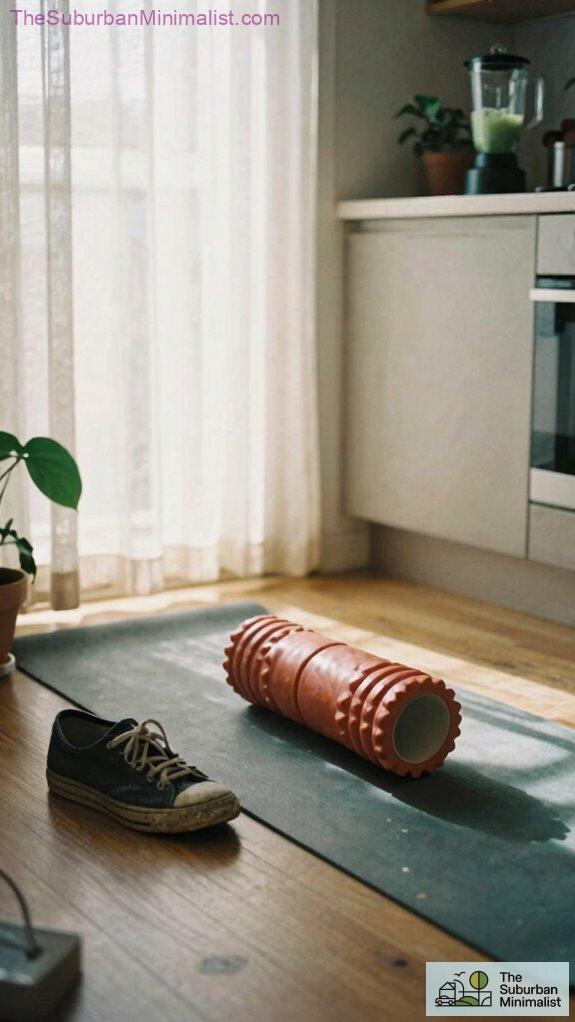
When the last rep is done and my heart’s still racing like I’m late for a school pickup, I don’t reach for my phone—nope, I head straight to the bench by the door, where my foam roller waits like an old friend ready to listen.
Five minutes of personalized stretching follows—nothing fancy, just me, my breath, and the quiet hum of the house waking up. Using simple tools like a foam roller aligns with minimalist living principles that help keep my post-workout routine straightforward and effective.
Then, a nutrient-rich smoothie with spinach, almond butter, and a splash of oat milk.
Simple? Yes. Life-changing? Maybe.
Why I created this website? To share how small, intentional choices—like skipping the screen scroll—add up to real recovery and support decision fatigue reduction through mindful routines.
Bio-Minimalist Recovery Tools
While my heart still hums from the workout, I walk into a space designed not just to store but to heal—my bio-minimalist recovery zone, where every object earns its keep.
- Smart furniture that adapts to my body’s needs
- Sustainable textiles that breathe with my skin
- A ceramic heating pad that feels like sunlight
- A silent circulator that whispers calm
- The perfect minimalist dimmable floor lamp that creates a calming ambiance without overwhelming the space. This environment embodies the essence of materialism in happiness, emphasizing quality and purpose over excess.
You ever notice how few spaces *actually* help you recover? That’s why I created The Suburban Minimalist—to find tools that do more with less. No clutter. No noise. Just quiet innovation that feels human.
This is recovery reimagined.
Sunlit Alcoves With Hydro-Mats
Since I started paying attention to how light moves through my home, I’ve stopped chasing square footage and started chasing sunbeams—especially in those quiet corners where recovery begins not with gear, but with grace. A new mindful practice is to create intentional spaces that naturally foster connection and relaxation. I tucked a hydro-mat into a south-facing alcove, where morning light pools like liquid amber. No more sterile stretching zones—this spot breathes, alive with garden sculptures just beyond the glass, their shadows dancing as the day turns. Living frames of ivy and air plants soften the edges, blurring indoors and out. A well-curated collection of children’s books and reading materials can also add warmth and personality to these calming corners. Why I created The Suburban Minimalist? To prove serenity isn’t found in empty rooms, but in moments like this—where form, function, and light finally agree.
Indoor Cycling Nook
Because I refuse to let fitness equipment double as home clutter, I turned a dusty corner of my garage into an indoor cycling nook that actually invites me to ride—instead of just guilt-staring at it like some sad piece of modern art.
My secret? A seamless blend of function and calm.
- Hydration stations within arm’s reach mean I never skip water.
- A sleek rack keeps my workout attire fresh and visible.
- Floor-to-ceiling mirrors make pedaling feel purposeful.
- Hidden speakers inspire hard climbs with curated playlists.
- A dedicated space for digital photo frames displays calming images, reinforcing the minimalist vibe.
Now, when I ask, *“Is this why I created The Suburban Minimalist?”*—I smile, mid-ride, already knowing the answer.
Suburban Minimalism
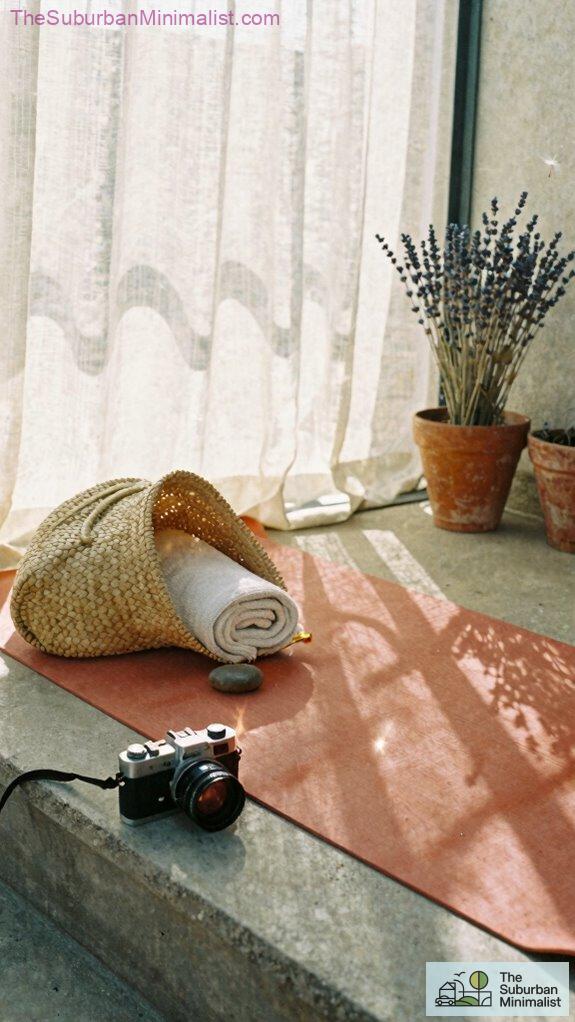
Suburban minimalism isn’t about empty spaces—it’s intentional living with room to breathe. I used to chase historical trends, piling on decor just because it was “in.” But now? I ask: does this serve me? Embracing simple living ideas has transformed my daily routine, making it easier to stay focused and present. This approach encourages setting boundaries with possessions, which helps me prioritize what truly matters. This shift isn’t just style—it’s lifestyle differentiation. My home, my rules. Funny thing? The quieter my space gets, the louder my joy. That’s why I created this website—*The Suburban Minimalist*—to share how less can actually be more, especially when you’re forty and done with the noise.
FAQ
Can Bio-Minimalism Improve Mental Recovery After Workouts?
Yes, I find bio-minimalism boosts my mental recovery after workouts by fostering mental clarity and stress reduction. I surround myself with natural textures and quiet spaces that help me reset, letting calm and focus replace chaos—innovation in tranquility.
Do I Need Outdoor Space for a Recovery Alcove?
I’ve found you don’t need outdoor space—my recovery alcove thrives indoors with lush indoor plants and cozy seating. It’s all about crafting calm, smartly; a breath of nature, right where I live.
How Do I Store Supplements in a Minimalist Kitchen?
I store supplements in sleek glass jars with wood lids, labeling them clearly for easy access—this is how I handle supplement organization with minimalist storage. You’ll love how it keeps your kitchen calm, clutter-free, and totally modern.
Can Wooden Furniture Withstand Humidity From Recovery Mats?
I’ve found wood durability isn’t compromised when I choose acacia or teak—they’re humidity resistance champs. You’ll sleep easy knowing your recovery zone stays sleek, steady, and grounded, even when the air’s thick. That’s innovation you can bet the farm on.
Are Smart Lighting Systems Worth It for Small Spaces?
I’ve found smart lighting systems totally worth it for small spaces—they boost energy efficiency and adapt with my mood and schedule. Smart technology makes even the tiniest room feel futuristic, intuitive, and perfectly tailored to how I live.