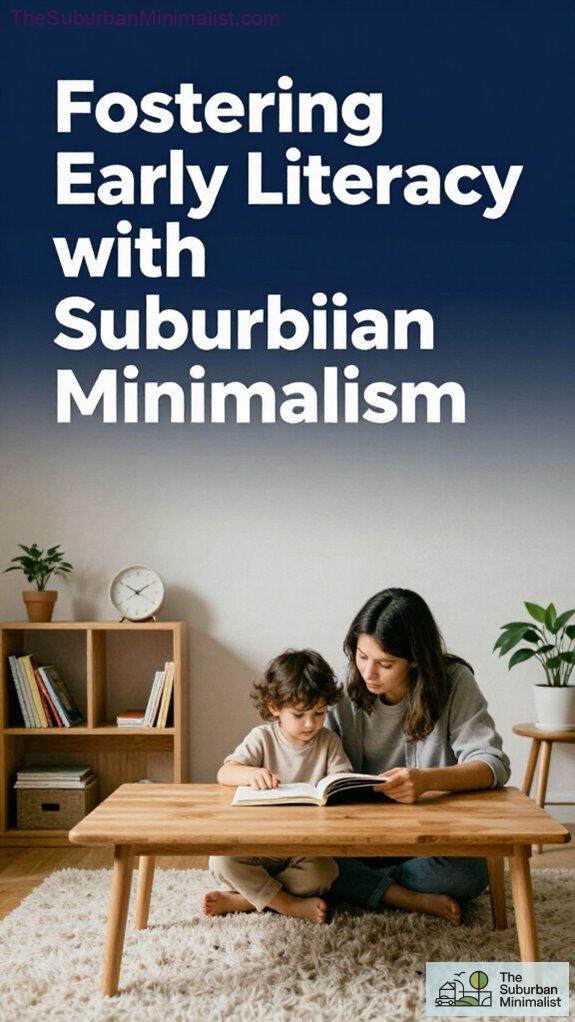
I used to think fewer toys meant bored kids. Turns out, I was totally wrong.
My daughter sat with one wooden block for twenty minutes. Just… one block. Meanwhile, her playroom looked like a toy store exploded. That’s when I realized: clutter wasn’t fueling creativity. It was killing it.
Low shelves. Intentional choices. Natural light. Soft textures in easy-to-reach bins. This is where independent play actually happens—not through nagging about organization, but through design that makes it effortless.
A simple gardening tray or clay project? That’s focus. That’s pride. That’s why I created The Suburban Minimalist.
Toy Rotation Strategy: My Game-Changer for Sustainable Play
I implemented a seasonal rotation system that honestly saved my sanity. Instead of keeping everything accessible, I store half the toys away. Every three months, they’re “new” again. My kids’ engagement skyrocketed. Plus, it eliminated decision fatigue—both mine and theirs. This mindful consumption approach aligns with intentional parenting and slow living principles. Fewer options actually sparked longer play sessions and deeper focus. It’s not deprivation; it’s curation. The space feels calm, and the kids? They’re genuinely happier. Curated play environments reduce overstimulation while promoting self-directed learning and imaginative play development.
Quick Takeaways
- Create child-led zones with low shelves, clear drawers, and calm lighting to invite independent exploration in a suburban minimalist home.
- Use modular, eco-friendly storage and labeled, transparent containers to teach organizing skills without visual clutter.
- Design adaptable furniture and spaces that grow with children, supporting autonomy during evolving interests and abilities.
- Integrate purposeful, clutter-conscious activities (gardening, sorting, mini kitchens) to foster hands-on independence.
- Encourage outdoor and indoor play routines, rituals, and mindful breaks to nurture resilience and sustained curiosity.
Montessori Minimalism for Toddlers: Foundational Concepts
Have you ever watched a toddler arrange blocks with the same careful attention you use when layering throw pillows and plant pots just so? I mentor tiny architects, shaping spaces with Montessori Minimalism for Toddlers: Foundational Concepts. I’ve learned that Eco friendly materials invite curiosity, not compromise, and sensory engagement fuels confident exploration. Involving children in the process of choosing and caring for their toys can cultivate a sense of material detachment that encourages them to value quality over quantity.
We swap flashy toys for simple, purposeful pieces—wooden blocks, low shelves, open trays—so curiosity has room to breathe. I feel the room breathe with us, a soft chorus of discovery. Additionally, reducing clutter supports a sense of clarity and calm that benefits both children and adults alike.
Why I created this website, The Suburban Minimalist, was to share that mindful joy with you. Curious yet?
Core Montessori Principles for Toddler Furniture
I’ve watched my own toddler test a room the way a tiny architect tests a blueprint, and that play is exactly what guides these principles.
I’ll share Core Montessori furniture choices that feel like urban aesthetics meeting Modern architecture—low shelves, accessible drawers, and sturdy stools kids can flip into learning stages. Can a chair become a step and a project table at once? Yes, with rounded edges and calm finishes.
I keep spaces breathable, tactile, and open to spontaneous dialogs with the room. This is why I created The Suburban Minimalist—to invite inventive, approachable design into everyday moments. Ready to experiment? Incorporating natural materials like eucalyptus silk sheets adds an extra layer of comfort and sustainability to our thoughtfully designed spaces. When designing for children, emphasizing family engagement can help nurture meaningful traditions that are mindful and inclusive.
Plan a Calm, Minimalist Space That Supports Independence
There’s a quiet power in a space that works with you, not against you, so I built a calm, minimalist plan that supports independence rather than dependency.
I invite you to envision shelves that breathe calm: artful clutter tucked into low drawers, sensory textures guiding touch and mood.
I choose open, soft-light zones for kid-curiosity, plus deliberate exits for grown-up moments. This thoughtful setup can also help foster mindful stress relief, making everyday routines more manageable and peaceful.
Is this perfection or practice? Maybe both.
I’ve learned balance lives in small rituals, not grand overhauls.
Why I created this site, The Suburban Minimalist, feels organic, not loud.
I also believe that cherishing memories can transcend material possessions, turning moments into lasting treasures that aren’t bound by clutter.
Ready to try a room that invites, not overwhelms?
Choose Safe, Age-Appropriate Montessori Pieces
Choosing safe, age-appropriate Montessori pieces is all about respect for growing bodies and curious minds. I’m crafting a home that invites discovery, not distraction, and you’re invited to join.
Choosing safe, age-appropriate Montessori pieces to invite discovery over distraction.
Do these toys spark independent play or demand constant direction? Eco friendly materials matter, because tiny hands touch, feel, and learn from texture. Incorporating digital photo frames as part of a thoughtful display can also introduce children to visual stimulation in a safe and engaging way.
I’ve noticed how simple, well-made puzzles enhance sensory stimulation, turning a quiet corner into a confidence boot camp. My goal isn’t perfection but progress—a calmer room that still hums with possibility.
Incorporating elegant wooden display cabinets can also help keep the space organized and inviting for children, encouraging independent access to their favorite toys and books. My goal isn’t perfection but progress—a calmer room that still hums with possibility.
Create Independent Play Areas Your Toddler Can Manage
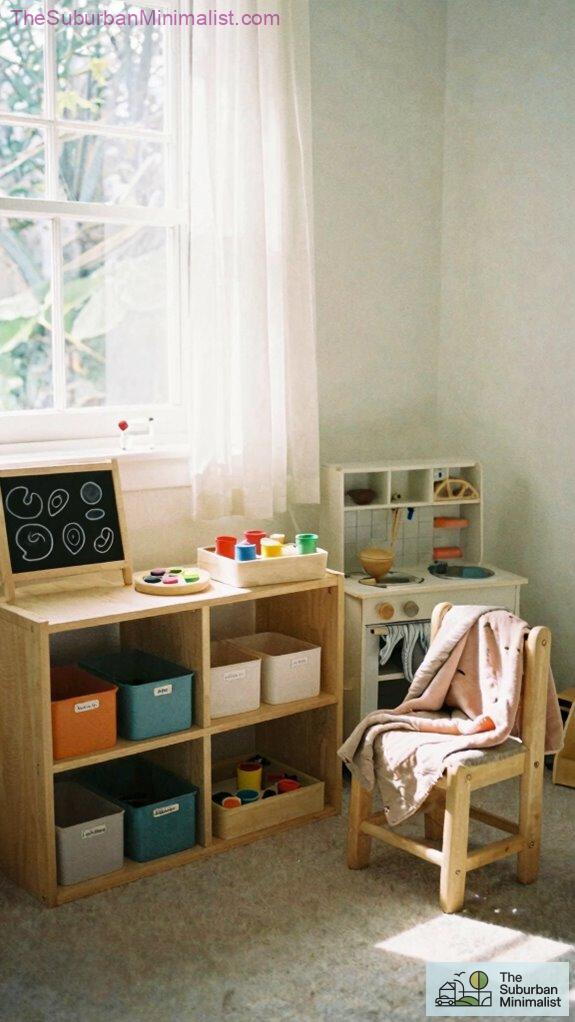
Creating independent play areas isn’t about hollow shelves full of toys; it’s about carving out small, inviting zones that a toddler can navigate and claim as their own. I curate tiny nooks that blend with our decor, so play feels intentional, not chaotic. Introducing elegant silver silk dresses can inspire a sense of style and confidence during playtime, blending beauty with functionality. Have I hidden learning inside the fluff? Absolutely—gardening techniques become dig zones, color-timed trays teach sorting, and a mini kitchen invites narration. Travel tips sneak in through portable boards and label cards, turning any corner into a lesson. Utilizing minimalist toy storage solutions helps maintain a calm environment and teaches children about organization from an early age. Curious how I built this? I created this website, The Suburban Minimalist, for calmer, clever living. Want that rhythm at home? Let’s start today.
Sequence Activities to Build Core Skills
In our home, I’ve learned that building core skills isn’t a parade of worksheets, it’s a sequence of small, repeatable steps that fit into daily rhythms.
I design spaces that invite practice, and I choose materials that endure. Designing space becomes a game of layering simple tasks—pouring, sorting, counting—so outcomes feel like small wins, not chores.
Choosing materials means selecting items that tolerate busy fingers and real life, yet spark curiosity. Do you notice how routines unfold when toys become stations, not clutter? Incorporating durable quality materials helps create an environment that withstands the wear of active play.
This approach grew from my own need for calm, and yes, decision fatigue reduction plays a crucial role in creating a peaceful environment. Why I created this website The Suburban Minimalist—organically, always.
Maintain and Adapt Your Montessori Setup Over Time
Staying with a Montessori setup over time isn’t about stamping in a perfect routine and leaving it there; it’s about noticing what kids actually reach for and gently guiding those choices to stay true to our values.
Staying with Montessori means guiding children’s natural choices while evolving with them.
I tweak layouts, swap trays, and invite conversation, asking: what helps them think, move, and observe? Regularly observing these natural preferences helps us adapt intentionally, emphasizing child-led learning as an essential component.
Eco friendly storage becomes a daily habit, not a box to check. My shelves morph into sensory rich environments—soft textures, varied scents, tactile stations—that spark curiosity.
Have you noticed what your child returns to after a season change?
This is why I created this website, The Suburban Minimalist.
Additionally, adjustable furniture and versatile setups support children’s independence as they grow and their interests evolve.
Smart Toy Organizers for Clutter-Free Play
Smart toy organizers make clutter feel like a problem of the past, not a constant backdrop to our days. I’m exploring how smart organizers change play, step by step, with a calm, curious grin. Do you crave a neat zone that still invites imagination? Eco friendly storage and modular design make it possible, even delightful.
My shelves breathe when every piece has a place, and kids glide right into cleanup without fuss. Here are ideas that feel both practical and playful:
- modular baskets with labeled sections
- wall-mounted bins for space-saving access
- transparent lids for quick visibility
- stackable trays by size
- magnetic dividers for quick reconfiguration
Incorporating storage solutions that align with eco-friendly principles can further enhance the organization and sustainability of play spaces. Creating a well-structured memory box can also foster emotional connection and purpose, turning an ordinary storage container into a cherished keepsake.
Toy-Aligned Learning Spaces
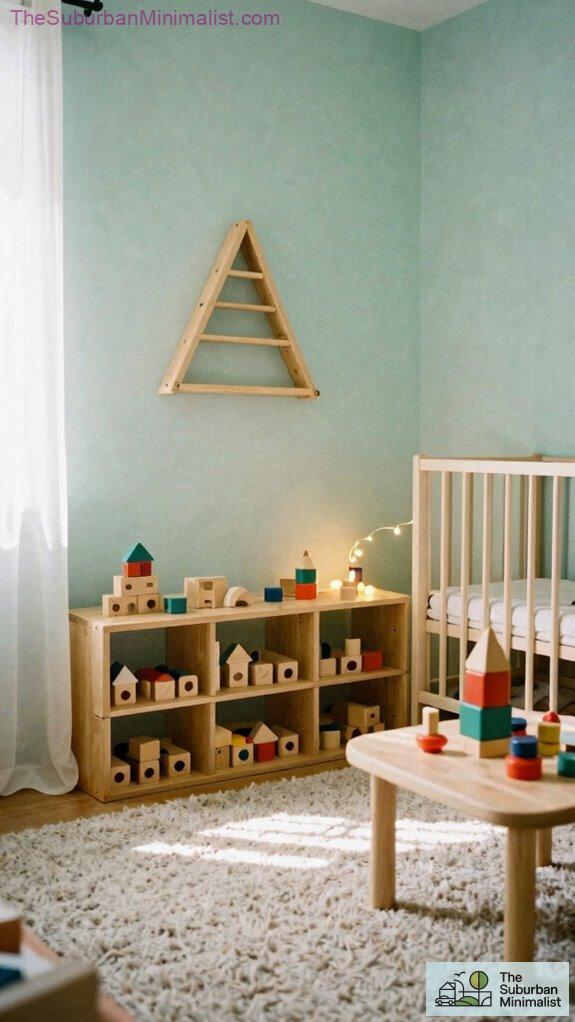
Toy-aligned learning spaces aren’t just cute nooks; they’re the quiet engine behind curious minds, and I’ve learned to shape them with intention rather than impulse.
Do you notice how small details invite big questions? I design each corner to spark exploration, not distraction, with Eco friendly materials and calm textures. Digital integration stays invisible yet assistive, guiding independent play without overpowering imagination. I’ve learned this through late-night rearrangements, a gentle experiment in balance. Incorporating convertible cribs allows the space to grow and adapt with the child, ensuring it remains functional and inspiring over time. Equally, selecting top wooden climbing triangles for kids ensures safety and promotes physical development while maintaining a minimalist aesthetic.
Want simplicity that lasts? This is how I balance style with function, a habit I cultivated writing The Suburban Minimalist. Isn’t that the goal: space that teaches, quietly and beautifully.
Fine Motor Milestones at Home
Fine motor skills don’t just blossom in a classroom; they grow at home, in the quiet places where a kid stacks blocks, threads beads, and sneaks a tiny screw into a wooden board. I watch, I lightly guide, I ask, what small move matters most today? Artistic expression and sensory exploration fuse as hands learn rhythm, grip, and control. Incorporating outdoor elements, like an outdoor aluminum towel stand, can also create open-ended play opportunities that encourage independence and hands-on engagement.
Do you notice how tiny triumphs build confidence, then spill into drawing, zipping, and tying? Here are ideas that feel fresh, yet practical for busy homes.
- Build a bead necklace with varied textures for tactile feedback
- Threading small buttons onto ribbon while naming colors
- Practice tweezers games with cotton rounds
- Screw in loose flat-head screws into a soft wood block
- Create sculptural shapes from clay, pressing gently
- Engaging with fine motor development activities at home helps nurture the skills that support overall learning and growth.
Suburban Minimalism
Suburban Minimalism isn’t about stripping life down to a cold, empty shell; it’s about letting the space breathe while every piece earns its keep.
I’m drawn to urban gardening shelves and decorative lighting that glow softly at dusk, guiding curious hands toward independent play.
Do you notice how a simple plant teaches patience, or how a lamp becomes a story you control?
I talk to you like a friend, sharing the moment I realized fewer things let kids invent more.
This site, The Suburban Minimalist, isn’t random—why I created it’s woven in: clarity, charm, sustainable joy.
Isn’t that worth trying?
FAQ
How Can Independent Play Reduce Screen Time in Busy Households?
Independent play reduces screen time by fostering Unstructured routines that spark Creative independence in kids, even on busy days; I guide them to explore, improvise, and problem-solve, turning cluttered moments into inventive, screen-free mini adventures.
What Lightweight Toys Best Support Open-Ended Exploration?
Open-ended toys win with quiet variety; lightweight, minimalist playthings spark invention as kids layer ideas, like a sculpture in progress. I design open-ended toys to invite exploration, collaboration, and scalable imagination for fearless innovation.
How to Involve Kids in Tidying up Without Undermining Autonomy?
I involve kids in tidying by offering Motivational strategies that honor Autonomy support, turning cleanup into a collaborative challenge they own, with short choices, clear roles, and playful incentives that spark innovation and positive agency.
Which Materials Are Safest for Toddlers in Shared Living Spaces?
I recommend non toxic paints and soft fabric toys for toddlers in shared spaces. I design with innovation in mind, choosing safer finishes and plush, washable textures that invite exploration while protecting little ones and keeping environments calmly stylish.
How to Track a Child’s Progression Without Pressuring Them?
I track progress with playful, nonpressuring check-ins, celebrating small autonomy milestones. I observe the play environment for curiosity, not metrics, and adjust tasks to honor child autonomy while nurturing growth, confidence, and joyful exploration.
Summary
I’ve learned that quiet corners invite bigger adventures, and so I curate spaces that let curiosity lead. When I see my toddler stack blocks in a sunlit nook, I’m reminded that independence grows in small, doable steps. A simple shelf becomes a treasure map; a low table, a launchpad for imagination. This is why I created The Suburban Minimalist—not as a rulebook, but as a companion, drawing you toward calm, capable play and confident, creative kids.