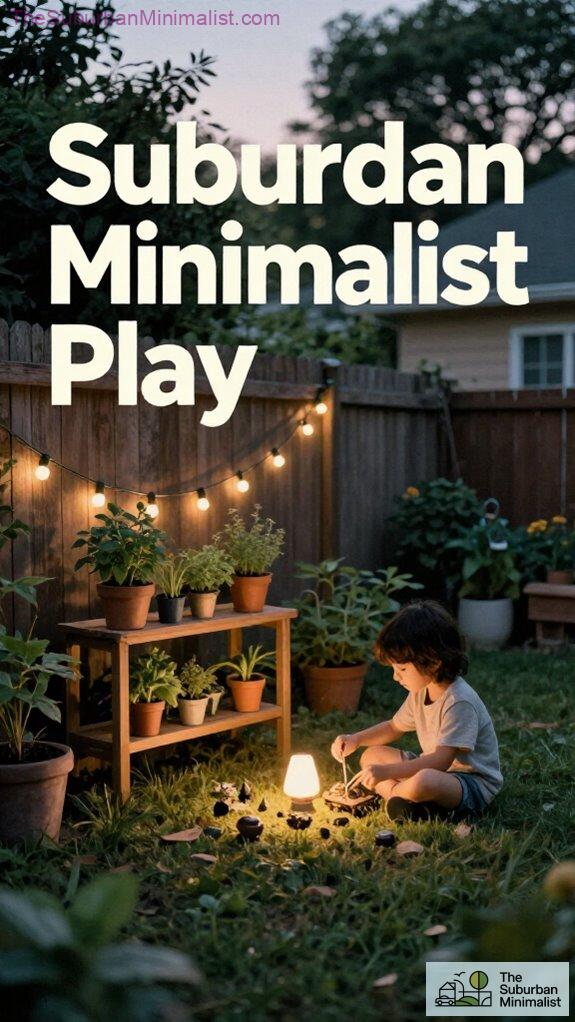
I used to think my cluttered Brooklyn apartment was just “lived-in.” Spoiler: it wasn’t.
My daughter couldn’t focus on reading. Too much noise. Too much stuff everywhere. So I did the obvious thing—I gutted it. Soft lighting, hidden storage, three carefully chosen books on her shelf. Suddenly? She actually *wanted* to read.
That moment sparked The Suburban Minimalist. A framework for people like me who craved calm without sacrificing warmth.
How Minimalist Living Sparked My Kid’s Reading Obsession
I’ll be honest—I didn’t expect decluttering my apartment to transform my parenting. But when I stripped away the visual chaos and created a dedicated reading corner with natural light and cozy textures, everything shifted. My daughter went from resisting bedtime stories to asking for them unprompted. We started tiny rituals: tea before reading, choosing one book together. The simplicity worked. Less stimulation meant deeper focus. I realized minimalist home design isn’t about deprivation—it’s about intentionality. Creating space for what matters. Now I help other NYC families do the same, weaving clutter-free living with meaningful daily practices and sustainable habits.
Quick Takeaways
- Create calm, clutter-free reading nooks with comfortable seating, soft lighting, and minimalist décor to signal slowing down and focus on books.
- Use purposeful storage and grids/labels to organize shelves, inviting exploration without chaos and supporting independent choice.
- Integrate eco-friendly materials and organic textures to foster warmth, sustainability, and tactile engagement in literacy spaces.
- Turn daily routines into literacy moments through micro-readings, prompts, and small rituals that make reading a natural habit.
- Design spaces and props that transform everyday objects into language-rich play, promoting dialogue, storytelling, and early math concepts.
Why Suburban Minimalism Supports Early Literacy
Suburban minimalism isn’t just about empty space; it’s about making room for what truly matters—like early literacy moments that happen long after storytime, during everyday routines. I’ve seen how urban expansion presses us to pause, to choose thoughtfully, and that choice becomes literacy itself. Sustainable materials anchor these choices, from cork boards to cotton-tiber shelf liners, turning rooms into quiet classrooms. Creating mindful spaces encourages intentional decision-making, fostering environments where literacy can grow naturally. Establishing purposeful spaces can also reduce clutter and distraction, helping children focus on foundational literacy skills. Do you feel it too—reading signs on a calendar, tracing letters in the steam on a mug? I created this website, The Suburban Minimalist, to share such micro-epiphanies, organically weaving curiosity into home life.
Creating a Calm, Accessible Reading Nook in 5 Simple Steps
A calm, accessible reading nook starts with a simple, thoughtful setup: a comfortable chair that fits your body, a soft light, and a spot that signals “this is where we slow down.” I learned early on that the best spaces aren’t crowded with stuff but curated for ease—a small, inviting corner where books can breathe and a child can practice turning pages without hitting a wall of distractions. Incorporating elements like a wooden climbing triangle can add a playful yet functional touch that encourages movement and exploration nearby. Eco-friendly materials guide my choices, and sensory engagement guides your. Recognizing the importance of environmental sustainability can influence the durability and safety of your setup. Curious, right?
Do you crave a nook that feels like a calm retreat yet sparks discovery? That’s why I created this site, The Suburban Minimalist, organically.
Choosing Age-Appropriate Books for Quiet Focus
Choosing age-appropriate books for quiet focus is more about intention than age brackets. I’m a 40-something decorator who notices how stories shape our calm, and I’m talking to you, reader. I favor titles that invite immersion, not overwhelm, and I blend art therapy with light music integration to support attention. Do you listen for rhythm while turning pages, or pause to sketch a scene? Here’s a quick grid to spark ideas:
| Aesthetic task | Quiet activity | Engagement cue |
|---|---|---|
| Texture prompts | Gentle narration | Soft echoes |
| My goal | Small rituals | Lasting calm |
| Page whispers | Cozy corner | Shared smiles |
Creating any sense of emotional healing through thoughtful decluttering can help mothers release emotional attachments and foster a sense of calm and clarity in their lives. Recognizing the importance of minimalist decor in creating serene environments, I believe that simplicity enhances focus and mindfulness during quiet activities.
Smart Storage That Encourages Independent Browsing
Smart storage can be magical when it nudges you toward independent browsing instead of turning every shelf into a scavenger hunt. I’ve learned that thoughtful curation invites curiosity, not chaos, and I adore how labels become tiny guides. Do you notice how vintage typography on a tag invites a second look, a slower breath? That’s sensory engagement at work, shaping discovery with texture, scent, and sight. Incorporating eco-friendly materials like recycled paper sketchbooks adds an inspiring touch that underscores sustainability. Clear labeling and organized car interior spaces can turn routine rides into opportunities for early literacy by fostering independent browsing. I’m a 40ish decor lover who loves practical poetry in drawers, and I’ve built spaces that invite kids to choose a book, then chat about it. Why I created this site, The Suburban Minimalist, lives in the rhythm of experimentation.
Daily Reading Routines That Build Momentum
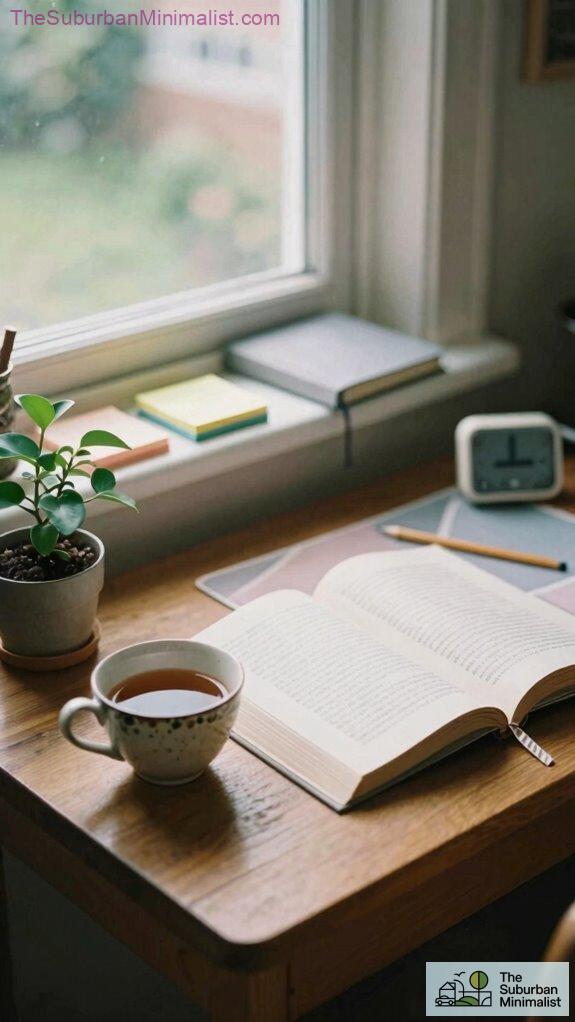
Daily reading routines that build momentum are less about slogging through pages and more about inviting small rituals that stick. I’ve learned that consistency beats intensity, and the quiet hours become a garden aesthetics moment, not a chore. Incorporating mindful moments into these activities can help children develop awareness and focus while engaging with stories. I notice how seasonal planting mirrors stories—tiny, hopeful steps sprouting into understanding. I pair a short chapter with a quick garden check, a sip of tea, a note in my journal. We crave clarity, not clutter. Letting go of unnecessary beauty habits like eyeliner simplifies mornings, making space to focus on what truly matters.
Here are five rituals to try:
- Morning micro-read and a plant check
- Skimmable chapters, longer reflection day
- Post-it prompts near the window
- 5-minute read, 5-minute sketch
- Seasonal planting wins as metaphors
Durable, Lightweight Props for Hands-On Learning
Durable, lightweight props aren’t just nice-to-haves; they’re the bread and butter of hands-on learning, especially in a home that values quiet, functional beauty. I adore how tiny, sturdy pieces invite curiosity without clutter, and I bet you do too. Eco friendly materials spark responsibility, while sensory engagement keeps little hands enthusiastic. Let’s explore simple tools that travel well, stain-free and squeak-free, turning practice into play. A seasonal decluttering approach can help keep these educational tools organized and fresh, making room for new learning opportunities. Table below guides my picks, but you’ll see your own favorites. Why I created this website The Suburban Minimalist? to coax calm creativity into daily life, naturally. Emphasizing minimalist chic in educational tools fosters a serene, focused environment that enhances cognitive development.
Track Literacy Growth With Simple, Regular Checks
Tracking literacy growth isn’t about chasing a page count; it’s about noticing the small shifts that add up over time. I’ve learned quick checks keep momentum, and you’ll see patterns emerge, especially when rituals feel natural. To further support consistency, creating designated spaces for reading and organizing books can help develop a decluttered literary environment. Think simple, trackable, and gentle—like a weekly note tucked into a family wall calendar. Incorporating eco-friendly habits into reading choices can also reinforce mindful living and sustainability.
- Use 5-minute reading snapshots
- Log new words and quick prompts
- Celebrate tiny wins with a family shout-out
- Reflect on eco friendly habits in reading choices
- Invite community involvement through book swaps and read-alouds
Do you see how small acts ripple outward, shaping confident readers? This approach mirrors The Suburban Minimalist ethos, naturally.
Pet Care Organization Essentials
Pet care organizing isn’t just about bins and labels; it’s about making every everyday routine feel calm and contained, even when chaos flits around the kitchen floor. Creating a dedicated space for pet supplies can also serve as a memory box, helping you cherish special moments with your furry friends. I write to you as a 40ish woman who loves quiet, smart spaces. Pet grooming becomes a ritual, not a chore, when tools have homes and schedules spark confidence. I schedule Veterinary visits like well-timed art openings, with reminders and a tidy kit ready. Incorporating stylish minimalist furniture, such as entryway benches with discreet storage, can also streamline your organization efforts. Do you feel the difference when clutter-free cues guide care? This site, The Suburban Minimalist, grew from my longing for simple elegance. Why I created it? To keep routines humane, clear, and beautifully functional.
Block-Based Learning Corners
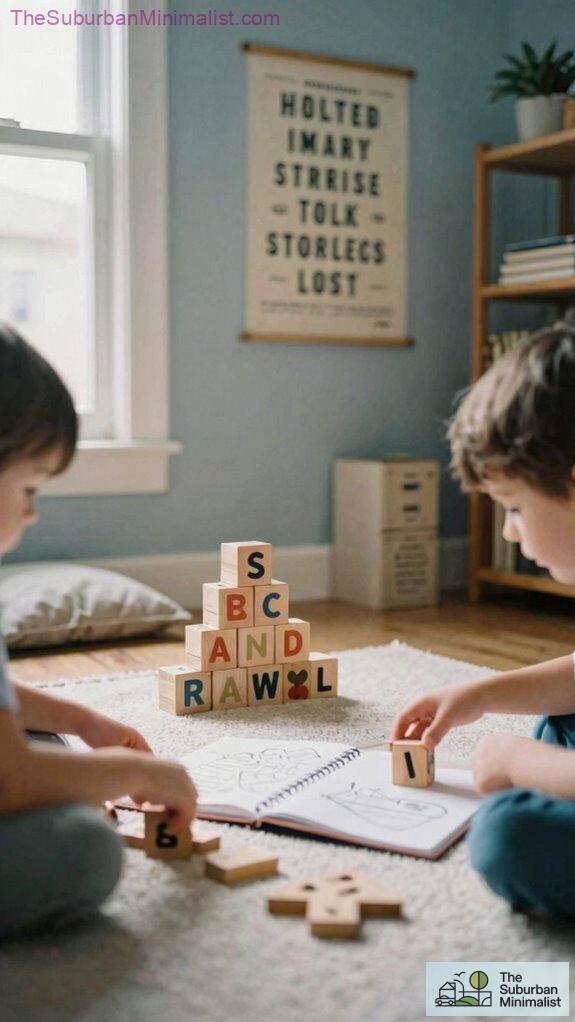
Block-Based Learning Corners feel like tiny, well-lit hubs where curiosity can roam without chaos. I set these up in soft, kid-friendly corners, balancing vintage typography posters with tactile blocks, inviting collaboration as the clock ticks softly. Do you see how play becomes a method, not a maze? Incorporating simple, memorable designs inspired by minimalist fashion helps create a calm, focused environment that enhances early literacy.
- Vintage typography posters spark conversation and memory
- Collaborative storytelling with peers builds confident voices
- Block sorting teaches early math ideas through pattern play
- Quiet reading nooks anchor focus amid lively activity
- Personal journals capture growth, reflection, and humor
Want to know why I created this website The Suburban Minimalist? It grew from daily observations.
Language-Rich Play Routines
Language-rich play routines became my daily compass when the house is buzzing but the moments for talking feel scarce. I invite you to see how simple chats bloom during messy projects, read-alouds at kitchen counters, and improvised storytelling as we tidy. Cultural storytelling and Multilingual exposure weave meaning into play, turning blocks into passports and cups into microphones. Table time becomes a small stage for voices to mingle.
| Benefit | Example |
|---|---|
| Engagement | Puppet conversations during cleanup |
| Diversity | Bilingual word swap during snack prep |
| Confidence | Recounts of day’s small adventures |
Why I created this website, The Suburban Minimalist, feels natural, not forced.
Suburban Minimalism
Suburban minimalism isn’t about stripping life down to the bone; it’s about making space for what truly matters, with a calm, confident presence that feels like a breath you can take.
- Minimalist architecture inspires calm, practical layouts that invite focus.
- Organic textures weave warmth into harder surfaces.
- Quiet storage hides clutter, revealing everyday beauty.
- Well-chosen objects serve both function and story.
- A mindful routine turns chores into purposeful rituals.
- When you intentionalize material possessions, it helps prioritize quality over quantity, fostering a sense of contentment and reducing impulsive buying.
Have you noticed how less can sharpen perception, even in busy mornings? Simplifying your beauty routine can diminish overwhelm and foster a sense of clarity.
I created this website, The Suburban Minimalist, to share that clarity.
Does your space reflect your pace, or demand more? Let’s rethink together.
FAQ
How Does Suburban Minimalism Impact Attention Spans in Young Readers?
Suburban minimalism shapes attention by reducing clutter, which can lessen distractions and support attention span reduction. I’ve seen focus enhancement when spaces prioritize purposeful design, calm lighting, and intentional materials, helping young readers engage more deeply with stories and tasks.
Can Minimal Décor Influence a Child’s Willingness to Read Daily?
Yes, minimal décor can boost a child’s daily reading by shaping inviting, calm spaces; I’ve seen decorative elements become subtle reading incentives that spark curiosity, focus, and consistent practice—even a hologram quote can encourage routine.
What Role Do Parents Play in Modeling Reading Behavior at Home?
I model reading aloud and quietly read beside them, because parental involvement shapes enthusiasm; I establish daily reading routines, celebrate progress, and invite questions, turning books into collaborative adventures that spark curiosity and sustained literacy in our home.
Are Digital Devices Discouraged in a Minimalist Reading Space?
Yes, digital devices are discouraged in a minimalist reading space. I design around screen distractions and set clear technological limits, inviting focused reading moments that spark curiosity and innovation without constant interruptions.
How Soon Will Literacy Gains Appear With This Approach?
Early gains can appear within weeks when I deploy Early intervention and Classroom strategies that blend playful literacy routines with bio-minimalist calm, rapid feedback, and purposeful repetition, keeping learners engaged and innovators motivated to read more each day.
Summary
This little project isn’t just about shelves and labels; it’s about inviting wonder into the hum of everyday life. Do you feel the same pull to slow down and listen to a child’s questions as I do? I built this space to prove that calm beauty can spark bold curiosity, one quiet page at a time. And yes, this is why I created The Suburban Minimalist—to show that small, thoughtful tweaks create big, lasting literacy moments.