I almost lost my mind to my concrete backyard—until I discovered that one koi pond changed everything.
Water features aren’t just pretty. They’re survival tools for us suburban folks drowning in noise and chaos. I started small: a modest bird bath, native plants, deliberate spacing. Nothing fancy. Just intentional.
That’s why I built The Suburban Minimalist. Because honestly? We don’t need more stuff. We need moments that actually matter.
A little motion, some carefully chosen greenery, and suddenly your yard breathes again. Your nervous system does too.
Creating Calm Through Intentional Water Design: My Journey to Mindful Yard Living
Three years ago, my backyard was basically a lifeless square of mulch. Depressing, right? I was stressed, overworked, and my outdoor space reflected that emptiness. Then came the koi pond—modest, unassuming, transforming everything. Adding native plantings like sedges and ferns around it created natural boundaries without clutter. The water’s subtle movement became my meditation ritual. Now I spend mornings watching birds navigate the space, feeling genuinely present. Minimalist landscape design isn’t about emptiness; it’s about intentional placement. Strategic hardscaping, limited color palettes, and purposeful focal points—these principles apply whether you’re designing a water garden, creating a meditation nook, or simply curating your outdoor sanctuary. Small spaces deserve thoughtful attention.
Quick Takeaways
- Integrate native plants and wildlife corridors to enhance year-round biodiversity around minimalist water features like koi ponds and bird baths.
- Use simple, purposeful designs with subtle movement and reflective surfaces to create tranquil focal points in suburban landscapes.
- Pair water features with seasonal plantings and boho minimalist décor for evolving textures without clutter.
- Design water features as emotional “pause buttons” for mindful living, balancing beauty, ease, and emotional well-being.
- Prioritize low-maintenance, water-efficient systems with easy cleaning, regular testing, and eco-friendly materials to sustain longevity.
What Makes an Outdoor Bird Sanctuary Ecologically Balanced?
An ecologically balanced outdoor bird sanctuary isn’t just about pretty feeders and fluttering wings; it’s about making a space that supports birds year-round while fitting into a quiet, minimalist yard. I’ve learned that Wildlife corridors matter, guiding journeys without clutter. Native planting isn’t decoration; it’s a lifeline, feeding refugees and juveniles alike. Do you notice how a tucked-in shrub can host a family of finches? Incorporating minimalist placement tips can subtly enhance the calm and understated elegance of your space. A thoughtful arrangement of elements supports the local ecosystem without overwhelming the senses. My approach blends restraint with bold, inviting edges, inviting conversation with neighbors who crave innovation. This site, The Suburban Minimalist, grew from cravings to share calm, practical wonder. Ready to try a calmer, greener path?
Which Bird Baths Best Support Local Biodiversity?
Bird baths aren’t just pretty yard ornaments; they’re tiny lifelines for our local birds, especially when drought or shifting seasons tighten up water sources. I’m always testing designs that invite real biodiversity, not just pretty reflections.
Which bird baths best support local life? I lean toward options that pair with bird friendly plants and create nesting habitats nearby, encouraging a safe, inviting micro-ecosystem. Incorporating native plants around the water source can further enhance habitat suitability for various species.
A shallow, sloped basin reduces drowning risk, while textured edges invite perching. Incorporating organic practices can also attract a wider variety of birds by supporting the natural balance of the surrounding environment.
Do you notice how the whole scene—plants, water, shelter—becomes a learning garden for kids and neighbors?
This is why I created this website The Suburban Minimalist, organically.
How to Maintain Water Quality for Birds: Simple Routines
Water quality can feel like a tiny science project, but it’s really just everyday care with a gentle routine. I watch birds sip, then think how fresh water can spark lively visits. Elegant cleaning becomes a pause, not a chore, and I rinse gently, scrubbing algae away with a soft brush.
I keep Water testing routines simple: dip, note, adjust. If the pond looks clear but smells off, I tweak filters and shade, not panic. Having routine checks can help catch issues early and keep everything running smoothly. Have you tried weekly tweaks and a refreshed bowl?
Maintaining consistent family traditions can be just as straightforward, turning simple moments into meaningful rituals.
I built this site to share small rituals; why I created this website The Suburban Minimalist feels like a quiet promise.
Designing Around the Bath to Attract Diverse Birds
In my garden, I’ve learned that a bath isn’t just for a bird to sip and splash; it becomes a magnet, drawing a chorus of visitors with different colors and sizes. I design around it with urban landscaping logic, pairing shallow drinking zones and gentle spray to invite diverse birds. Incorporating a variety of wooden climbing triangles can also add vertical interest and shelter, encouraging birds to stay and explore. Water conservation guides every choice, from drip-free bowls to refill cycles that mimic rainfall. Using environmentally friendly materials helps minimize impact and supports sustainable practices. Have you noticed how a simple bath changes yard energy, inviting tweet-song and quiet observation?
This site, The Suburban Minimalist, grew from that curiosity, merging beauty with function, yet never sacrificing sustainability.
Quick Fixes for Common Garden-Water Issues for Birds
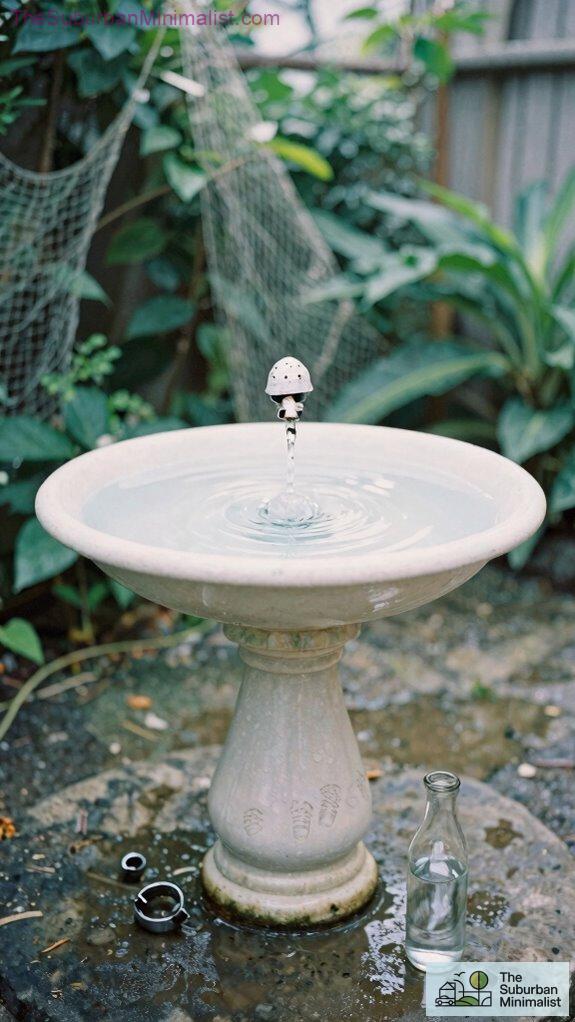
If a birdbath leaks or the spray jets misbehave, I’ve learned that quick tweaks beat a full redo any day. I jot tiny fixes between design sketches, because innovation loves a fast win.
A chipped faucet head, a loose hose clamp—ta-da, drip stopped, drama avoided. Additionally, understanding the importance of water quality helps ensure that the water remains calm and inviting for the birds.
Pollution prevention matters here; I swap plastics for glass, clean with gentle solutions, and observe how birds react to calmer water.
Predator deterrence matters, too—slender netting and discreet spikes keep curiosity from becoming trouble.
Have you noticed how small changes invite bigger, calmer visits? This is why I created this website The Suburban Minimalist. Emphasizing minimalist collection, I encourage decluttering to better appreciate the remaining elements.
Smart Irrigation System Needed
Smart irrigation isn’t just about watering plants; it’s about cutting waste while keeping our terrains living and lush. I admit, I love tech that respects soil and schedule. A smart controller learns patterns, but I still tweak—Garden pruning becomes smarter when timing pairs with growth, not guesswork.
Seasonal planting cues guide my zones, saving water and mood. Do you notice how tiny sensors tell us when roots are thirsty? I sip tea, think of quiet rain, and plan with intention. This approach echoes why I created this website The Suburban Minimalist, a little guide for thoughtful, connected care. Using soil moisture sensors helps optimize watering and reduce runoff, reflecting the importance of smart irrigation techniques that optimize resource use.
Drip Irrigation for Native Grasses
Wouldn’t it be nice if we could water just what our native grasses need, without turning the lawn into a swamp?
Wouldn’t it be nice to water native grasses precisely, avoiding swampy lawns?
I’ve learned drip irrigation for native grasses saves water and supports subtle textures in our yard. We balance beauty with efficiency, choosing Water feature materials that look effortless yet perform.
I track maintenance scheduling like a small ritual, not a chore, so plants thrive without guesswork. Here’s how I approach it:
- Pick targeted emitters and driplines
- Adjust pressure and emission rate
- Zone by zone watering
- Mulch to reduce evaporation
- Regular seasonal checks for optimal efficiency
Focusing on decision fatigue helps me keep choices simple and intentional, ensuring consistent care with less mental strain.
Stone Koi Pond
The Stone Koi Pond sits at the edge of my garden like a quiet observation point, and I’m drawn to the way its ripples catch the afternoon light. I crave something playful yet purposeful, a stone sculpture that breathes. Water circulation keeps the surface lively, inviting little conversations with passing breezes. Engaging with this emotional attachment to objects creates space for emotional healing and growth.
A well-crafted concrete bird bath can also serve as a top concrete bird baths focal point, thriving in a minimalistic landscape. I tell friends it’s a pause button, a place where design and patience meet. Do you hear the subtle clink of koi and stone, the soft lap of water? This is why I created this website The Suburban Minimalist, to invite thoughtful, artful living. Isn’t simplicity quietly revolutionary, after all?
Suburban Minimalism
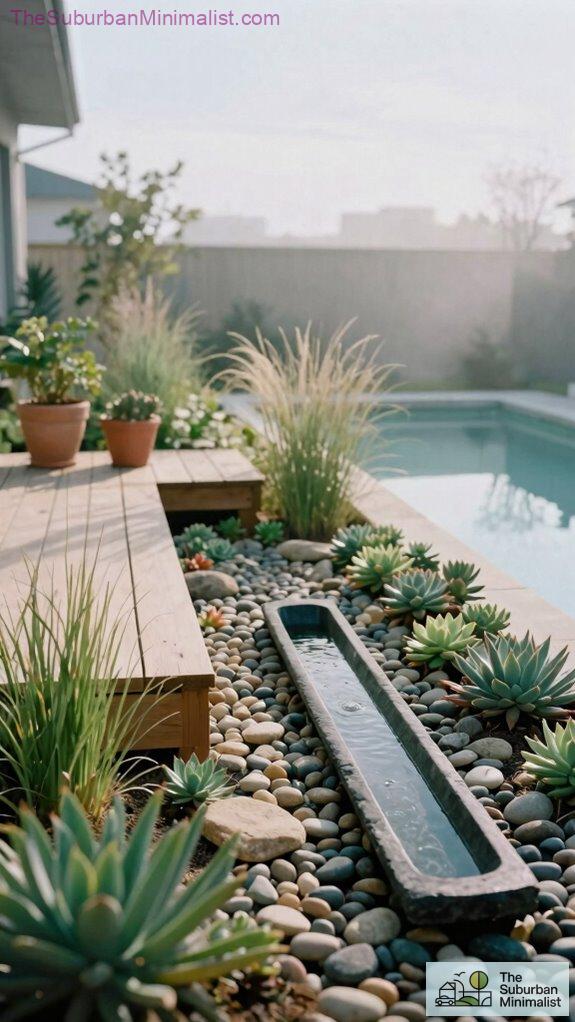
Suburban Minimalism feels like a quiet conversation I keep having with my own home. I ask you, what if calm can host color, not crowd it? I curate spaces through urban landscaping and seasonal plantings, letting each season tell a different story. Integrating boho minimalist elements can add a relaxed, artistic touch to the overall aesthetic.
Choosing sustainable and eco-friendly natural materials can enhance the subtle luxury of your design. Do you hear the water whispering from a discreet feature, guiding attention without shouting? I write to you because this design mindset fits a busy life, balancing beauty and ease.
- Urban landscaping ideas that stay playable year-round
- Seasonal plantings for progressively shifting texture
- Quiet water accents with maximal effect
- Modular storage that hides clutter
- Sustainable materials with subtle luxury
FAQ
How Large Should a Water Feature Be for Bird Safety?
I’d keep a bird-friendly water feature at a moderate depth, around 6–12 inches, to balance Sunlight exposure and Predation risks, creating safe access while still encouraging wildlife to sip, bathe, and stay curious about innovation.
Which Filtration Options Minimize Maintenance and Attract Birds?
Natural filtration minimizes maintenance and attracts birds best. I’ve found combination biofilters and mechanical skimmers, with natural filtration plus careful water chemistry to invite feathered visitors, while avoiding chemical treatments that disrupt delicate avifauna.
Do Birds Prefer Moving or Still Water in Minimal Gardens?
Yes, birds prefer moving water for stimulation and safety, though still water can attract different species. I’d design a Bird habitat with gentle Water movement—a micro-jet rill and shallow, sun-warmed basins for year-round attraction and innovation.
What Materials Resist Algae in Outdoor Water Features?
Algae resistant materials beat slick surfaces with stubborn vigor, just as Eco friendly water treatments harmonize. I blend durability and beauty, choosing algae resistant materials and Eco friendly water treatments to keep outdoor features innovatively pristine and quietly bold.
How to Seasonally Adjust Features for Year-Round Birds?
I seasonally adjust features for year‑round birds by integrating bird friendly plants and seasonal lighting, inviting migration-friendly shrubs in spring, UV‑safe LEDs in winter, and modular water moves that keep feathered visitors curious and energized.
Summary
I’m drawn to water’s quiet grammar, where a simple fountain becomes a gentle punctuation mark in my days. Isn’t that the trick—balance juxtaposed with motion, a pebble basin mirroring a sleepy garden and a white oak bench watching over it all? If you’ve felt overwhelmed, consider this: calm isn’t absence of sound, it’s the rhythm you invite. That’s why I built The Suburban Minimalist—to make spaces breathe, one serene drop at a time.