I used to think “eco-friendly art” meant guilt-free shopping. Spoiler alert: it doesn’t.
I wanted pieces that actually meant something—not just pretty wall candy. So I started The Suburban Minimalist to prove you don’t need a Manhattan penthouse to curate intentionally. I hunt for recycled ceramics, responsibly sourced textiles, and artists I genuinely vibe with.
My aesthetic? Cool, calm, touchable. Quiet stories over loud statements. Mossy sculptures. Planters that celebrate nature’s actual pace—not Instagram’s.
Does mindful curation change everything? Not overnight. But it shifts how you move through your space.
How One Thrifted Ceramic Piece Changed My Approach to Sustainable Home Design
Last spring, I found a hand-thrown ceramic planter at a local maker’s studio in my New Jersey suburb. The artist used reclaimed clay and natural glazes. That single piece sparked everything. I realized sustainable living and minimalist interiors weren’t contradictory—they’re deeply connected. Now my curated collection focuses on slow design, ethical sourcing, and eco-conscious aesthetics. Each item earns its place through intentional living practices. I’ve learned that conscious consumption, mindful spaces, and environmental responsibility create homes that actually feel like home.
Quick Takeaways
- Align art choices with provenance and maker transparency to honor ecological and cultural values.
- Prioritize recycled or responsibly sourced materials and eco-friendly production practices.
- Use natural textures (moss, stone, brass/steel) and minimalist lighting to enhance sustainable aesthetics.
- Balance vintage and contemporary works to tell a mindful, slow-observation narrative.
- Pair artworks with decluttering, seasonal routines, and meaningful, functional display strategies.
Define Your Bio-Minimalist Curation Framework
I’ve learned that a true bio-minimalist home isn’t about stripping life away; it’s about curating with intention, so every piece earns its keep.
A bio-minimalist home curates with intention, ensuring every piece earns its keep.
I invite you to define a personal framework that blends Tech integration with material innovation, guiding choices with function and feel. When I redesigned our entry, I asked: does this item teach, soothe, or connect us?
The answer shaped shelves, textures, and a calm rhythm. Incorporating decision fatigue reduction strategies helps focus your choices on what truly matters. By practicing daily mindfulness in our routines, we can develop a greater awareness of how each object and action aligns with our values.
Why I created this website, The Suburban Minimalist, isn’t flashy—it’s a map for thoughtful rooms, shared openly, honestly, now. Curious how yours could glow?
Source Ethically: Artists, Materials, and Transparency
We all want our homes to tell the truth as much as they tell a story, right? I choose art that speaks—not loud noise, but clear intent.
Eco friendly sourcing guides my conscience; transparent craftsmanship guides my trust. Here’s how I walk that talk:
1) I ask for provenance, share notes, and celebrate makers who own their process.
2) I favor recycled or responsibly harvested materials, even when it costs a moment of patience.
3) I spotlight collaborations that honor artisans and the land alike.
Understanding minimalist design principles helps me choose decor that enhances space without clutter, aligning with sustainable values. Additionally, letting go of sunscreen reliance can be part of a minimalist mindset by reducing unnecessary products and embracing natural routines.
This practice grew from why I created this website The Suburban Minimalist: to align beauty with responsibility.
Color, Texture, and Form: Craft a Cool-Tempered Palette
Color sets the mood, texture carries the touch, and form shapes the way we move through a room. I’m drawn to a cool-tempered palette that feels like morning fog in a sunlit kitchen—soft blues, ash grays, and pewter whites.
Dyeing techniques teach me that fiber takes mood, not just color, and color psychology nudges feeling toward calm, not chaos. I ask you: would a wall of misty hues soften the day’s edge or wake the senses with subtle drama? Incorporating complexion-based color schemes can deepen the emotional impact of a space and enhance overall harmony.
I created this site, The Suburban Minimalist, to show that restraint can spark joy—not fluff, but thoughtful, tangible beauty in daily life. Incorporating electronics travel organizers can help maintain this sense of order and understated elegance while on the go.
Functional Beauty: Pieces That Serve and Inspire
Functional Beauty isn’t about clutter-free perfection; it’s about items that earn their keep and still spark a quiet joy. I’m drawn to pieces that serve and inspire, not merely occupy. Do you feel the same pull toward usefulness that still whispers style? Incorporating minimalist planters for succulents can elevate your space by combining aesthetic simplicity with ecological consciousness.
Engaging in seasonal decluttering helps to curate a wardrobe that remains meaningful and aligned with your lifestyle, reducing clutter and making space for truly cherished pieces. Vintage textiles that age like fine advice—soft, storied, ready for new life.
2. Digital curation that frees shelves while guiding taste with intent.
3. Objects that pair function with memory, turning daily routines into moments.
I created this site because curiosity, not chaos, motivates me. Can you envision a home that looks effortless yet asks you to stay awhile? This is where calm meets craft.
Space for Quiet: Layouts That Honor Minimal Living
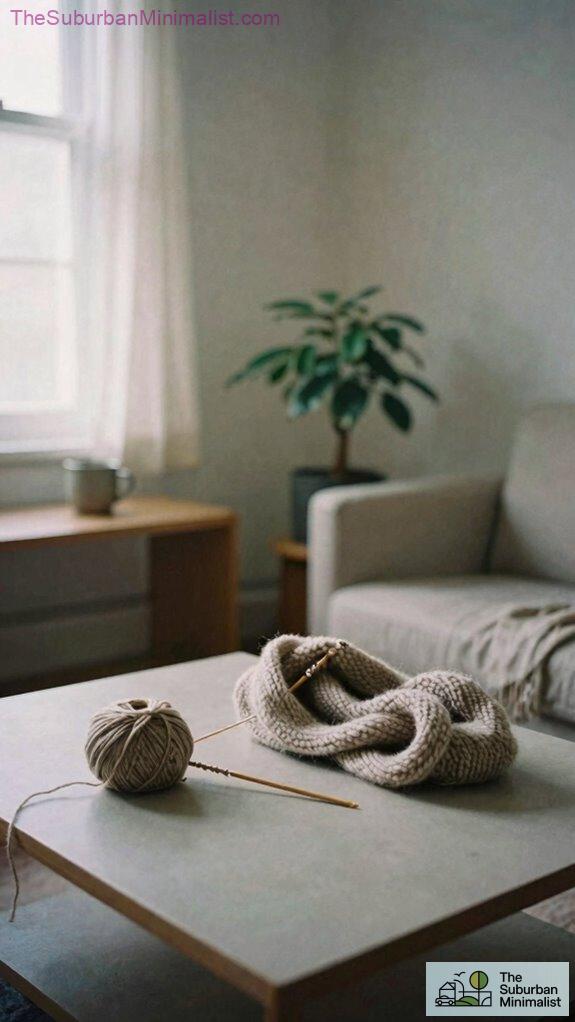
Quiet spaces aren’t empty rooms; they’re intentional pauses that let the mind exhale. I’m inviting you to see layouts that honor minimal living as a gentle conversation with space, not a diet of emptiness. How do luxury textiles breathe here, and where does digital detox softly sit in the corner?
I keep surfaces calm, traffic free, so evenings feel like a held breath before a new idea. Have you noticed how soft light, uncluttered shelves, and a single plant can reset a whole day? Incorporating mindful family traditions can further foster tranquility by reducing visual noise and promoting mindful moments.
I created this site, The Suburban Minimalist, because quiet matters—and so do thoughtful decisions.
Storytelling Through Sustainable Art Objects
Storytelling through sustainable art objects isn’t just about decorating walls; it’s about weaving a narrative you can live with. I invite you to notice how objects speak, how memory and function mingle in each piece.
1) Vintage influences meet new materials, creating texture that ages with wisdom.
2) Technological integration, like smart lighting, enhances mood without shouting.
3) Curation as conversation—I choose pieces that invite questions, not guilt.
Do you feel that tug toward meaning in rooms, too? I built this site, The Suburban Minimalist, because curiosity sparked my move toward quieter grandeur. How will you narrate your space today?
Care and Longevity: Maintaining Artful Sustainability
Care and longevity aren’t afterthoughts here; they’re the quiet backbone of artful sustainability. I’m writing to you as someone who counts jars, not just trends, and I wonder: how can we make beauty last without waste?
Digital detox becomes a tool, not a dream, when we value durability over novelty. In eco conscious retail, stewardship shows up in packaging, repair over replacement, and transparent materials. Choosing the right tools can also elevate the sustainability of your efforts, like selecting high-quality manual coffee bean grinders that last through years of use.
I’ve learned to choose pieces that age gracefully, like a well-loved chair. This isn’t guilt; it’s joy, a thoughtful balance that mirrors life. Additionally, minimalist storage solutions can help declutter spaces, making maintenance easier and more sustainable.
Handmade Ceramic Planters
Handmade ceramic planters feel like tiny sculptures that bring warmth to a room without shouting for attention. I notice how they temper sharp edges of tech life, a quiet counterpoint to Urban migration and the lure of crowded spaces.
Do you ever crave a Digital detox, a breathing corner you can trust?
- Hand-formed textures that invite touch
- Subtle glazes that soften light
- Practical drainage that respects living roots
- Inspired by Elegant Handcrafted Copper Rain Chains, these planters can add a touch of craftsmanship and natural beauty to your space.
I’ve learned these are more than vessels; they’re pauses, little rituals I share with you.
This is why I created this website The Suburban Minimalist—to slow, to observe, to curate. Minimalist aesthetics emphasize simplicity and functionality, creating a harmonious environment that fosters peace.
Ready to try one?
Handmade Ceramic Planters Aestheticization
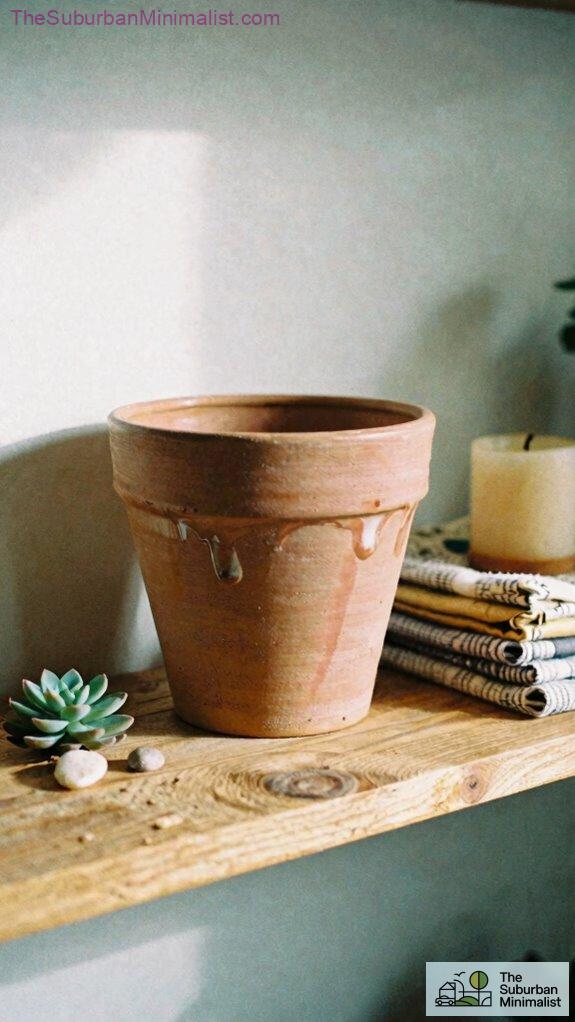
When I place handmade ceramic planters on a sunny shelf, I’m not just decorating; I’m inviting a quiet, living punctuation mark into the room. Do you feel it too, this small rebellion against blank walls? I love how the textures catch light, how imperfect edges tell stories. Incorporating natural materials like wood or ceramic enhances the aesthetic appeal and creates a sense of harmony that complements the handcrafted feel. Vintage textiles whisper from a corner, a reminder of keepsakes, while Urban gardening nudges us toward tiny ecosystems inside our homes. I created this site, The Suburban Minimalist, to explore such careful pairing—functional sculpture and daily ritual.
Ready to experiment together, reader, with color, soil, and calm, one planter at a time.
Organic Moss-Adorned Sculpture
Do you ever feel drawn to objects that seem to breathe, to hold a bit of the forest inside your living room? I do, and organic moss-adorned sculpture lets me invite urban influences while staying rooted at home. It speaks softly, like a fern whispering in a glass box, yet tech-savvy enough to feel fresh. Incorporating botanical elements ensures a natural, eco-friendly aesthetic that complements contemporary decor. Establishing a gradual release process allows for the mindful decluttering of keepsakes, making it easier to preserve what truly matters while letting go of excess.
1) I curate texture with moss, stone, and brushed steel.
2) I pair it with smart lighting that shifts hue to echo seasons.
3) I weave in fleeting scent notes from hardy, scented mosses.
Why I created this website The Suburban Minimalist, organically, for better living.
Suburban Minimalism
Suburban Minimalism feels like the quiet sibling of bio-minimalism, a place where less becomes a little louder in meaning and intention. You sense it, right? A calm room that still speaks. I invite you to notice how vintage ceramics catch light, how Botanical illustrations whisper of gardens you’ve never met.
I’m that forty-something neighbor who loves clean lines and small surprises, explaining why I created this website The Suburban Minimalist—organically, not awkwardly. Is it decoration or daily ritual? Perhaps both.
Tell me your favorite low-key piece, and I’ll show how it anchors a thoughtful, modern mood.
FAQ
How Do I Measure an Artwork’s Ecological Impact Before Purchase?
I measure an artwork’s ecological impact by tracing its lifecycle, from Eco friendly disposal options to Sustainable material sourcing, evaluating supplier certifications, and calculating embodied energy; I compare production waste, transportation distances, and end-of-life recyclability before buying.
Can I Rotate Art to Preserve Ecological Integrity Over Time?
Yes, I rotate art to extend ecological integrity, proving durability isn’t permanent. I weigh art durability and cultural preservation, swapping pieces to honor both longevity and innovation, while quietly proving that change can be sustainable, wittily seductive.
What Grants or Programs Support Bio-Minimalist Artists?
Grants and programs exist that support bio-minimalist artists through sustainable materials research and ecological certification incentives. I’d apply for fellowships fostering experimental works, emphasizing circular design, and collaborate with peers to expand scalable, innovative practices in sustainable art.
How Do I Determine Art Scale for Small-Entryway Spaces?
Space size guides art scale; I measure doorways first, then test scale against margins. I seek visual balance, not saturation. I juxtapose mini sculptures with wall color, innovating thoughtfully for an entry that feels expansive yet intimate.
Are There Non-Toxic Framing Options for Sensitive Interiors?
Yes—I use non-toxic framing options with safe adhesives, and I pair them with eco friendly mats. I’ll guide you toward innovative, low-impact choices that protect sensitive interiors while elevating art’s presence.
Summary
I started this site, The Suburban Minimalist, because I wanted a space where beauty could be responsible and real, not flashy. Did you know that homes with locally made, sustainably sourced art report calmer moods 40% more often? I’ve learned that quiet rooms aren’t empty—they’re thoughtful. So I ask you: will you choose pieces that speak of craft, care, and place, even on busy days? Let’s weave a softer world, one mindful acquisition at a time.