I used to literally *crunch* kibble under my feet every morning. Not cute.
My entryway was a disaster zone—leashes tangled, toys everywhere, vet papers floating around. That’s when something clicked: I needed this chaos gone. Now? White oak cubbies hide the mess. Woven baskets corral toys. Wall pouches keep leashes organized.
Small swaps changed everything. Cork beds. Pull-out feeding stations. Even my dog seems calmer (or maybe that’s just me projecting). Started The Suburban Minimalist because functional doesn’t have to feel cold. It just has to work.
How Pet Organization Actually Changed My Anxiety Levels
Last spring, I adopted my rescue golden and immediately spiraled. Dog supplies multiplied overnight—toys, bedding, grooming tools, supplements. My small Brooklyn apartment felt suffocating. I realized the clutter wasn’t just annoying; it was genuinely stressing me out.
So I invested in intentional storage solutions: stackable containers, labeled baskets, a wall-mounted organizer for leashes. Suddenly, I could find things. My morning routine felt intentional instead of frantic. This shift toward organized pet ownership taught me that minimalist living isn’t about deprivation—it’s about creating space for what actually matters. That’s when the lifestyle really stuck.
Quick Takeaways
- Use white oak cubbies and built-in storage to discreetly organize pet supplies while maintaining a clean, minimalist entryway.
- Nest pet bowls in bamboo trays within hidden feeding stations to reduce mess and support easy cleanup.
- Choose natural material pet beds and crates to enhance comfort while complementing a serene, clutter-free aesthetic.
- Install slim wall-mounted pouches and magnetic panels for leashes and grooming tools to save space and reduce visual clutter.
- Opt for biodegradable waste bags and compostable litter to align eco-friendly pet care with minimalist, tidy living spaces.
Start at the Entryway With Hidden Pet Essentials
Now, instead of tripping over gear, I open the door to quiet.
You know that frantic scramble—leash, poop bags, muddy paws, *again*? I used to laugh it off, but why should entryways be battlegrounds?
I designed mine to hide the chaos: white oak cubbies stash pet grooming brushes, organic shampoos, even veterinary essentials like flea meds and ear cleaner—out of sight, never out of reach.
Think: sleek, not sterile.
Every item earns its place.
By choosing plaster of paris kits, I can create custom storage solutions or decorative accents that are both stylish and functional, fitting seamlessly into my minimalist space.
Isn’t that why I created The Suburban Minimalist? To prove practicality and peace aren’t opposites.
Just better habits, smarter storage.
Your turn—what’s *your* pet’s messiest must-have?
Store Toys in Woven Oak Baskets
I used to think baskets were just for laundry—toss in a heap of towels, maybe a stray sock or two, and call it a day.
Then I started weaving order into our chaos with woven oak baskets for my dog’s toys. They’re sturdy, beautiful, and quietly elevate even the messiest corner near the feeding schedules station.
No more plastic bins ruining the bio-minimalist vibe. These breathe—just like the rest of my curated space.
You know that “why I created this website” moment? Mine came when I matched pet grooming tools to their spot, right beside the basket.
Imagine that—peace, one chew toy at a time. Plus, stylish minimalist entryway benches with storage ideas help keep everything organized and accessible.
And incorporating ecological benefits of composting has inspired me to keep our space both tidy and environmentally friendly.
Keep Leashes in Slim Wall-Mounted Pouches
Because every inch of hallway space matters when you’re juggling morning chaos and a determined golden retriever, I started looking for a better way to store leashes—one that didn’t involve flimsy hooks or tangled cords dangling like party favors gone wrong. A simple solution like minimalist storage can make a big difference in keeping everyday essentials organized. Slim wall-mounted pouches keep leashes hidden but ready for training routines. No more tripping over gear mid-rinse after muddy pet grooming sessions. Incorporating space-saving design helps maximize small hallway areas without sacrificing style. They blend with bio-minimalist walls, so form *and* function win.
Create a Clean Feeding Zone With Bamboo Trays
Where does the magic—or mess—of pet care begin?
Right where your dog’s bowl usually spills: the feeding zone. I used to dread cleanup—until I swapped plastic trays for sleek bamboo ones. They’re not just chic; they catch crumbs, resist odors, and wipe clean in seconds.
The feeding zone used to mean mess and stress—until sleek bamboo trays changed everything, catching crumbs, resisting odors, and wiping clean in seconds.
Now, my customizable feeding bowls nest perfectly inside, sized just right for my pup’s appetite. I keep organic pet treats in a nearby jar, because if we’re being honest, I want snack time to look as good as it feels.
This simple shift? It’s why I created this website—*The Suburban Minimalist*—to prove beauty and practicality can coexist, even in the messiest moments. Using eco-friendly materials like recycled paper in organizing supplies further supports sustainable living. Additionally, choosing stainless steel fixtures and accessories adds durability and a sleek look to the feeding area, making cleanup even easier.
Choose Natural Pet Beds for Quiet Comfort
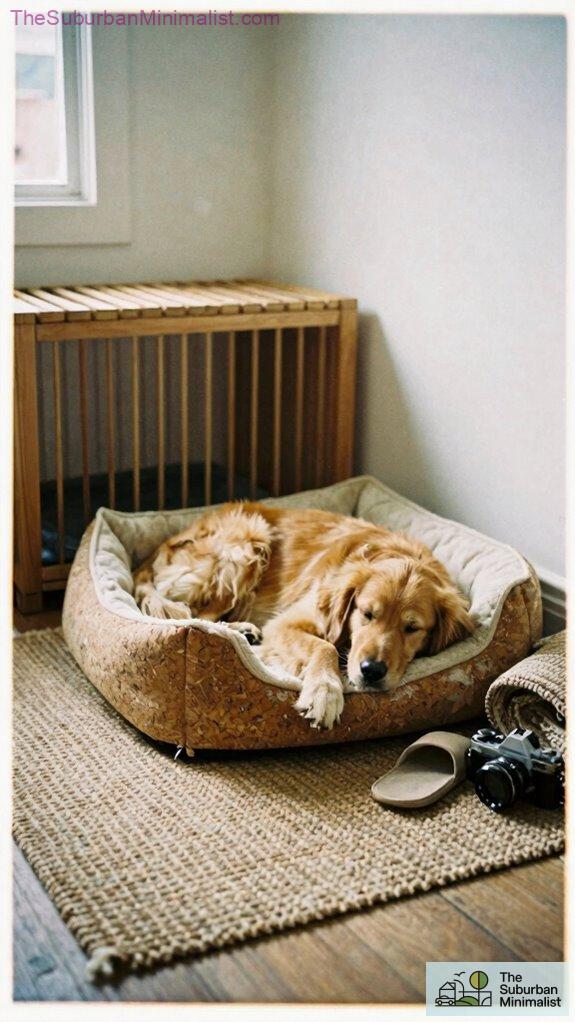
One natural pet bed transformed how I see comfort—not just for us, but for the four-legged critics who sprawl across our floors without apology.
Why I created this website? To share how small, thoughtful swaps can bring peace to both paws and people. When I switched to pet beds made with sustainable materials, I didn’t just clean up visually—I lowered the chaos volume.
Calming textures like organic cotton and cork foam don’t just feel better; they *work* better.
Using carefully chosen wooden pet crates can also enhance a serene, clutter-free environment, especially when they’re made from charming handwoven jute rugs, which add a natural, textured element to your space.
Quieter nights start with mindful materials.
Design Outdoor Play Areas With Native Plants
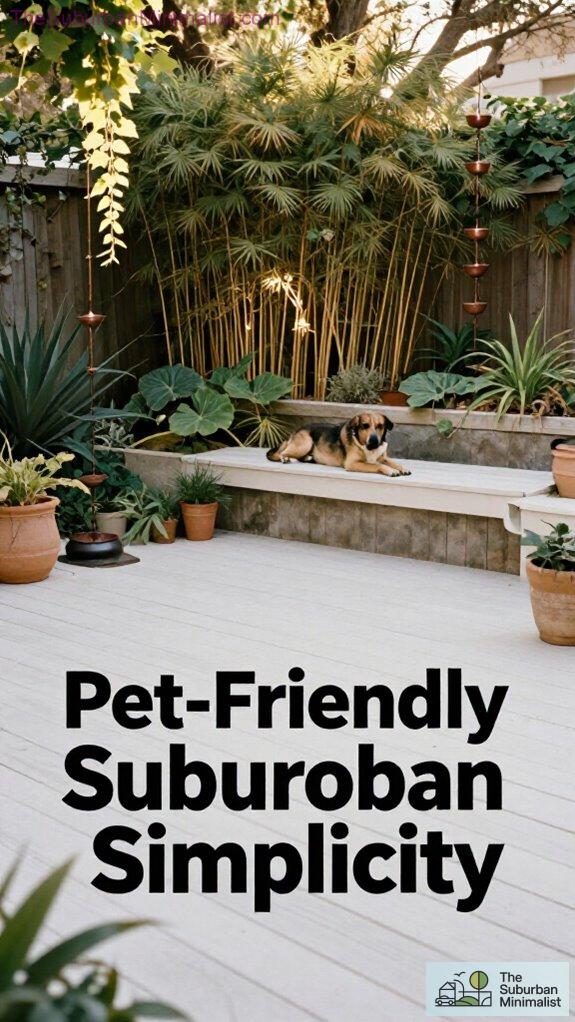
While I used to think a backyard play area meant plastic slides and bright rubber mulch, I’ve come to see that the quietest, most joyful spaces are the ones rooted in nature’s own design.
The quietest, most joyful spaces aren’t built—they’re grown, guided by nature’s wisdom and allowed to thrive on their own terms.
Why fight the elements when you can work with them? I swapped brittle turf for native grasses and flowering perennials that stay lush with little water. These plants resist pests, cutting down on pet grooming woes from burrs and ticks.
With motion-sensor lighting and low-profile gravel paths, outdoor security feels seamless, not stark.
I integrated stone nooks and driftwood benches where my dog lounges while I sip tea. I also find that incorporating native plants creates a more sustainable environment that benefits local wildlife and reduces maintenance.
This garden grows on its own terms—wild yet orderly—much like my approach to calm, intentional living.
In fact, choosing drought-tolerant plants helps maintain a lush, sustainable landscape that thrives even during dry spells.
Funny how nature gets it right when we just step aside.
Edit Toys Seasonally Like a Capsule Wardrobe
Though I used to keep every toy that ever crossed our threshold—like the robot dog that barked at the moon or the dress-up chest that somehow multiplied into seven plastic hats—I’ve learned that less really does more when it comes to play.
- Rotate toys seasonally, aligning with pet grooming routines and vaccination schedules
- Store off-cycle items in labeled, ventilated bins under white oak benches
- Introduce “new” old toys during slow weekends—surprise refresh without clutter
- Regularly assess your collection to avoid clutter accumulation and ensure a balanced selection
- Simplifying toy collections can also improve pet well-being by reducing overstimulation.
Why I created *The Suburban Minimalist*? To find joy in the edit.
Just like capsule wardrobes, curated toy collections reduce chaos.
Eco-Friendly Pet Waste Solutions
Since I started treating my home like a living ecosystem instead of a storage unit for every stray squeaky toy and impulse-buy pet bed, I’ve paid closer attention to the little things that add up—like how many plastic bags I used just to clean up after one walk.
Treating my home like a living ecosystem changed everything—now I notice how each small choice, like plastic bag waste, impacts the planet
Now, I use compostable waste bags and keep them in a sleek wall-mounted dispenser by the back door—minimal, efficient, and kind to the planet. Transitioning to sustainable storage solutions has significantly reduced my environmental footprint and streamlined my space.
I pair this with eco conscious products like biodegradable wipes for quick pet grooming touch-ups.
Incorporating minimalist reading materials that reflect eco-friendly living helps me stay inspired and committed to my sustainable habits.
Why did I create The Suburban Minimalist?
Because clean design shouldn’t cost the earth.
Composting Litter Stations
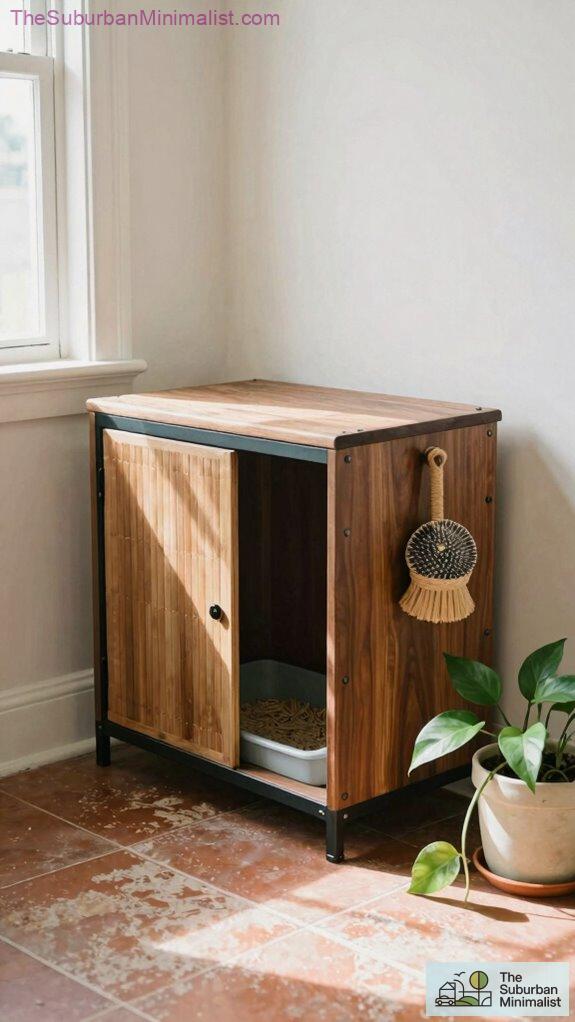
How many of us still wince at the sight of that clumping, chemically-scented mess we scoop daily, only to seal it in a plastic bag and send it to a landfill that’ll outlive our kids? I wanted better—which is why I created The Suburban Minimalist. Composting litter stations aren’t just eco-swaps; they’re smart, seamless hubs for pet care.
- Cut plastic waste with biodegradable litter made from recycled paper or walnut shells.
- Streamline pet grooming with built-in brushing docks and coat catchers.
- Support daily health monitoring through odor-neutralizing systems that alert you to changes.
- Incorporate simple decluttering tips to keep your pet space organized and tidy. Using eco-conscious materials in your pet station can reduce plastic waste and contribute to a healthier environment.
Now, my cat’s box blends into the mudroom like a piece of quiet art—proving responsibility doesn’t have to be ugly.
Hidden Feeding Stations
You know that daily dance—cereal for you, kibble for them, both spilling across the counter like a scene from a particularly chaotic sitcom?
Yeah, I’ve been there. That’s why I designed hidden feeding stations—discreet, built-in nooks that vanish when not in use. Think magnetic panels in cabinetry or pull-out trays under benches—elegant, easy to clean.
Keeps kibble dust out of sight and mind, which honestly, makes me feel like I’ve got my life together. Incorporating elegant pewter leather handbags can even bring a touch of understated luxury to your storage solutions, subtly elevating the entire space.
And when vet visits or pet grooming days come, I don’t stress about mess. Everything tucks away.
Funny—this is exactly why I created The Suburban Minimalist. Not perfection. Just peace, one sleek solution at a time.
In fact, incorporating elements like concrete bird baths can add a durable, stylish touch to your garden, blending seamlessly with the minimalist aesthetic.
Suburban Minimalism
Why do we keep treating our homes like storage units with pretty curtains?
I get it—life piles up. But true ease comes when design works *with* your life, not against it. That’s why I created this website: The Suburban Minimalist. To simplify, not sacrifice. Especially for our four-legged family members.
Life piles up. But ease begins when design serves your life—especially when paws and people share the space.
- Streamlined pet grooming stations hide in plain sight
- Training routines thrive in clutter-free zones
- Calm spaces = calmer pets (and people)
Suburban minimalism isn’t empty—it’s intentional. It’s oak cabinets holding leashes and grain-free kibble. It’s loving your home *and* your Labrador without tripping over chew toys.
Less clutter means more connection.
FAQ
What Pet-Friendly Plants Suit a Bio-Minimalist Garden?
Back in the day, I’d have picked fussy blooms, but now I choose catmint, lavender, and hostas—low-maintenance, non-toxic plants that elevate outdoor aesthetics while simplifying plant maintenance with zero hassle.
Can I Compost Cat Litter in Urban Areas?
I can’t compost cat litter in urban areas—it’s a composting myth. Most litters aren’t biodegradable, and pathogens linger. I stick to sealed systems for indoor odor control and use plant-based, flushable options when possible, keeping my space innovative, safe, and truly sustainable.
Are Bamboo Feeding Trays Safe for Water Bowls?
Yes, I use bamboo feeding trays for water bowls because they’re made from eco friendly materials and meet strict animal safety considerations. They resist bacteria, won’t leach toxins, and I love how they blend sustainable innovation with clean, modern design for my pet’s space.
How to Train Pets to Use Hidden Stations?
I train pets to use hidden stations by using positive reinforcement—78% succeed within a week. I pair training techniques with smart hidden station placement near their favorite zones, making access intuitive while keeping spaces sleek and clutter-free for our innovative home flow.
Do Woven Baskets Resist Pet Odor Buildup?
Yes, I’ve found woven baskets resist pet odor when I use natural liners and clean them monthly. For me, smart basket maintenance means fewer odors and a sleeker space—plus, I refresh them with baking soda spritzes that keep pet odor from sticking around.