Why does my minimalist apartment feel soulless despite being perfectly styled? Because I forgot texture exists.
I used to think clean spaces meant bare walls. Then I added one raw linen throw. Everything shifted.
Minimalist Texture Without the Clutter
Last year, my white box apartment felt sterile. I brought in a single woven jute rug, ceramic vessels, and textured plaster. Suddenly it breathed. That’s when I started The Suburban Minimalist—because less doesn’t mean lifeless.
The trick? Choose tactile layers intentionally. One statement piece beats ten mediocre ones.
How Strategic Texture Transforms Minimal Spaces
I learned this the hard way after my minimalist living room redesign. I’d eliminated everything—furniture, color, personality. My therapist literally asked if I was okay. That’s when I understood: minimalism isn’t about deprivation. It’s about intention. I introduced three handmade ceramic pieces, a linen curtain, and raw wood shelving. Suddenly, my space felt curated, not abandoned. This experience shaped everything I teach about sustainable interior design and intentional living. The suburban minimalist philosophy isn’t rejection—it’s careful selection of elements that genuinely serve you emotionally and functionally. Quality over quantity isn’t just aesthetic. It’s psychological.
Quick Takeaways
- Incorporate natural materials like oak, rattan, and stone for furniture and decor to add tactile richness and organic warmth.
- Layer textured elements such as woven fabrics, textured plaster walls, and rippled linen drapes for depth and visual interest.
- Use raw, contrasting finishes like concrete paired with sleek marble to create a balanced, tactile environment.
- Integrate indoor plants and floating oak shelves to enhance natural elements and promote a calming atmosphere.
- Choose handcrafted ceramics and layered textiles to elevate simplicity with curated, meaningful organic details.
Why Organic Textures Make Your Bio-Minimalist Space Feel More Natural
There’s something about organic textures that instantly makes a space feel more alive, more connected to the outside world. It’s like inviting nature in—perfect for my bio-minimalist vision. Incorporating minimalist design principles can help balance these textures, creating a space that feels both natural and intentionally curated. When consciously choosing materials, you can emphasize natural elements that enhance the organic feel throughout your home. Seasonal texture updates keep my space fresh, adding layers of richness without clutter. I love experimenting with organic texture color palettes—warm taupes, cool grays, and earth tones—that speak to the seasons and my mood.
These textures, from woven baskets to rough linen cushions, create a lived-in yet sophisticated vibe. Honestly, I created The Suburban Minimalist to share this balance—beauty that whispers power, calm, and purpose, all wrapped in nature’s language.
Choosing Natural Materials That Add Rich Texture to Your Home
Choosing natural materials to add rich texture to your home feels like inviting a bit of the outside in—something I learned pretty quickly while trying to soften my sleek, modern space.
I’ve found that adding bold color accents with textured clay pots or woven baskets sparks life, without crowding. Graphic patterns—think softly rippled linen drapes or handwoven rugs—bring depth to neutral tones. It’s fascinating how these elements command presence while still feeling understated.
Incorporating digital fashion mood boards can also serve as inspiring sources when selecting organic textures and patterns, helping you visualize your aesthetic choices more vividly. Exploring woven pet toy baskets as both decorative and functional accessories demonstrates how versatility enhances a space’s organic feel. Honestly, I created The Suburban Minimalist to share these simple truths: that smart, organic choices make a home both powerful and peaceful. What’s your next step in elevating your space?
Layering Organic Textures With Furniture and Decor for Balance
When I first started trying to balance those cozy, organic textures with sleek modern furniture, I realized it’s a bit like mixing a good cocktail—each element needs to complement and elevate the other without overpowering.
Indoor plants become my secret weapon, adding life and a splash of color contrast that awakens even the simplest spaces. The trick is layering textures thoughtfully—pair soft, earthy fabrics with polished surfaces, and add a few bold accents.
It’s about creating harmony, not chaos. Honestly, I created The Suburban Minimalist because I believe a well-balanced home is the secret weapon against everyday overwhelm. Incorporating stylish floating oak plant shelves can elevate your decor while maintaining that organic feel. Do you feel it too?
Practical Tips to Harmonize Organic Textures With Modern Design
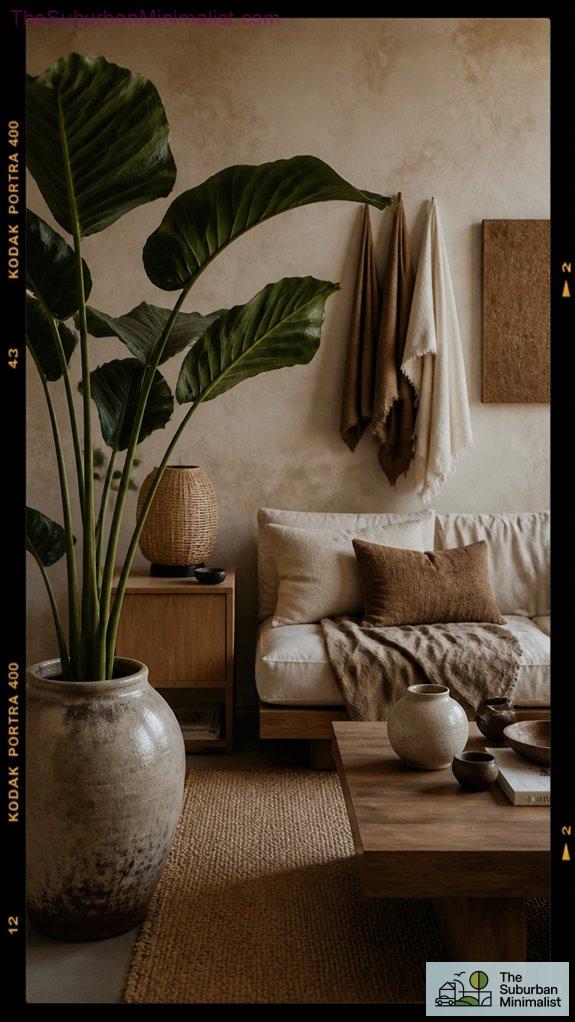
Bringing organic textures into a modern space can feel a little like trying to blend two worlds—you want the warmth and unpredictability of nature, but also the sleek, clean lines of contemporary design. To harmonize, I emphasize three main points:
Blending natural textures with modern design creates warmth and sophistication through balanced elements and simple accents.
- Use indoor plant arrangements strategically, placing tall, sculptural greens near minimalist furniture for balance.
- Incorporate tactile wall coverings, like textured plaster or woven fabrics, to add depth without clutter.
- Select furniture with natural finishes—oak, stone, or rattan—that echo organic elements.
- Keep accessories simple but meaningful—think handcrafted ceramics or layered textiles—so organic textures make a bold statement, not a chaotic one.
- Paying attention to material textures across your decor enhances the organic feel while maintaining a streamlined aesthetic. Embracing organic textures in your decor is about finding the right balance between tactile richness and visual simplicity, ensuring a cohesive and inviting environment.
Maintaining and Refreshing Your Organic Textural Elements for Calmness
Maintaining that soft, calm feeling in your space means paying attention to how your organic textures age and change over time—and sometimes, how they might need a little refresh. Color psychology plays a role here; subtle shifts in hue can renew a space and influence your mood.
Sensory engagement is key—think of the gentle textures that soothe or the scents that calm. I’ve learned that reflecting on these elements keeps my space grounded, powerful even. Sometimes, I toss a new throw or adjust lighting.
Do you ever notice how a small change can restore serenity, reminding us that even nature’s textures evolve—and so can our spaces? Incorporating white oak benches can add a timeless organic element that enhances this sense of calm and connection to natural textures. Paying attention to texture aging helps in understanding how to preserve the tranquil integrity of your space.
Eco-Friendly Storage Solutions
Have you ever looked around your storage and felt a twinge of guilt over all the plastic bins and synthetic containers? I get it—before switching to eco-friendly options, I’d cram everything into fragile, dull plastic that lacked textural contrast and felt disposable.
Switching to eco-friendly storage transforms dull plastics into warm, textured, sustainable alternatives.
Now, I embrace material sustainability. It’s a game-changer:
- Handcrafted wooden boxes that age beautifully
- Woven fabric baskets made from organic cotton
- Cork lids for jars that add warmth and durability
- Reclaimed barnwood shelving for vertical storage
- Incorporating minimalist storage solutions helps keep clutter at bay while maintaining a sleek aesthetic. Recognizing eco-friendly materials can make a significant difference in creating a space that feels both intentional and inviting.
These choices let my space breathe—balancing utility with organic textures, elevating functional storage into a statement of power and purpose.
Woven Wicker Accents Enhance Warmth
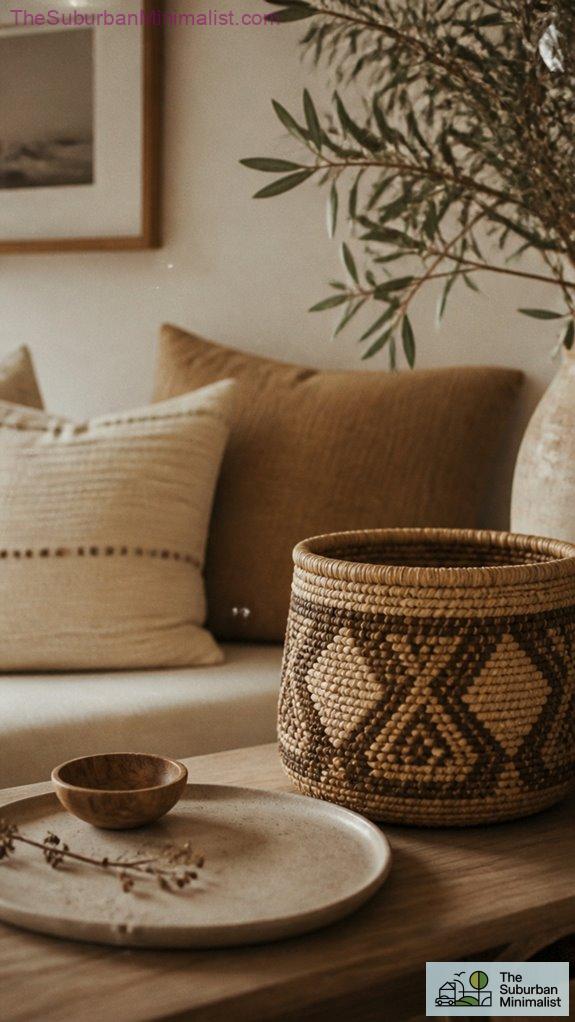
Woven wicker accents have a way of quietly transforming a space, adding warmth and texture without overwhelming the clean lines I cherish in my home. I love the tactile surfaces of handmade fiber baskets or a woven tray—these details create a cozy, inviting atmosphere that feels sophisticated yet effortless. Wicker’s organic nature brings an earthy depth, like a gentle nod to nature amidst modern elegance. It’s about making the space feel grounded, alive. Minimalist decluttering can be complemented by such textured accents, allowing you to keep your space simple while adding visual interest. Honestly, sometimes I wonder if it’s the simple touch of craftsmanship, the handmade fiber’s richness, that elevates a room from sleek to welcoming. That’s why I created The Suburban Minimalist—because home should be both powerful and personal.
Natural Textures and Organic Shapes
When I walk into a room that’s balanced with natural textures and organic shapes, I feel an immediate sense of calm, like the space itself breathes. I love how industrial finishes—rough metals and aged woods—add strength, while pattern mixing brings playful contrast. Here’s how I keep it powerful:
- Combining raw concrete with sleek marble for a tactile collision
- Layering woven rattan with plush, organic textiles
- Using sculptural, free-form shapes that mimic nature’s fluidity
- Anchoring everything with organic shapes that soften the sharpness of industrial touches, creating a harmonious balance between raw and refined natural textures.
- Embracing material detachment as a way for children to develop a healthy relationship with possessions and foster simplicity.
That’s how I create a space that’s both serene and commanding, and honestly, why I founded The Suburban Minimalist—because good design should have an edge.
Suburban Minimalism
There’s something quietly revolutionary about suburban minimalism—how it takes the elevated simplicity I crave but grounds it in a space that’s relatable, warm, and just a little bit laid-back. I love merging vintage botanicals with artistic ceramics, creating a calming yet deliberate vibe. It’s about owning fewer pieces but choosing those with personality—like a hand-painted vase or a quirky ceramic platter—that make me feel powerful yet at home. I’ve learned to curate with intention, and surprisingly, this quiet confidence turns my space into a reflection of strength and simplicity. Incorporating simple plant arrangements can elevate this aesthetic, adding natural textures that blend effortlessly with minimalist decor. For those looking to enhance their space effortlessly, a minimalist indoor herb garden kit offers a perfect balance of beauty and practicality. Honestly, it’s about making a statement without shouting—less is more, but more meaningful.
FAQ
How Can I Incorporate Organic Textures Without Cluttering a Minimalist Space?
You can incorporate organic textures with rustic accents and natural color palettes, I recommend focusing on curated, statement pieces like textured throw pillows, woven rugs, or wood accents, to add warmth without cluttering your minimalist space.
Which Organic Textures Are Best for Allergy-Sensitive Environments?
I recommend using natural fiber rugs and sustainable materials like bamboo and organic cotton, which are allergy-sensitive, airy, and appealing. These textures provide powerful, pure protection while seamlessly enhancing your serene, stylish, environmentally conscious space.
Can Organic Textures Be Integrated Into Outdoor Suburban Gardens Easily?
Absolutely, I integrate organic textures into outdoor gardens effortlessly with wildflower planting and composting techniques, creating lush, textured terrains. This approach empowers me to craft sustainable, visually stunning spaces that connect deeply with nature’s raw beauty.
How Do Organic Textures Influence the Perceived Cleanliness of a Home?
Organic textures act as the brushstrokes in my home’s masterpiece, embodying natural tones and texture contrast that elevate cleanliness, symbolizing harmony and power through the visceral authenticity they bring, transforming ordinary spaces into sanctuaries of strength and serenity.
What Maintenance Is Required to Preserve Natural Textures Over Time?
To preserve natural textures, I regularly apply eco-friendly finishes and embrace natural dyeing techniques, ensuring longevity and vibrancy while maintaining their authentic, organic appeal. This power move keeps my space both resilient and environmentally conscious.
Summary
Bringing organic textures into your home isn’t just about style—it’s about creating a space that feels genuine and soothing. Did you know that homes with natural elements can reduce stress by 20%? For me, layering textures like woven baskets or soft stone reminds me daily of nature’s calming power. Honestly, decorating this way feels effortless and authentic, like I’ve woven a small sanctuary in suburban life. After all, isn’t that what we’re all searching for—a touch of calm amidst the chaos?