I was doom-scrolling at 2 AM again. Again.
My NYC apartment felt smaller each night—cluttered nightstands, three phones buzzing, my brain basically static. Something had to give. So I got ruthless. Stripped my bedroom down to essentials. Real sheets. Real quiet. Suddenly? I slept.
That’s when The Suburban Minimalist happened. I realized peace isn’t trendy—it’s boring stuff done right.
Ready to actually rest?
How Decluttering Your Bedroom Actually Changes Your Sleep Habits
Last spring, I couldn’t sleep for weeks. My bedroom looked like a Target exploded—clothes piled everywhere, skincare products covering every surface, phone chargers creating this web of chaos. I finally did a brutal purge. Kept my bed, nightstand, one lamp. That’s it.
My sleep improved immediately. No visual overwhelm. No decision fatigue before bed. I learned that intentional bedroom organization isn’t about minimalist aesthetics—it’s about nervous system regulation. When your sleep environment is calm and clutter-free, your cortisol drops. Your racing thoughts settle. Creating this intentional space taught me that sustainable living and better rest aren’t separate goals. They’re connected.
Quick Takeaways
- Design sleep spaces with natural materials like linen, eucalyptus silk, and white oak to enhance comfort and connection to nature.
- Eliminate screens and digital distractions from bedrooms to reduce mental stimulation before bedtime.
- Use layered, warm ambient lighting with dimmers to support circadian rhythms and create a calming atmosphere.
- Adopt suburban minimalism by curating intentional, clutter-free environments that balance warmth and simplicity.
- Establish screen-free bedtime rituals like journaling, herbal tea, and diffusing lavender to signal restfulness.
Fix Screens First
While I used to believe that a fresh coat of paint or a new set of throw pillows could fix what ailed my space, I’ve learned the hard way that no amount of decor can mask the chaos of unmanaged screens.
Isn’t it funny how we’ll buy matching coasters but ignore the glowing devices piling up on our nightstands? Interestingly, cluttered screens and devices often contribute to a sense of chaos similar to overflowing closets, making it hard to relax.
I started my screen detox after realizing I was checking work emails like a slot machine addict—no wins, just spins. A simple digital declutter changed everything: I deleted unused apps, banned tablets from the bedroom, and set phone-free Sundays.
Funny how peace isn’t found in a candle, but in silence. That’s partly why I created this website—The Suburban Minimalist—not to sell serenity, but to keep myself honest.
Fostering mindful family traditions can also help bring everyone together away from screens and devices, encouraging meaningful connections. Additionally, decluttering physical spaces like worn-out shoes and boots can reduce visual distraction and promote a calmer environment.
Use Natural Materials to Boost Sleep
Because my bedroom used to feel like a charging station with a bed shoved in the corner, I started paying attention to what actually helped me sleep—and spoiler: it wasn’t the blue light of three devices blinking from my nightstand.
My bedroom felt like a charging station with a bed in the corner—turns out, sleep thrives when screens don’t.
Now? I’ve gone full bio-minimalist, and wow—what a difference natural materials make.
- Organic textiles like linen and eucalyptus silk sheets that breathe with me
- A white oak bed frame that looks like it grew from the floor
- Natural lighting through sheer, unbleached curtains
- Felt wall tiles for soft sound absorption
- A ceramic diffuser whispering lavender into the dark
Who knew nature was the ultimate sleep tech? This is why I created The Suburban Minimalist to share these quiet revolutions, especially as natural materials contribute to a healthier sleep environment. Incorporating sustainable and eco-friendly choices can further enhance the calming atmosphere and reduce environmental impact.
Control Light for Better Sleep Cycles
If your bedroom still has blackout curtains that feel like they’re holding a hostage situation, you’re not alone—I used to sleep like I was training for a cave expedition, totally cut off from sunlight, seasons, or basic circadian logic.
But here’s the shift: I now layer ambient lighting with smart dimmers and sheer linen shades that welcome dawn.
Blackout curtains? I reserve them for weekend resets, not nightly ritual.
Why I created this website, *The Suburban Minimalist*, was to explore these small, joyful tweaks—like syncing light to your body’s rhythm instead of fighting it.
Natural light in the morning, warm ambient lighting at night—simple, right? Your circadian rhythm will thank you.
Keep Sleep Surfaces Clutter-Free
Now, my sleep surface looks like a spa menu compared to the junk drawer it used to be: one ceramic diffuser, a paperback, and an analog wooden clock.
Why did I create The Suburban Minimalist? Because I wanted calm, not clutter.
- I swap chaotic corners for snug linens in calming colors
- I ban phones (and guilt) from my nightstand
- I use only what serves rest or ritual
- I store extras in hidden oak trays
- I let my bed breathe—no piled pillows or “just-in-case” throws
Less clutter means my mind settles faster.
You ever notice how a tidy sleep surface feels like a deep breath?
Mine finally does.
Optimize Airflow and Scent for Rest
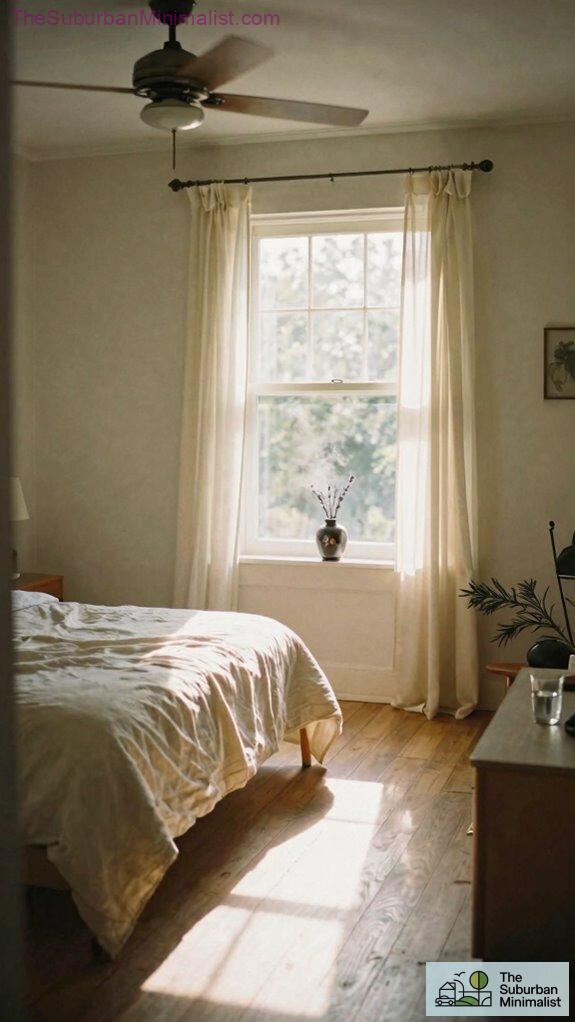
When I finally stopped treating my bedroom like a storage unit for my daily stress, I realized rest wasn’t just about turning off the lights—it was about letting the air move and the scents speak.
You ever notice how stale air makes your mind race? I did. That’s why I prioritized airflow optimization—cracking windows, adding a ceiling fan with reverse cycle, and ditching heavy drapes.
Stale air fuels a restless mind. I cracked windows, installed a reverse-cycle fan, and let go of heavy drapes—suddenly, my room breathed with me.
Incorporating minimalist luxe elements into my space helped create a calming environment that promotes better sleep.
For aromatherapy relaxation, I reached for a ceramic diffuser with lavender and cedar—scents that ground, not overwhelm.
Funny how clean air and quiet smells made me create *The Suburban Minimalist*—a space where design meets calm. Who knew air quality could impact how well you sleep?
Build a Screen-Free Bedtime Routine
Because I used to scroll until my eyes burned—half-watching true crime docs while propped up on pillows like some sad urban recliner—I get why breaking up with screens feels impossible.
But here’s the quiet truth: real rest starts when the blue light dies.
I built bedtime rituals that act like sleep triggers, soft signals telling my brain it’s safe to surrender. That’s why I created this website—*The Suburban Minimalist*—to share how small shifts spark big calm.
Try these:
- Sip herbal tea from a favorite ceramic mug
- Journal three wins from the day
- Flip through a tactile poetry book
- Wind down with a wooden-handled crossword pencil
- Set a lavender-scented ritual with ceramic diffuser
- Incorporate minimalist decor elements that create a calming space for sleep
- Remember that practicing material detachment can help children develop healthier relationships with their possessions, encouraging a peaceful environment that promotes better sleep.
Peace isn’t found. It’s designed.
Make Your Bed a Sleep-Ready Zone
It starts with intention, not renovation.
I used to pile my bed with decorative pillows—eight, maybe ten—until I realized I wasn’t curating a vibe, I was staging a barricade. Now, I keep just two: one for form, one for function. The rest? Stored out of sight. Because real innovation isn’t in what you add, but what you *allow*.
I traded excess for bedside plants instead—small, quiet aloe and snake plants that purify air and calm my gaze. Incorporating minimalist design promotes a clutter-free environment, which can enhance sleep quality. Letting go of sentimental items can also create a more peaceful space, allowing you to focus on what truly brings joy and calm to your life.
Why I created this website, The Suburban Minimalist? To remind us: a sleep-ready zone isn’t about perfection. It’s about presence.
Are yours breathing with you—or for show?
Living Art Installations
My bed used to double as a photo shoot set—fluffy pillows, draped throws, the whole magazine spread—but the second I started treating it like a real place I actually sleep, everything changed.
Now, my bedroom feels like a gallery of calm. I swapped clutter for *living sculptures*—air plants in ceramic cradles, a slow-growing moss wall that breathes with me.
Paired with warm *ambient lighting*, they turn nightfalls into moments of wonder.
Why did I create The Suburban Minimalist? For nights like these.
- Living sculptures that filter air and anxiety
- Ambient lighting on dimmers, not switches
- Zero tech after 8 PM
- Walls in soft earth tones
- A single rotating art piece—no more visual noise
Finding closure through possessions offers a way to release emotional burdens associated with personal items and embrace simplicity.
Kitchen No-Tech Policy

When I finally kicked my smart speaker out of the kitchen, I swear the room exhaled.
Hear me out—what if this space wasn’t for updates, alerts, or awkward voice commands? I turned mine into a true tech free zone, where the only “assistant” is my pour-over dripper.
No more screens. No more pings. Just the sizzle of onions, the scrape of a knife. That’s my version of a digital detox—simple, radical, real.
Why I created *The Suburban Minimalist*? Because peace isn’t built into most smart homes. Mine just works—quietly. I’ve also pared down my collection of beauty products to focus on minimalism in beauty, which helps reduce clutter and decision fatigue.
In fact, I even replaced my ordinary kitchen benches with Elegant White Oak Benches to reinforce the calm and minimalist aesthetic.
You in?
Smartphone Sunset Ritual
Because I finally stopped pretending I could scroll my way into relaxation, I started building a real wind-down ritual—one that doesn’t end with me blinking at a glowing screen at midnight like I’ve lost the plot.
Now, my phone gets docked by 8 p.m., making room for a true meditation practice and a clutter-free sleep environment. Simplifying my evening choices helps reduce decision fatigue and promotes better sleep.
Wondering how to reclaim your nights? Try this:
- Charge your phone outside the bedroom
- Sip herbal tea from a handmade ceramic mug
- Light a beeswax candle
- Journal for five minutes
- Use a guided meditation app—then put it away
Funny how stylish pewter leather handbags can be replaced by simplicity and intention.
That’s why I created this website: The Suburban Minimalist
Peace isn’t downloaded—it’s designed.
Suburban Minimalism
I used to think minimalism meant clearing everything out, going so bare it felt like living in a lab.
But now? I crave warmth, flow, *life*.
Suburban minimalism isn’t about lack—it’s about smart abundance.
Think architectural integration that guides light and movement, blending indoor calm with outdoor rhythm.
We’re crafting urban privacy not with fences, but with intention: a copper rain chain here, a floating oak shelf there.
By thoughtfully limiting seasonal clothing, I ensure I wear only what truly serves my style and needs—and I don’t clutter my wardrobe with infrequently worn pieces. Infrequent wear becomes an opportunity for mindful decision-making rather than clutter accumulation.
Applying seasonal decluttering techniques helps me assess which garments I genuinely need and love, ensuring my wardrobe stays streamlined and functional.
Why I created *The Suburban Minimalist*? To prove quiet spaces can pulse with personality.
Your home shouldn’t silence you—it should sync with you.
Isn’t that the innovation we really want?
FAQ
Can Bio-Minimalism Improve Sleep for Light-Sensitive Individuals?
Yes, bio-minimalism improves sleep for light-sensitive individuals by optimizing your sleep environment. I reduce light sensitivity with blackout bamboo shades, felt wall tiles, and eucalyptus silk sheets—innovative elements that harmonize nature and design for deeper, uninterrupted rest.
Do Copper Rain Chains Affect Nighttime Ambiance in Gardens?
Yes, I’ve found copper rain chains elevate nighttime garden aesthetics by merging with soft outdoor lighting, creating shimmering focal points. They add ambient reflection without glare, enhancing the sensory calm of my bio-minimalist space while supporting innovative, low-impact design that feels both modern and timeless.
Are Wool Dryer Balls Safe for Linen Sleepwear?
Yes, I use wool dryer balls with linen sleepwear—they’re safe and work great with eco friendly detergents. They soften allergy friendly fabrics naturally, reduce drying time, and eliminate static, all while enhancing breathability. You’ll love how they maintain fabric integrity over time, too.
How Do Acid-Free Boxes Preserve Sentimental Sleep Items?
I use acid-free boxes to protect sentimental sleep items because they prevent yellowing and deterioration. These preservation techniques guarantee memory preservation for generations, blending innovation with care in how I store cherished textiles and heirlooms.
Do Smart Door Locks Interfere With Bedroom Tranquility?
No, smart door locks don’t haunt my bedroom like old creaky bolts; they enhance peace. With no noise disruption and fortified security vulnerabilities, I sleep tight—modern guardianship, silent and sharp, keeps my sanctuary secure without a whisper.