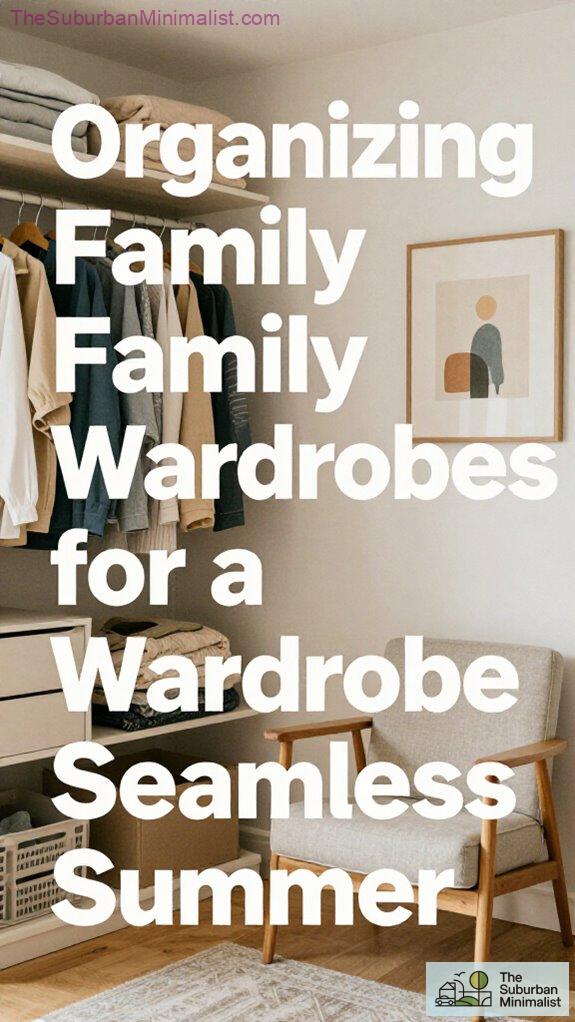
I used to think my kids needed every toy ever invented. Spoiler alert: they didn’t.
Now I’m helping families ditch the chaos. We’re talking kid-sized furniture, actual boundaries on stuff, and those sliding storage benches that changed my life. My kids? They actually help organize now. Wild.
This is why I built The Suburban Minimalist—because calm rooms matter. Because breathing room matters.
How I Stopped the Toy Avalanche: A Real Minimalist Parenting Story
Last spring, my daughter couldn’t find her favorite doll in a pile of 200 toys. I sat there frustrated, surrounded by plastic chaos, and realized: this wasn’t abundance. It was suffocation.
We sorted together that weekend—kept maybe thirty pieces she actually loved. The relief? Immediate. She plays deeper now, creates more, asks for less. Her friends notice the difference too.
Minimalist parenting isn’t about deprivation. It’s about intentional living, purposeful consumption, and teaching kids that experiences beat excess. Storage solutions like rotating toy systems, capsule wardrobes for children, and thoughtful decluttering routines transformed our entire dynamic.
Quick Takeaways
- Model purposeful living by choosing calm, multi-use items that grow with children, reducing clutter and transitions.
- Involve kids in decluttering as playful, ritual activities to foster ownership and emotional security.
- Create routine-based transitions with soft lighting, gentle textures, and predictable steps to ease change.
- Use memory anchors (memory boxes, digital scrapbooks) to preserve meaningful items without excess.
- Establish kid-friendly storage, routines, and chores that emphasize independence, responsibility, and mindful consumption.
Define Kid-Friendly Minimalist Principles
So what makes a kid-friendly minimalist home feel calm instead of rigid? I’ve learned that principles shape perception more than toys. I define kid-friendly minimalist principles as usable simplicity, gentle textures, and rooms that invite exploration without clutter. Incorporating mindful family traditions can also foster a sense of comfort and connection within this space. Interior textiles soften edges; wall decor guides imagination without shouting. I want spaces where mess isn’t a villain, just a moment passing through. Do you notice how calm settles when every item has a purpose?
This approach fits The Suburban Minimalist’s ethos, a site I created to share reflections on balance. It’s about design that listens, while still feeling hopeful.
Choose Kid-Sized, Purposeful Furnishings
Choosing kid-sized, purposeful furnishings is all about small, honest steps that invite both independence and ease into the everyday.
Choosing kid-sized, purposeful furnishings invites independence and ease into everyday life.
1) I select pieces that grow with my kids, not out of fashion.
2) I test furniture versatility by swapping roles—desk, art station, or reading nook.
3) I color coordinate thoughtfully, so toys land in bins and rooms feel calm. I also consider plastic-free storage solutions to reduce waste and clutter.
I’m a 40ish decorator who loves clean lines and warm textures, curious about how color coordination guides mood. This approach nudges us toward intentional organization, not scarcity.
Set Clear Boundaries for Toys and Clothes
I’ve learned that boundaries aren’t fences so much as gentle guides, especially when it comes to toys and clothes. I speak to you as a fellow decorator of calm, wondering how to keep play vibrant without chaos. Toy organization becomes a ritual, not a drill; clothing boundaries, a daily clarity. The goal isn’t deprivation but intention, a shelf with purpose. Below is a quick frame I’ve found helpful. It’s also important to recognize the value of memories, which can be preserved through thoughtful mementos rather than excess possessions. Establishing consistent routines helps children understand decision-making boundaries, making the process smoother and less overwhelming for everyone.
Create Calm, Sensory-Friendly Routines
Calm doesn’t just happen; it’s crafted through routines that feel like gentle, everyday rituals. I guide you toward a space where Home decluttering becomes a breath, not a burden, and sensory integration paves smooth mornings. Incorporating minimalist decluttering techniques can also help reduce clutter and create a more serene environment.
1) I start with a sensory-friendly wake, dim lights, soft fabrics, a slow sip of tea.
2) The midday reset: a quick tidy, calm music, and a visual check on clutter.
3) Evening wind-down: lavender, quiet pages, and a tactile sweep of textures before bed.
Do you crave this kind of routine, or fear it’ll stall progress?
This is where The Suburban Minimalist shines.
Involve Kids in Sorting and Maintenance
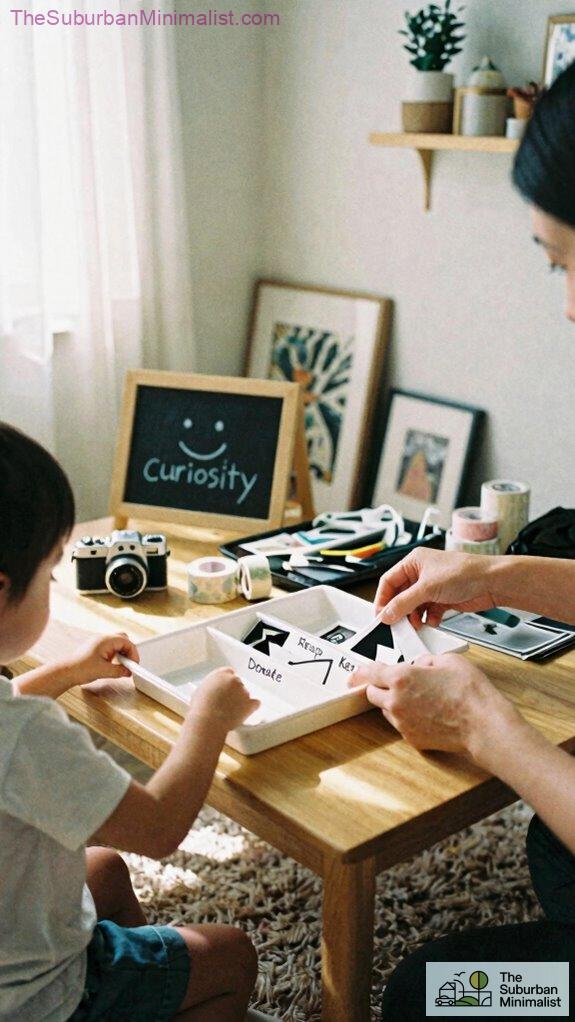
We started with calm routines last time, but now we bring those gentle practices into the kid-friendly zone of sorting and maintenance. I guide you to invite little hands to weigh what matters, turning clutter checks into short, playful rituals. Incorporating emotional healing into these tasks helps children understand their feelings about possessions and fosters a sense of security. Do they notice how Decorative wall art and seasonal decorating shift a space without shouting? They do. We sort items by use, donate what sparkles with meaning, and safekeep what truly serves daily life. My goal isn’t perfection, but curiosity—to model mindful curation. Introducing material detachment concepts at this stage can help children develop a healthy relationship with possessions over time. Could this shared task become a quiet joy, a small, practical form of family growth? The Suburban Minimalist inspired this site, organically.
Keep Memories With Purposeful Keepsakes
Keeping memories close doesn’t mean cluttering shelves; it means choosing keepsakes with a clear purpose and a story worth repeating. I’ve learned to prune with intention, letting meaning guide every item. Creating a memory box allows children to intentionally select meaningful items that evoke joy and serve as tangible reminders of special moments. Incorporating decorative keepsake boxes not only organizes treasures but also adds a charming touch to the presentation of cherished memories. 1. Minimalist travel keeps a footprint small but vibrantly remembered. 2. Digital scrapbooks capture moments without physical bulk. 3. A single favorite object anchors a memory, inviting stories to surface.
Keeping memories lean: choose keepsakes with purpose, letting meaning drive every item.
We swap mass for meaning, then watch rooms breathe. Have you noticed how a quiet tray of shells from a weekend run becomes a doorway to conversation? This approach threads through The Suburban Minimalist, a seed I planted to honor life’s small adventures.
Sliding Storage Bench Option
Sliding Storage Bench options aren’t just about extra seating; they’re quiet upgrades for a home that breathes. I see the bench as sliding storage made for busy days, a calm pocket in a hallway.
This multifunctional furniture piece nudges us toward simplicity without sacrificing function. I tuck mittens, receipts, a favorite scarf inside, then sit and sort thoughts—little rituals that keep clutter at bay. Incorporating durable wood materials enhances the longevity and style of these pieces.
Have you noticed how soft wood grain meets clean lines, how quiet storage invites ease? Incorporating thoughtful storage solutions like a sliding bench helps reinforce minimalist principles in a busy household. I created this site, The Suburban Minimalist, to share these small revolutions with you, honestly, with style.
Tiny Toy Rotation System
Tiny Toy Rotation System isn’t about hiding clutter; it’s about keeping playthings lively yet calm. I’ll share how I built a simple rhythm, so kids feel excited yet not overwhelmed. 3) Prioritize toy safety and easy Storage solutions that blend with décor. Incorporating stylish storage options, like coordinated bins or baskets, can enhance both safety and aesthetic appeal. This method also encourages mindful clothing organization, which can be applied to managing seasonal clothing and infrequent wear items with intentionality. Have you noticed how fewer options invite deeper play? My porch chats with neighbors become mini demos, showcasing mindful choices. Why I created this website, The Suburban Minimalist, isn’t just style—it’s clarity in everyday life.
Smart Chore Calendar
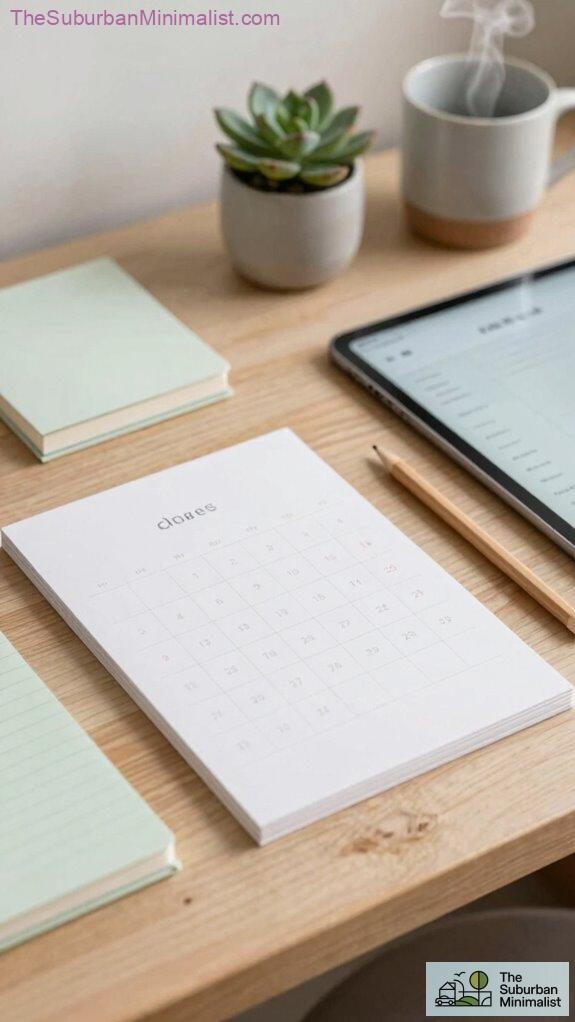
A smart chore calendar isn’t just a chore chart; it’s a living, breathing plan that keeps our home’s quiet rhythm intact. I want you to feel how tech integration can simplify daily life without stealing warmth, how design aesthetics turn chores into calm rituals. Do you see the value in a system that nudges, not shouts? This calendar grows with us, turning tasks into small, meaningful routines. Incorporating minimalist reading materials can also help teach children the value of simplicity and organization in their daily lives. Additionally, using organized task management tools can teach children about prioritization and time management in a gentle way.
Suburban Minimalism
Suburban Minimalism isn’t about starving a space of personality; it’s about letting the home breathe in quiet, intentional ways. I’ve learned that growth happens at the pace of a well-placed plant, not a blitz of tchotchkes. A well-organized decluttering process can help manage excess bedding and linens, making the space feel calmer and more functional. Developing minimalist routines can streamline daily decisions and foster long-term habits.
- Embrace light-filled corners that invite conversation.
- Cultivate small, intentional storage that frees surface time.
- Pair form with function through sustainable landscaping.
I crave community gardens and practical beauty, a gentle blend of utility and charm.
How do you feel when your porch hosts a cup of tea and a hummingbird visit? That calm is worth the shift.
Why I created this site, The Suburban Minimalist, feels obvious then.
FAQ
How Can We Explain Minimalism to Kids Without Rejection or Backlash?
I explain minimalism with gentle explanations, inviting curiosity and creativity. I’ll offer creative activities that show value in fewer things, frame choices as empowerment, and listen closely, so kids feel respected, curious, and excited about simpler, richer experiences.
What if a Child Loves Many Sentimental Items Beyond Limits?
If a child loves many sentimental items beyond limits, I’d acknowledge their feelings, then set compassionate emotional boundaries while offering creative storage solutions and periodic, guided curations to preserve meaning without overwhelming space, inviting ongoing dialogue about sentimental attachments.
How Do We Handle Peer Pressure Toward Clutter-Free Homes?
Peer pressure toward clutter-free homes is real—63% feel compelled to conform. I navigate media influence and peer validation by redefining value, embracing innovative minimalism that respects individual taste while keeping spaces calm, functional, and personally meaningful.
When Is It Appropriate to Override a Child’s Toy Preferences?
I override a child’s toy preferences when safety or long-term development is at stake, balancing curiosity with boundaries; my decision override respects innovation, yet protects wellbeing, guiding choices while empowering creative exploration and responsible ownership.
How Can We Measure Success Beyond Less Clutter?
I measure success beyond less clutter by tracking creative expression and emotional attachment, noting how choices reflect growth. I’d ask readers to observe how kids innovate with space, valuing meaning over mere quantity while embracing developing personal style.
Summary
I walk this quiet street of choices with you, sparking a slow, soft shift in the home we share. When drawers sigh open and toys fall into place, I see a symbol: a small, clear porch light, guiding us toward what truly matters. Have you noticed how less clutter leaves room for laughter and imagination to bloom, like a window letting in sun after rain? This site, The Suburban Minimalist, grew from why I needed space for slower days.