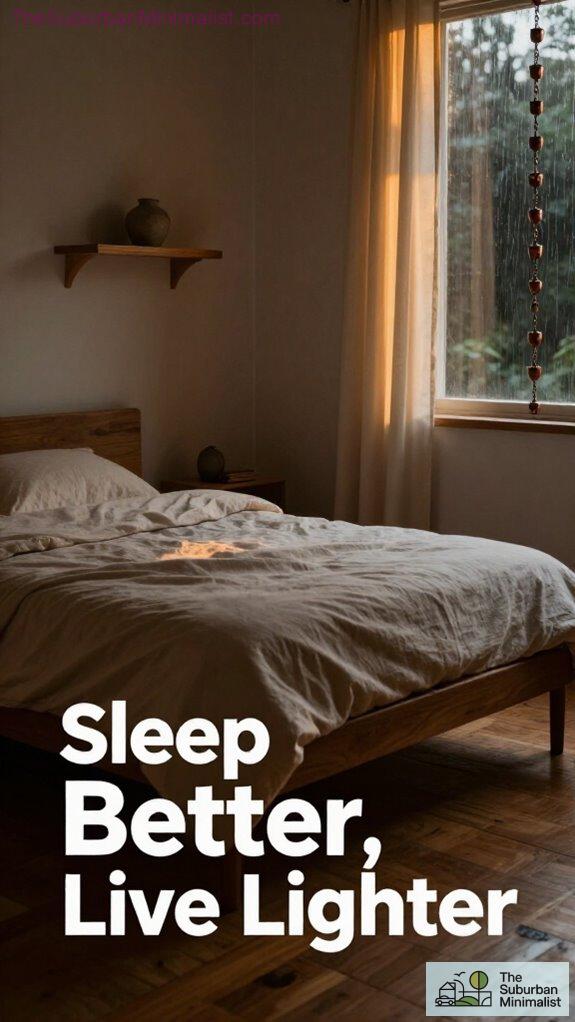
My phone’s blue light was basically my alarm clock—until it wasn’t.
I’d wake up scrolling. Emails first. Anxiety second. Actual life? Nowhere to be found. So I ditched the dopamine machine and grabbed a wooden clock instead. Soft morning light. No notifications. Game changer.
That white oak bench in my entryway? It’s not aesthetic—it’s survival. A landing pad for the chaos before it spreads. Real minimalism isn’t about Instagram-perfect rooms. It’s about breathing.
That’s why I built The Suburban Minimalist. To prove you don’t need much to feel like enough.
Reclaiming Your Morning Routine: Ditching Digital Dependency for Intentional Wakefulness
Last spring, I tracked my screen time. Three hours before 9 AM. Three. I felt sick. So I implemented a simple morning ritual: no phone until coffee. Sounds basic, but it rewired everything. My anxiety dropped. My focus sharpened. I actually noticed my apartment—the light hitting my walls, the way my plants looked. Morning mindfulness became natural, not forced.
Digital minimalism isn’t about total disconnection. It’s about choosing when and how you engage. I’m not anti-technology; I’m pro-intention. Small shifts—like a non-smart alarm clock or a phone-free bedroom—compound into genuine peace. Slow living starts here.
Quick Takeaways
- Begin your morning with at least one hour of screen-free time to cultivate calm and presence.
- Use an analog alarm clock made of natural materials to support a peaceful, intentional wake-up.
- Align your wake time with sunrise to reset your circadian rhythm and boost daily well-being.
- Design a clutter-free entryway with functional, minimalist elements that promote order and tranquility.
- Delay digital engagement until after sunrise to maintain mental clarity and reduce morning stress.
Why Your Phone Ruins Screen-Free Mornings
Even before the kids’ alarms go off, I’ve already lost the morning—because, let’s be real, my phone buzzed first. That blue light? It hijacks morning mindfulness before I even stretch. I thought I was checking the weather, but somehow I’m deep in emails, heart racing. Sound familiar?
I started my website, The Suburban Minimalist, asking why our calm crumbles so fast. Spoiler: it’s not the kids.
Digital detox at dawn isn’t extreme—it’s essential. Incorporating minimalist inspiration like a simple, decluttered space can help reset your mind for the day. Reducing unnecessary choices can further combat decision fatigue, making mornings more peaceful.
Try silence for 45 minutes. Breathe. Sip tea. Watch light fill the oak shelves.
Your brain will thank you. Mine did.
Why Analog Alarm Clocks Support Mindful Wake-Ups?
Because I used to slam my phone snooze button six times a day—okay, maybe eight—I get how hard it’s to start slow. Now, my wooden analog clock, made with organic materials and soft, nature-inspired design, greets me instead. No buzzing, no blue light—just quiet, steady hands moving like breath. I set it nightly, ritual-like, next to my eucalyptus pillow. No temptation to scroll, no inbox waiting. Just me, the dawn, and a reminder that peace isn’t found in notifications. Incorporating minimalist design principles like simplicity and natural materials enhances this calming routine. Understanding how color analysis impacts mood and environment shows how choosing harmonious hues can make mornings feel even more serene. Funny how such a small change—ditching tech for tactile calm—led me here, why I created this website: *The Suburban Minimalist*.
How Circadian Rhythm Shapes Your Ideal Alarm
When your body’s internal clock hums in sync with the sun, waking up feels less like an act of war and more like a quiet invitation—something I didn’t believe was possible until I stopped fighting my alarm.
Now, I time my rise with circadian science: morning light exposure resets my rhythm, boosting sleep quality naturally. I let the east-facing glow hit my face before coffee, no screens, just quiet.
Morning light resets my rhythm—no screens, just stillness. I rise with the sun, not the alarm, and my sleep follows without effort.
Ever notice how babies wake with the sun? It’s not cute—it’s biological innovation.
Funny how optimizing light exposure felt like a hack—until I realized it’s just how bodies work. Recognizing the importance of natural cues can dramatically influence my overall health and well-being.
Understanding your circadian rhythm reveals how aligned light and sleep can dramatically improve overall well-being.
That’s why I created this website: to share what my suburban sanity taught me.
5 Features of the Best Screen-Free Alarm Clocks
Since ditching my phone from the nightstand, I’ve learned that the best screen-free alarm clocks don’t just wake you—they welcome you back to the day with intention.
- Eco conscious materials that feel honest to the earth and your space, like stylish large white ceramic vases that add a touch of serenity to any room.
- A modern design that complements, not competes with, your bedside aesthetic
- Gentle wake features—like gradual light or soft chimes—that honor your circadian rhythm
It’s amazing how a mindful approach to everyday objects can influence your overall wellbeing and foster a sense of intentional living.
Bamboo & Wood Clocks for Minimalist Bedrooms
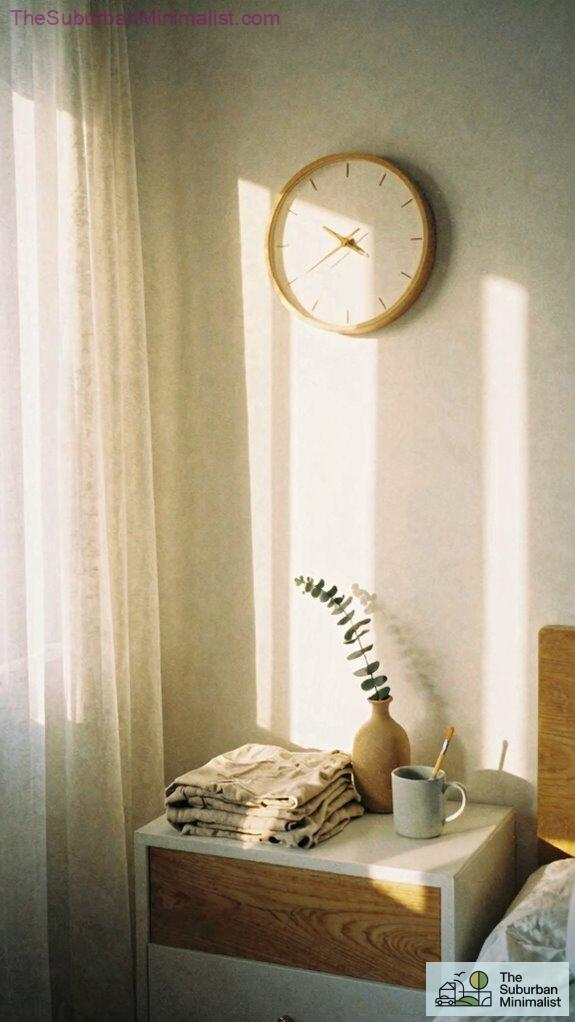
Though I never thought a clock could spark joy, I’ll admit—I’ve become a little obsessed with the quiet elegance of bamboo and wood timepieces gracing my nightstand.
Who knew sustainable material choices could feel so grounding? These aren’t just alarms—they’re design anchors.
I swapped my plastic clock for a slim bamboo wall clock with silent motion, and suddenly, my bedroom felt like a retreat, not a storage unit. Plus, the wooden display cabinets in my living room add a touch of sophistication and organization.
And isn’t that why I created The Suburban Minimalist? To find meaning in the small stuff—like choosing a warm walnut clock over another faceless gadget.
Decorative wall clocks made of natural wood? Yes. Beauty, purpose, and calm—all ticking in sync.
In fact, some wooden clocks even double as small art pieces, blending functionality with the natural warmth of wood.
Where to Place Your Alarm for Better Sleep Hygiene
It turns out, where you place your alarm isn’t just about logistics—it’s a small act of self-respect.
- Keep it across the room—forcing you to rise and start the day with purpose.
- Pair it with a morning tray of plant based snacks, ready for mindful fuel.
- Place near an air purifier to boost indoor air quality while you sleep.
- Consider choosing a calming color, which research suggests can influence your mood and help you wake up more gently. You might also think about incorporating textured minimalist pots into your space, as their subtle patterns can promote a sense of calm and focus upon waking.
I never realized how much my space affected my calm—until I stopped fumbling for silence and started designing mornings with care.
Funny thing? That’s why I created this website—The Suburban Minimalist—because innovation isn’t just in tech, it’s in how we gently wake ourselves, again and again.
What Wakes You Gently Without a Screen?
When the first light creeps through the blinds and the house still holds its breath, I’ve learned that how I’m woken matters more than I ever thought—because while my phone could scream at me with a jarring buzz, I’d rather be invited into the day with something softer, something kind.
That’s why I choose the benefits of natural light and a wooden analog clock over any screen. No blue glow, no notifications—just quiet. I wake with the sun, not a siren.
Incorporating minimalist wardrobe choices into my mornings helps create a calm and organized start to the day, free from visual clutter.
The simple, intentional design of these routines reflects the larger principle of minimalist fashion—focusing on quality and harmony rather than overload and distraction.
Isn’t that what the importance of morning mindfulness is really about?
It’s why I created this website—The Suburban Minimalist—to share simple swaps that don’t shout… they just work.
Sculptural Utility Pieces for Entryways
Because my entryway used to stress me out more than my to-do list, I finally asked myself: why does the first space people see feel like a dumping ground for shoes, dog leashes, and yesterday’s mail?
That’s when I discovered *sculptural aesthetics* meet real life. Now, my entryway is *functional art*—not just storage, but a statement.
- A white oak bench with clean lines hides boots and bags
- Slender oak wall hooks hold coats (and leashes) with grace
- A ceramic bowl for keys doubles as a quiet art piece
I created The Suburban Minimalist to share how small upgrades spark calm. Your entry? First impression. Make it count.
Morning No-Phone Ritual

Now, my first act each morning is one of gentle intention: lighting a cedarwood candle, pouring hot water into my matte black pour-over, and letting the quiet seep in before the world barges in. I wait an hour—*at least*—before touching my phone. Instead, I curl up with my journal for a short morning meditation, syncing breath with the steam rising from my cup. It’s radical, I know. Incorporating mindfulness practices into the start of the day helps cultivate a sense of presence and calm that lasts. I also avoid clutter that can distract or create chaos, such as unnecessary non-functional furniture, which often take up valuable space without serving a purpose. Why I created this website, The Suburban Minimalist? This. This sliver of stillness is where clarity starts. Then, I prep an organic breakfast—usually avocado toast with microgreens—savored slowly, not scrolled through.
First Digital Declutter at Dawn
Why do I wait until the sun’s fully crested to touch my phone?
Because dawn’s the quiet lab where I test my newest *decluttering strategies*—no chaos, just clarity.
Dawn’s my silent workshop—clutter dissolves, focus sharpens, and clarity emerges like the first light.
1. I delete unused apps made from non-transparent code, favoring tools built like *eco conscious materials*: renewable, responsible, elegant.
2. I unsubscribe from digital noise that doesn’t spark peace—or profit.
3. I archive memories into encrypted cloud albums, so my device breathes like my home does. Reducing digital clutter enhances my sense of intentional living.
It feels like why I created The Suburban Minimalist: to innovate not just space, but mind.
This ritual? It’s not denial. It’s design.
4. By simplifying my digital environment, I also cultivate a mindset of material detachment, fostering less reliance on possessions and more on meaningful experiences.
Suburban Minimalism
One morning, after years of fighting clutter like it was a personal enemy, I finally realized I wasn’t trying to empty my home—I was trying to make it *breathe*. Now, I weave in organic textures—eucalyptus silk sheets, bamboo baskets—so minimalism feels warm, not cold. Natural palettes dominate: think sage, oat, and charcoal, not sterile white. Using bamboo cooling bed sheets helps create a comfortable and restful environment. Incorporating minimalist linen bath towels adds a touch of understated elegance while enhancing functionality. Why I created this website *The Suburban Minimalist*? To prove quiet spaces aren’t empty—they’re intentional. You don’t need a vaulted ceiling or a city escape. Just one shelf, cleared. One drawer, organized. Beauty meets function where life actually happens: between dropped sippy cups and yoga mats. Suburbia, simplified.
FAQ
What Time Should I Start My Morning Routine?
I start my morning routine at 6 a.m., right before sunrise. You’ll love how morning meditation grounds you, then sunrise stretching wakes up your body—both fuel innovation with calm clarity and mindful energy.
How Do I Choose a Non-Ticking Wooden Alarm Clock?
I choose a non-ticking wooden alarm clock by prioritizing silent mechanisms and clean design. I look for wooden craftsmanship that’s precise and quiet, blending alarm clock aesthetics with innovation—think matte finishes, slim dials, and tech-integrated simplicity that respects my space and peace.
Can Minimalist Design Work With Kids’ Messy Schedules?
Yeah, minimalist design works with my kids’ messy schedules. I sync their activity flow with smart clutter management—modular storage, labeled zones, and durable baskets keep chaos hidden but access easy, so our home stays calm, creative, and ready for anything.
Are Copper Rain Chains Safe for Small Gardens?
Yes, I use copper rain chains in my small garden because they’re safe and elegant. I trust their rain chain materials to support garden safety while adding beauty—copper won’t leach toxins, and I love how it ages naturally, blending innovation with nature in smart, lasting ways.
Do Wool Dryer Balls Work in Large-Capacity Machines?
Yes, I’ve tested wool dryer balls in my large-capacity machine—they work perfectly. They soften natural fabrics, reduce drying time, and support eco friendly drying. Plus, they’re a sustainable swap that keeps my high-efficiency routine innovative and simple.