Your kitchen can either drain your energy or fuel it—honestly, mine used to do both.
I started auditing my fridge like I was investigating a crime scene. Clear glass jars. Strategic labeling. Rotating the almost-expired stuff so nothing ghosted me. It sounds obsessive, but it saved my sanity (and my wallet).
I needed a calm prep zone—sunlight, minimal clutter, nothing screaming for attention. That’s when The Suburban Minimalist clicked into place. I wasn’t just organizing. I was building a life that felt intentional instead of chaotic.
Daily audits aren’t about perfection. They’re about catching waste before it happens. About knowing exactly what you have.
—
Kitchen Inventory Systems That Actually Stick
My breaking point came when I threw out three half-empty jars of coconut oil in one week. Embarrassing, right? I implemented a simple rotation system: front-facing labels with purchase dates, seasonal deep dives, and a running mental map of my pantry. Now I meal plan around what I already own instead of buying duplicates. It’s not just food waste reduction—it’s the relief of knowing my kitchen serves me, not the other way around. This mindful consumption philosophy became the backbone of my entire minimalist lifestyle redesign.
Quick Takeaways
- Schedule quarterly audits to remove expired items, rotate near-expiry stock, and refresh pantry organization for ongoing freshness.
- Track expiry dates with simple charts and set reminders tied to lighting or routine cues to stay proactive.
- Group items by function and create distinct zones for quick, efficient access and reduced waste.
- Use clear containers, bold labels, and open shelving to visualize contents and support calm, intentional storage.
- Leverage digital tools for inventory, recipes, and meal planning to sustain a well-organized, minimal, and functional kitchen.
Define Pantry Goals and Pain Points
I’ve learned that a pantry isn’t just a closet with shelves—it’s the heartbeat of a calm week. I write to you with a curious, practical tilt, asking: what should stay, what should go, and why?
My pantry goals live near Eco friendly storage and aesthetic considerations, shaping every shelf and setup. I’m not chasing perfection, just usable beauty that sparks joy when I grab a snack or brew.
I’ve noticed small gaps invite waste, so I plan: label, rotate, refresh weekly. Developing a clear organization plan can also reduce clutter and streamline your routine. Regularly reviewing your items helps you stay aligned with your pantry goals, ensuring everything serves a purpose and reduces impulse purchases or unnecessary stockpiling.
Do you feel that shift too—when order feels like a design choice, not a chore?
This site, The Suburban Minimalist, grew from that belief.
Audit Current Pantry Inventory and Expiry Risk
Auditing my pantry feels like a small, quiet act of control that somehow blooms into clarity. I glimpse expiry dates like tiny milestones, and I ask myself, what truly serves meal prep and mood?
I pull jars, jot notes, sigh at a forgotten spice, then reorganize for Kitchen aesthetics that spark delight. A quick check for expired food helps prevent waste and potential health risks, ensuring my kitchen remains safe and nourishing.
When I see a dented can, I resist waste with a plan, not guilt. This mindful audit becomes conversation with you: what’s still usable, what’s worth rotating, what deserves a clean slate?
By decluttering excess furniture, I create space that fosters both peace and functionality in my home, making it more adaptable for everyday living.
Classify Items by Function and Access Needs
How do I make sense of the neat chaos on my kitchen shelves? I sort by function, then access needs, so I can grab what I use most. I group flour and beans near the baking supplies, snacks up high, utensils within easy reach, cleaning gear tucked away yet accessible. Incorporating minimalist principles helps me reduce clutter and decision fatigue, making it easier to maintain an orderly space. Gardening aesthetics and natural lighting influence how I place jars—clear containers catch light, color blocks calm the eye. It’s about flow, not fear; a calm rhythm for a busy family. Additionally, using decorative elements like handcrafted copper rain chains can add a unique touch that enhances the overall aesthetic while subtly guiding the eye around the space.
Why I created this website The Suburban Minimalist? because simplicity scales when shelves breathe with intention, clarity, and curiosity.
Create Clear Pantry Zones and Labeling System
Creating clear pantry zones feels like giving my kitchen a gentle map, where every jar and box knows its place and I’m not hunting for the oats at 7 a.m. on a Tuesday. I set zones by function, then label boldly, so spice jar organization becomes a quick, joyful ritual.
Vintage cookware gleams atop open shelves, a tactile reminder of memory and craft. Do you notice how a simple label prompts care?
I love the calm that follows when shelves breathe openly, and I recollect why I created this website The Suburban Minimalist—organizing, smiling, living simply. Ready to map yours?
Implement a Simple Expiry-Tracking Method
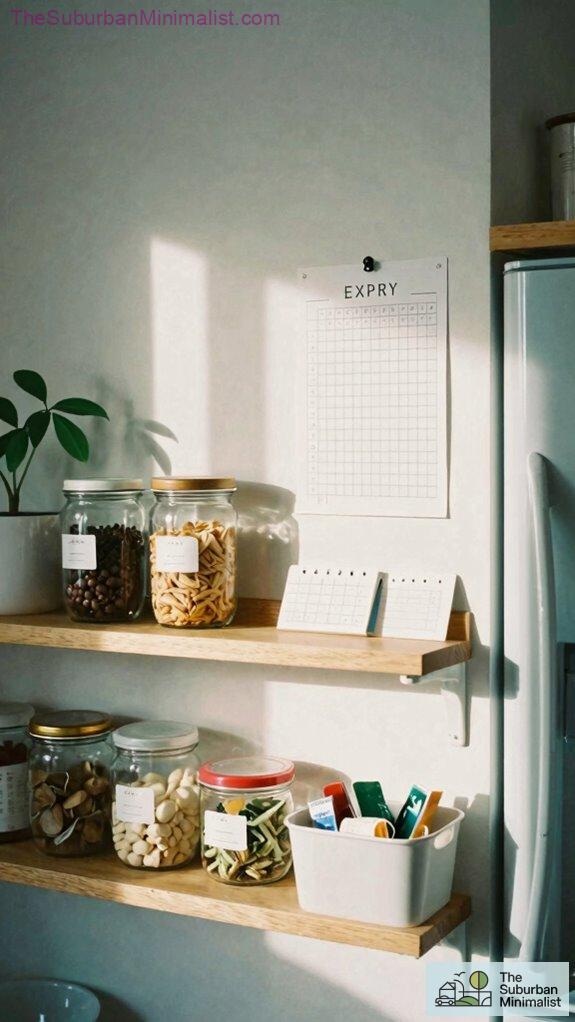
I’ve learned that keeping track of expiry dates doesn’t have to feel like a math pop quiz; it can be quick, gentle, and almost invisible in the rhythm of a calm kitchen.
I keep a simple chart near the fridge, a tiny ritual that respects Eco friendly containers and Mood enhancing lighting. Why reinvent the wheel when one glance tells me what to use today, what to group, and what to rotate first?
To enhance my system, I also include decluttering tips for quick identification and removal of expired items. Incorporating minimalist decluttering techniques helps me stay organized and prevents accumulation of unnecessary keepsakes, making my system even more effective.
Rotate Seasonal Items and Set Reminders
Seasonal items drift in and out of our cupboards like guests who overstay their welcome, so I rotate them before they become forgotten memories in a dusty bin. I mix quick checks with charm, moving cans toward the front and stacking new jars behind—a small, clever system that feels almost magical.
Have you noticed how Seasonal decor can spark quiet joy when you spot it at eye level, ready to use? I set reminders on my phone, linking to Kitchen lighting changes as days shift. This habit keeps freshness bright, and my home calm, like a well-tuned, practical ritual. The Suburban Minimalist, organically.
Quarterly Pantry Audit Checklist and Maintenance
Have you ever opened the pantry and felt a tiny panic at the sight of expired cans or jars you forgot you bought? I’ve learned a quarterly audit keeps chaos calm, blending Kitchen aesthetics with practical notes. Adding some botanical-inspired organizational labels can also enhance the decorative appeal of your space. I unscrew lids, date-check, and wipe shelves, then group items for easy family meal planning. Implementing neutral color palettes in labels and storage containers can create a more harmonious look that complements various home styles. I mark a reuse strategy for near-expiry staples, and donate excess bottles cluttering the top shelf. This ritual isn’t sterile; it’s a moment to honor that curated, bi-minimalist vibe we crave. Why I created this website, The Suburban Minimalist, guides me, and hopefully you, toward calmer shelves.
Smart Fridge Organizers
A well-organized fridge feels like a little daily win, and I’ve found that a few smart tweaks can make a big difference in how we actually cook and eat at home. I’m obsessed with how Smart Fridge Organizers simplify life, yet keep décor cohesive. Do you ever crave appliance integration that doesn’t scream tech? I do. Clear bins, labeled lids, and humidity controls become quiet allies. Kitchen décor meets function, right here. Additionally, incorporating smart storage solutions can maximize space and ensure everything stays fresh longer. Below is a quick grid I love for planning zones and temps, so mornings feel effortless. Plus, investing in portable external hard drives can help you keep digital inventories of your favorite recipes and meal plans for easy access.
Smart-Fridge Inventory Audit
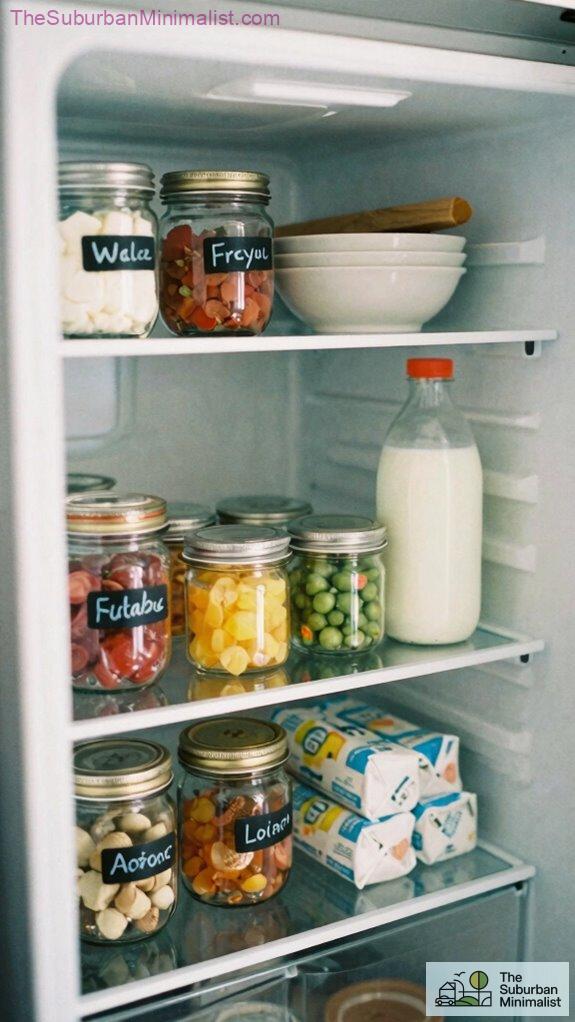
I’m noticing how a quick audit can turn a chaotic fridge into a calm, almost spa-like space, you know? I sketch a plan, check dates, and joke with myself about “appliance upgrades” that aren’t flashy—just smarter storage.
The fridge shows its mood with labels, and I respond with clear kitchen decor choices: glass jars, chalk markers, and a weekly rotation. Do you ever feel lighter after ditching mystery tubs?
I share a moment from my day—organizing dairy near the door, savoring the symmetry. This website, The Suburban Minimalist, grew from why I created it, naturally guiding mindful routines.
Hidden Pantry Alcove Synergy
The hidden pantry alcove isn’t just a secret stash; it’s the quiet backbone of a well-run home, the kind of space you only notice when it’s doing its job beautifully. I lean in, noticing Gourmet ingredients lined like tiny guests awaiting a party, and I wonder, what could be more purposeful than a smartly curated nook? Regularly tidying this space ensures it remains efficient and accessible, preventing clutter from taking over. This is where Beverage corners quietly breathe, inviting simple rituals into busy days. Do you see how calm blooms from order? I’m often asked why I created this website The Suburban Minimalist, and the answer is practical wonder, small joys sparking daily delight.
Suburban Minimalism
Suburban Minimalism isn’t about cold emptiness; it’s about space that breathes. I’m writing to you, reader, because I know you crave fresh ideas without sacrificing warmth.
In my kitchen, artificial lighting isn’t just utility; it shapes mood during late-night audits of jars and labels. Decorative accents become quiet punctuation, not clutter, a wink that says, “You’ve planned this well.” Incorporating thoughtfully selected storage solutions can elevate both function and style in your space.
Have you noticed how a single plant or wooden tray can calm a countertop’s rhythm? Consider how a well-chosen cantilever patio umbrella can enhance your outdoor space with both style and function.
I created this website, The Suburban Minimalist, to share that feeling—clarity with character—and to invite you to audit, refine, enjoy, together.
FAQ
How Often Should I Audit for Non-Food Pantry Items?
I audit non-food pantry items monthly, prioritizing shelf organization and expiration tracking to prevent waste. This proactive rhythm keeps innovation flowing, ensuring every container has purpose, visibility, and a clear lifecycle that supports a serene, functional kitchen.
What Signals Indicate a Need to Rezone Pantry Zones?
Signals I’d rezone pantry zones when labeling consistency falters and shelves feel crowded; I’ll act with shelf reorganization, labeling tweaks, and smarter layouts to sustain innovation and rapid access for every item I rely on daily.
How Can I Audit for Allergen-Safe Storage Practices?
I audit allergen-safe storage like a lighthouse keeper; Allergen labeling guides ships, and storage segregation keeps reefs clear. I map every container, label clearly, and test cross-contact risks, inviting you to innovate with fearless precision.
What’s a Quick Method to Audit Energy Use of the Pantry?
I’d start a quick energy audit of the pantry with a simple benchmark: track usage by week, note peak loads, and then refine Inventory tracking and labeling consistency to pinpoint waste and spark innovative energy-saving ideas.
How Do I Handle Duplicate Items Without Clutter?
I handle duplicate clutter by consolidating like items, labeling clearly, and creating a dedicated drawer bin system. I advise smart item organization that adapts with your routines, keeping innovation front and center for a calmer, efficient kitchen.
Summary
I circle back to the kitchen, like a quiet hallway of light, and realize the audits aren’t chores as much as compass points. Do you hear the clock-tick of a well-organized drawer, the soft sigh of a labeled jar? I’ve learned to pace my space the way I pace a room makeover—with intention, not panic. That’s why I built The Suburban Minimalist: to share how small, steady tweaks keep home calm, creative, and vividly ours.