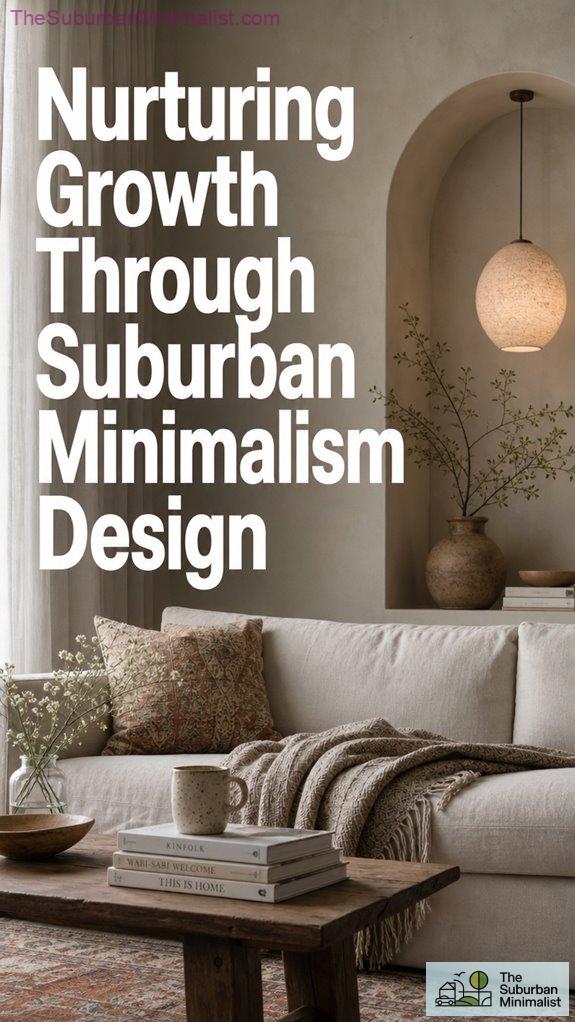
Ever wonder why your kid’s playroom still feels chaotic even after you’ve decluttered? Because I used to think minimalism meant empty rooms. I was so wrong.
I started The Suburban Minimalist after my son’s playroom transformation. Soft natural light, neutral walls, and those bamboo baskets? Game-changer. The anxiety I felt looking at toy explosions literally vanished. Now, intentional design—not deprivation—creates space for actual creativity.
How Minimalist Toy Rotation Changed My Family’s Mornings
Last year, I was drowning in plastic. My apartment felt suffocating. So I implemented toy rotation—keeping only a handful of meaningful pieces accessible at once. The difference shocked me. My kids played deeper. They weren’t overwhelmed by choice paralysis. Mornings became peaceful instead of stressful. I paired this with sustainable storage solutions and neutral color palettes throughout our space. What started as decluttering anxiety became genuine joy. Conscious consumption and intentional living aren’t just buzzwords anymore; they’re how we actually breathe easier. My kids now understand that less stuff means more freedom to imagine.
Quick Takeaways
- Suburban minimalism emphasizes intentional design with clean lines, subtle textures, and curated accents for a calm, sophisticated play environment.
- It incorporates sustainable storage solutions and clutter reduction to create organized, serene play areas.
- Natural materials, soft lighting, and textured textiles foster warmth and tranquility in children’s spaces.
- Open-ended, accessible toys and sensory elements promote autonomous exploration and creative play.
- Family-focused zones encourage relaxed bonding through minimalist decor, intentional layouts, and calming botanical accents.
Core Design Principles for Suburban Minimalist Playrooms
There’s a quiet power in designing a playroom that feels intentional rather than chaotic—a space that embraces simplicity without sacrificing fun. I believe in nurturing artistic expression, where children feel free to create, color, and explore without clutter.
A thoughtfully designed playroom sparks creativity and calm, blending simplicity with joy to inspire young imaginations.
Sensory integration becomes the foundation, with textures and soft lighting inviting curiosity and calm. Do you wonder how minimalism can champion creativity? It’s in choosing quality pieces that speak to children’s senses, like woven rugs or textured wall art, rather than overwhelming their world. Creating a space that values memories over material things encourages children to develop a deeper connection to their environment.
This isn’t just a playroom; it’s an environment crafted to empower and inspire, echoing the philosophy behind The Suburban Minimalist. Mindful family traditions can also be woven into daily routines to strengthen bonds and foster a sense of security.
How to Create a Calm, Organized Space for Kids
Creating a calm, organized space for kids might sound like chasing a unicorn—every parent’s dream and a daily struggle all at once. Yet, I’ve found vintage textiles and artistic lighting are game changers. Soft, textured fabrics add warmth and calm, while understated lighting creates a gentle glow that whispers peace rather than shouts activity. Do I dare say it’s almost—and I mean almost—relaxing? As someone who’s navigated this jungle of toys and chaos, I swear that curating simplicity isn’t just aesthetic; it’s empowering. I created The Suburban Minimalist to share these little secrets—because if I can do it, so can you. Additionally, reducing excess furniture and decor can help create more space and a sense of tranquility. Embracing gradual release can make the decluttering process feel more manageable, helping you avoid being overwhelmed by keepsakes.
Eco-Friendly and Multi-Functional Toy Storage Ideas
I used to think toy storage had to mean plastic bins overflowing and chaos disguised as cute, but then I discovered that eco-friendly, multi-functional solutions can breathe new life into a child’s space. I leaned into sustainable materials—think bamboo baskets and recycled wood crates—that look chic, not childish.
Modular furniture pieces—stackable shelves or hidden compartments—give me control and flexibility, transforming clutter into a curated display. Why settle for chaos when you can create calm? Incorporating ceramic bee hotels into outdoor play areas can subtly teach kids about the importance of pollinators and sustainability.
It’s empowering to design a playroom where beauty meets purpose, proving that minimalism isn’t just aesthetic but a level of mastery over our environment—something I’ve come to cherish as part of this journey. Incorporating eco-friendly materials not only enhances sustainability but also elevates the overall design.
Design Play Areas That Promote Exploration and Independence
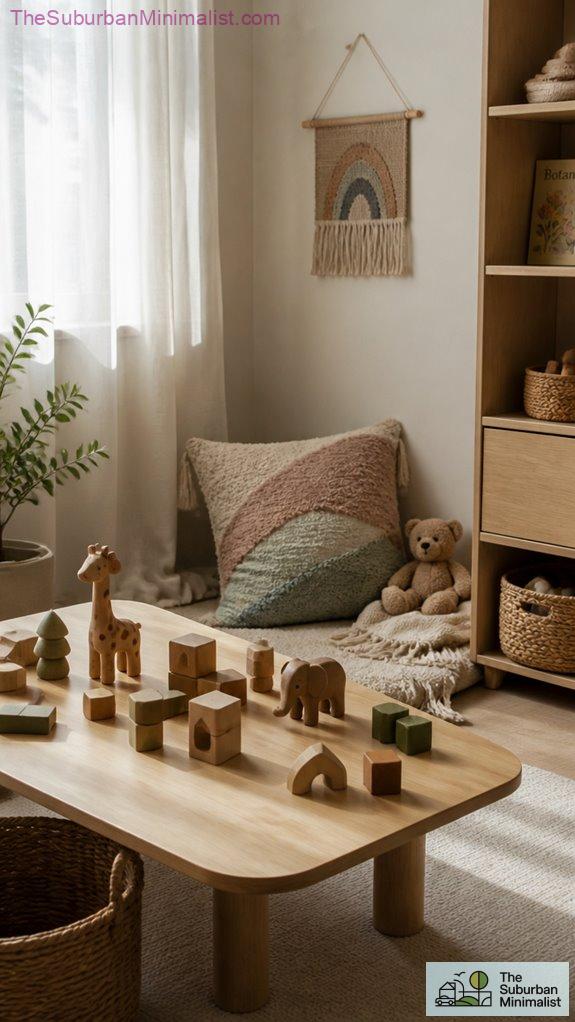
Designing play areas that foster exploration and independence feels like orchestrating a quiet symphony—each element must serve a purpose, spark curiosity, and nurture confidence. I’ve learned that sustainable furniture—think natural wood shelves and low tables—creates a sturdy foundation for growth.
Creating intentional spaces fosters confidence, curiosity, and growth through purposefully designed, sustainable, and calming play environments.
Sensory integration, like textured mats or soft cushions, engages little senses without chaos.
- Smooth, rounded edges on furniture
- Hidden compartments for discovery
- Open-ended wooden toys
- Cozy nooks for quiet time
- Low, accessible storage for independence
It’s about empowering children to explore confidently, while I maintain a calm, intentional space that reflects my modern, minimalist sensibility. Incorporating elements that emphasize textile color palettes can enhance the overall peaceful atmosphere. Additionally, thoughtful organization and minimalist design principles help maintain a clutter-free environment conducive to both play and relaxation.
Using Natural Elements and Neutral Colors in Playroom Design
Natural elements and neutral colors have a way of grounding a playroom, making it feel calm yet rich with subtle textures. I’ve found that applying a thoughtful textural balance—like a soft wool rug against sleek wooden furniture—creates a space that’s both inviting and empowering. Incorporating digital design trends can also inspire innovative ways to layer textures and colors for a modern touch. Paying attention to visual balance helps create harmony and prevents the space from feeling cluttered or overwhelming.
Lighting techniques matter too; soft natural light filtering through linen curtains or warm LED spots highlights these textures without overwhelming. Why settle for chaos when serenity can fuel creativity?
I created this website to share perspectives like these, proving that a peaceful, sophisticated playroom is within reach—powerfully simple, beautifully functional, and deeply nourishing for little imaginations.
How to Keep It Simple and Encourage Creative Play
Starting with simple setups and open-ended toys, I’ve found that less really does mean more when it comes to inspiring little imaginations. A simple, well-chosen metal plant stand can add a touch of elegance and calm to the space without overwhelming it. Incorporating minimalist reading materials tailored for busy moms can support their journey toward intentional living and mindful parenting. Powerful modern parenting recognizes that fostering child autonomy doesn’t require clutter or over-stimulation. Instead, it’s about providing space for independence and creative exploration.
Imagine:
- A narrow wooden table with freeform art supplies.
- Low shelves holding just a handful of natural wooden blocks.
- A soft rug in muted tones to invite quiet play.
- Steady, simple textiles like canvas tents or teepees.
- Clear, uncluttered surfaces for impromptu storytelling.
Minimalism isn’t about limit; it’s about empowerment — giving kids room to flourish in a space that respects their innate curiosity.
Custom Storage Solutions
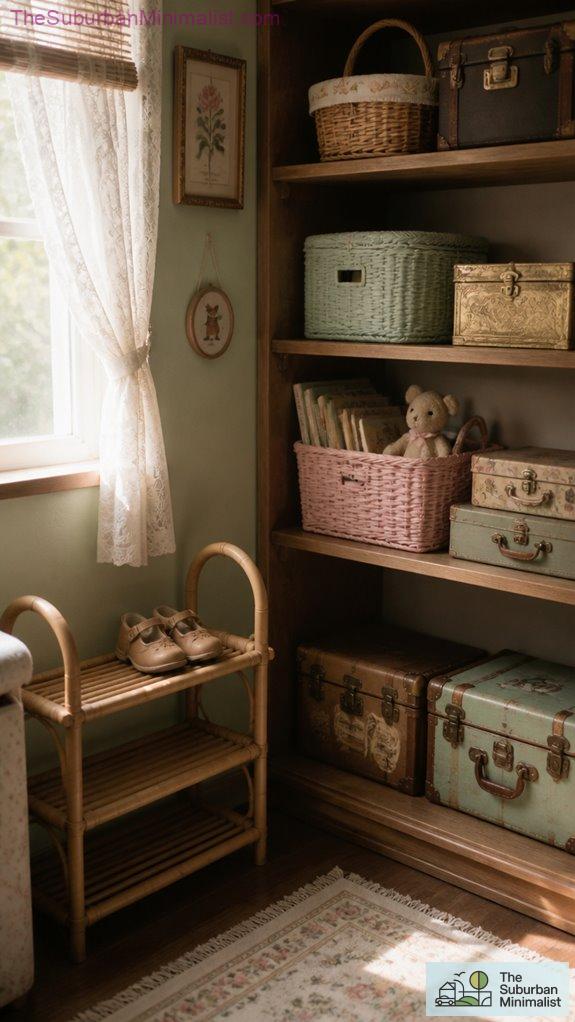
Have you ever looked at a closet or a drawer and wondered how it’s managed to descend into chaos so quickly?
That’s where custom storage solutions come in—think vintage decor pieces that add charm, paired with sleek lighting fixtures to keep things bright and lively. I’ve learned that well-designed shelving and tailored baskets don’t just hide clutter; they command control, giving the space a sense of purpose. Incorporating organized play areas can also encourage children to share and take responsibility for their space.
Incorporating bamboo shoe racks for entryway can also help keep shoes organized and accessible, adding a touch of natural elegance. I love integrating unexpected finds—like antique trunks or gilded boxes—to personalize the room. These solutions give power over chaos, creating a playroom that’s where organization meets style—precisely why I started The Suburban Minimalist, to bring beauty, purpose, and peace to everyday spaces.
Colorful Wall Murals
Colorful wall murals have become a secret weapon in my decorating toolkit—an unexpected way to inject personality and a splash of joy into even the most serene spaces.
Vibrant accents breathe life into a playroom, transforming plain walls into immersive worlds. Thematic murals, like enchanted forests or whimsical cityscapes, command attention and foster imagination.
Imagine a mural of blooming cherry blossoms wrapping around the room or a bold galaxy scene that sparks curiosity. They’re powerful tools, making the space feel alive and meaningful.
Honestly, I created this website because, let’s face it, home should be both peaceful and expressive—these murals help strike that perfect balance. Additionally, incorporating minimalist indoor herb garden kits can add a fresh, natural element while maintaining a clean aesthetic. And just as thoughtful beauty and skincare products simplification can create a more tranquil routine, choosing only essentials can foster a sense of calm and clarity in your space.
Cozy Family Game Nook
A cozy family game nook seems like such a small corner of the house, but it really holds the power to bring everyone together in a way that’s both relaxed and intentional. I prioritized sustainable lighting—think warm, dimmable LEDs that feel more like gentle candlelight than glare—and chose modular furniture that adapts as children grow or new interests emerge. Incorporating stylish wall shelves for small plants can add a touch of greenery, enhancing the tranquility and visual appeal of the space. The simplicity allows us to focus on shared laughter and quiet moments, not clutter. It’s a small but powerful reminder: minimal doesn’t mean cold or stark. minimalist design principles help us create a space that promotes calm and fosters meaningful connections. In this nook, every piece is purposeful, every moment meaningful—a true sanctuary from life’s chaos.
Suburban Minimalism
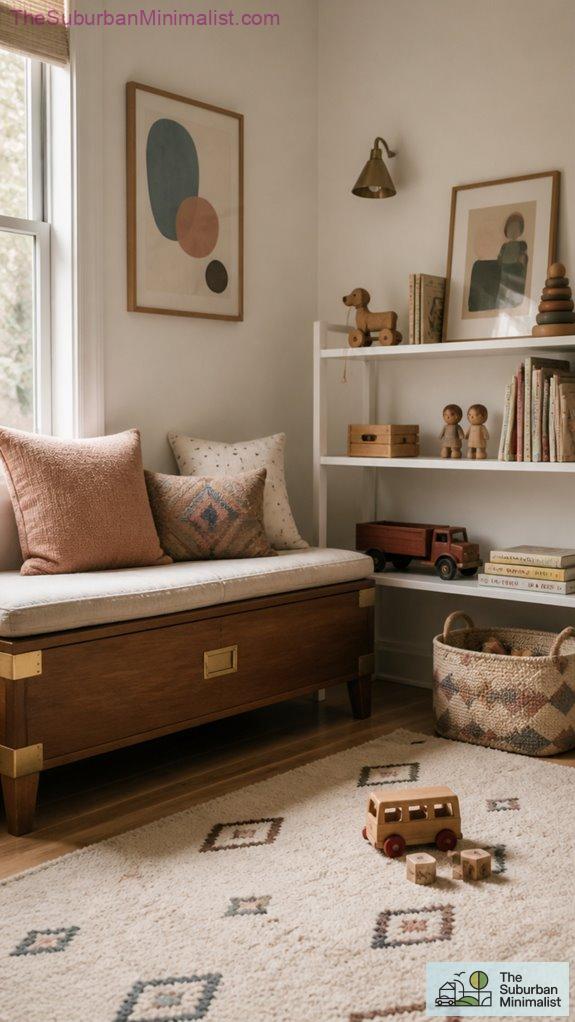
Suburban minimalism isn’t really about stripping your home down to the bare bones, even if some might think that’s the goal. It’s about crafting a space that exudes quiet power through urban aesthetics, balanced with vintage accents that speak to timeless style.
I’ve found that clean lines combined with subtle textures create a sense of calm–yet somehow commanding presence. Embracing minimalist decision-making can also reduce stress by helping you focus on what truly matters, making your environment a deliberate reflection of your values.
Picture this: sleek furniture, a pop of vintage brass, textured textiles, quiet lighting, and curated art that whispers rather than shouts. This isn’t just about style; it’s about owning your environment with effortless confidence, in a space that feels both modern and rooted in history. Emotional healing through decluttering can transform a chaotic home into a sanctuary of peace and clarity.
FAQ
How Can I Incorporate Sensory Elements Into a Minimalist Playroom?
To incorporate sensory elements in a minimalist playroom, I suggest adding a sensory wall with tactile panels and textured rugs strategically placed to encourage exploration. These elements empower children while maintaining clean, purposeful design.
What Are Eco-Friendly Materials Suitable for Children’s Furniture?
Aren’t we all looking to empower our children with sustainable choices? Recyclable plastics and natural textiles are ideal eco-friendly materials for furniture, blending durability with environmental responsibility, and enabling your child’s space to truly reflect conscious sophistication.
How Do I Balance Accessible Toys With Maintaining a Clutter-Free Space?
I balance accessible toys with clutter by implementing toy rotation and sleek storage solutions, ensuring only a few are out at a time. This approach empowers me to keep the space serene, organized, and effortlessly stylish, with control and ease.
What Lighting Options Best Promote Calm in a Play Area?
Visualize your play zone as a peaceful pond; natural illumination and soft lighting serve as the gentle moonlight, casting calm over chaos. Prioritize layered lighting with dimmable fixtures for the ultimate control in creating serenity.
How Can Sustainable Design Support Children’s Emotional Development?
Sustainable design fuels children’s emotional growth through mindful decor that promotes calm and connection. I believe empowering kids with eco-friendly, thoughtfully curated spaces nurtures resilience, confidence, and harmony, guiding their development into balanced, emotionally intelligent adults.
Summary
Creating a peaceful playroom feels like finding that rare moment of calm after a busy day—quiet, intentional, and surprisingly simple. It’s about balancing the vibrant chaos of childhood with the serenity of a space designed to nurture curiosity without clutter. When I step into my minimalist play zone, I’m reminded that less truly is more. Sometimes, it’s the neatness—the empty corners and natural textures—that let children’s joy and independence shine brightest, quietly and beautifully.