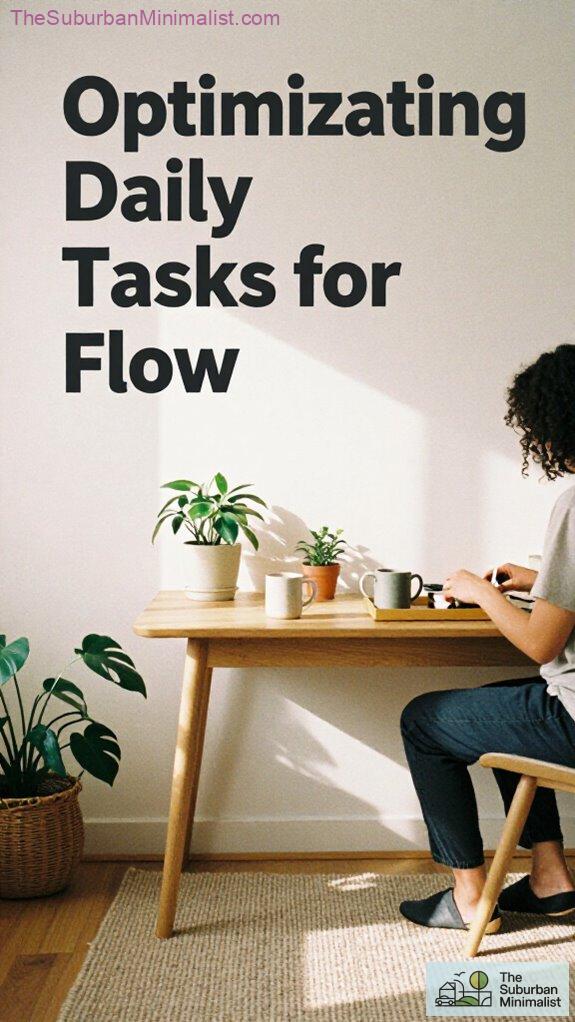
Spoiler: minimalism isn’t about living like a monk—it’s about reclaiming your space (and your sanity).
I ditched the furniture-hoarding mindset years ago. Now I ask: where do you *actually* move? What deserves real estate in your home? I map zones, strip nonessentials, layer light and texture. Suddenly? Calm happens.
Strategic swaps beat clutter every time. A floating tray. Better lighting. Purpose over stuff.
That’s why I built The Suburban Minimalist—because suburban life doesn’t require suburban excess.
How Intentional Furniture Placement Transformed My Chaotic Family Room Into a Breathing Space
My turning point? Staring at three side tables I never used. My kids had nowhere to actually play. So I removed them. Suddenly, the room breathed.
That single act shifted everything—decluttering my mental load too. I realized home design isn’t about perfection; it’s about functional living spaces that work *for* your life, not against it.
Minimalist home organization, negative space design, and thoughtful furniture arrangement aren’t trends. They’re survival strategies for overwhelmed suburban families seeking intentional living and calm aesthetics in their homes.
Quick Takeaways
- Prioritize function over quantity: remove seldom-used pieces to free pathways and improve movement through rooms.
- Create breathing space with negative areas: keep surfaces uncluttered to allow furniture to “breathe” and improve flow.
- Establish clear zones: designate specific functions and remove items that blur transitions between areas.
- Use editorial furniture tweaks: test routes visually and edit layout as an editor would for smoother circulation.
- Leverage subtle tempo changes: replace heavy pieces with lighter alternatives to guide eye flow and enhance calm.
Define Visual Quiet: What It Looks Like in Your Space
Visual quiet isn’t about blank spaces or blandness; it’s the art of letting the room breathe. I notice how color harmony guides my eye, soft blues meeting warm beiges, like a calm conversation at twilight. Incorporating complexion-based color schemes helps create a balanced and harmonious environment that emphasizes a gentle flow.
Furniture balance matters: one slender console, two low chairs, never crowding the doorway. Do you feel the difference when clutter steps back? I do.
I’ve found this approach changes mood, not just layout. Removing unnecessary items, such as exfoliators, can help embrace a minimalist mindset, fostering clarity and intentional living. Why I created this website The Suburban Minimalist? To show how small shifts simplify life and elevate daily rituals. Curious how minimal can be lush, honest, and quietly powerful? Let’s explore, together.
Audit Essentials: What to Keep, Move, or Remove
When I audit a room, I start by asking: what truly earns its keep here? I look for items that spark function and calm, not clutter. If a piece doesn’t serve a clear purpose, it’s on the chopping block, even if it’s beautiful.
I’m careful with Decorative accessories, weighing whether they sharpen the mood or just crowd the surface. Statement artwork earns its keep only if it adds meaning without shouting.
I keep walls honest and spaces breathable, removing excess to invite flow. This approach mirrors why I created this site, The Suburban Minimalist—to help readers choose with intention, not fear. Embracing value-based decision making allows us to honor what truly enhances our environment and our lives. Incorporating mindfulness into our space audits can also help us recognize intentionality and develop a more meaningful connection to our homes.
Map Flow by Zone: Plan Traffic for Function and Calm
I like to think of our home as a living map, where every zone has a clear job and easy paths link them without dragging the day into chaos. I map flows by zones, planning traffic for function and calm, so mornings feel like a breeze and evenings breathe. Recognizing emotional attachment helps me gently let go of items that no longer serve my peace. Do you notice how vintage textiles softly tie rooms together, while industrial accents keep edges crisp? I test routes with a glance and a sigh, then adjust furniture like an editor trimming noise. Clearing out seasonal clothing that sees infrequent wear can significantly enhance home flow by reducing clutter and streamlining daily routines. This is why I created this website The Suburban Minimalist—to show how small shifts spark big ease, quietly.
Layer Light and Texture: How Removal Reveals Warmth
Layering light and texture isn’t about piling on more stuff; it’s about removing the noise to let warmth breathe.
I notice how textural layering changes a room’s mood when I edit clutter, not by shrinking space, but by guiding the eye to soft glows and tangible surfaces. Ambient lighting becomes a gentle thread, weaving warmth through wood grain and matte finishes. Removing bulky accents invites quiet drama, where every shadow speaks. Creating a sense of space and intentionality is at the heart of eco-friendly minimalism, ensuring each element serves a purpose and contributes to a calm environment.
- candlelit corners that invite slow evenings
- woven textures catching quiet, golden reflections
- glass surfaces that refract soft rays
- bare wood warmly commanding the center
- textiles adding tactile, cozy depth
Replace With Purpose: Strategic Swaps That Reduce Clutter
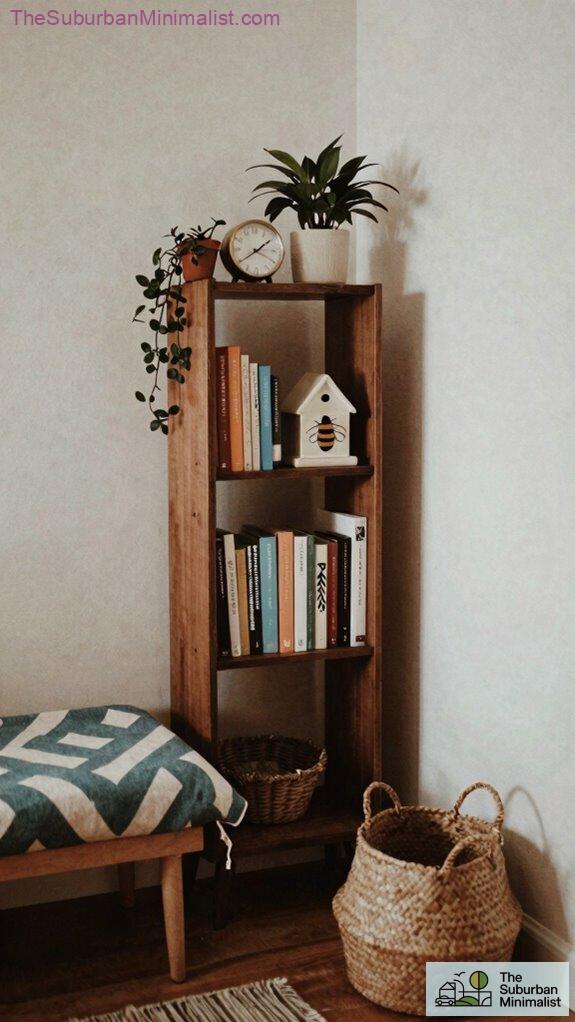
We’ve all got those “one more thing” moments, don’t we? I’m choosing swaps that honor purpose over excess, inviting you to rethink every surface.
Replace bulky pieces with multi-use options, so shelves glow with intention rather than clutter. I love vintage accents that whisper story, paired with bold patterns to spark joy, not overwhelm. It’s about function first, mood second, and a little playful rebellion when the sofa begs to stay.
Have you noticed how a single thoughtful swap reshapes rooms? This approach echoes why I created this website The Suburban Minimalist—organically, not shoutily. Incorporating versatile materials like ceramic bee hotels can also add both function and charm to your decor, helping to simplify your kitchen appliances and gadgets landscape.
Ready to try one swap today?
Maintain the Calm: Routines to Keep Spaces Timeless
Keeping spaces timeless isn’t about rigidity; it’s about rituals that honor calm. I learned this after a lunch-hour epiphany, pacing my hallway with a mug of tea, realizing less can feel more. Do you crave spaces that breathe? Here’s how I keep them that way, without becoming austere.
The secret isn’t polish alone but routines that honor function and mood. Incorporating mindfulness practices into daily routines helps maintain simplicity and tranquility. Regularly practicing mindful awareness ensures we remain present and attentive to what truly matters in our space and time.
- Morning reset: bowls and keys returned, a scent of citrus in the air
- Quarterly audit: vintage accessories sparingly displayed, stories renewed
- Weekly wipe-down: surfaces gleam, but furniture keeps its warmth
- Seasonal swap: bold patterns reimagined with care
- Nightly wind-down: quieting tech, mindful breaths, soft lighting
This is why I created The Suburban Minimalist.
Quick Wins for Everyday Serenity
A quick win is usually the smallest ripple that reshapes the day, right? I notice how a single tray disappears from the coffee table, and suddenly the surface breathes. Incorporating minimalist coat rack wall hooks can further streamline your space by providing a dedicated, clutter-free spot for essentials. Creating a memory box is another small yet meaningful act that can nurture your emotional well-being, helping you stay connected to joyful moments without cluttering your physical space.
I’m chasing calm with eco conscious choices, choosing pieces that feel right in my hands and in my space. Tactile textures invite me to pause—rough clay, soft linen, cool ceramic—and I ask you, doesn’t touch teach restraint?
I recall why I created this website, The Suburban Minimalist, not to perfection but to presence. Small shifts compound, and serenity arrives through mindful removal, honest habits, and thoughtful details.
Floating Console Tray Organizers
Floating console tray organizers aren’t just pretty pieces tucked into a hallway nook; they’re little systems that keep life’s essentials in reach without shouting for attention.
I see them as tiny stagehands, lifting everyday moments—keys, mail, a favorite candle—without clutter drama. Do you crave innovation you can feel, not just admire? Me too.
Vintage textiles drape the tray’s edge, a soft wink to history; botanical accents whisper calm into the chrome edge. I test them by morning: if I don’t forget something, it stays.
Designing for functional space utilization is key when selecting these organizers, ensuring they serve both style and purpose effortlessly. Incorporating petite linen wrap dresses into your wardrobe philosophy inspires a balance of comfort and elegance—a mindset that can extend to your home with thoughtful organization solutions.
Here’s imagery to spark ideas:
- woven pocket, copper trim
- tiny herb sprig magnet
- chalky ceramic dish
- linen napkin roll
- glass oil bottle
Silence-Evoking Contrast Fixtures
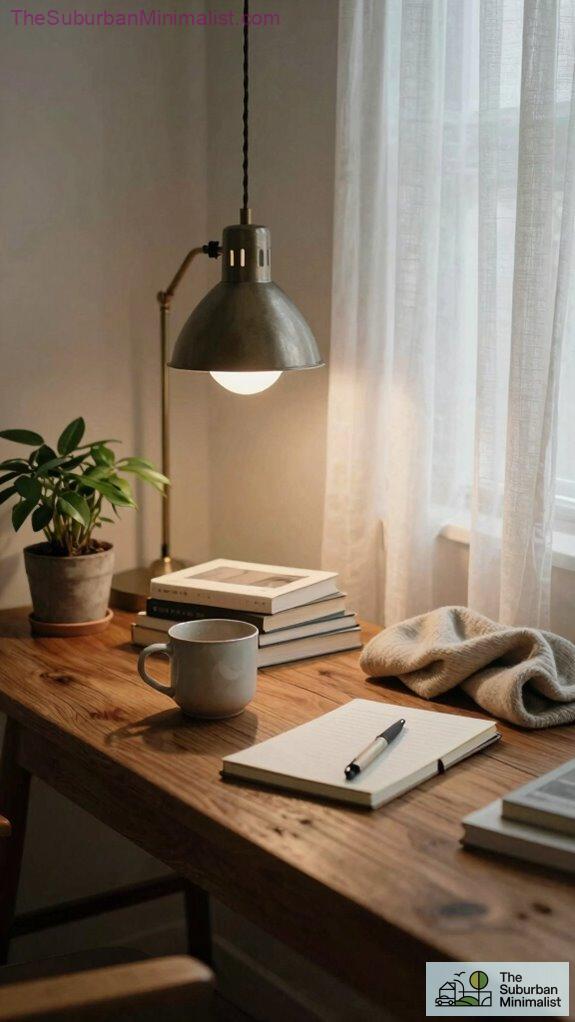
Silence isn’t just the absence of noise; it’s a design choice that steadies the room and lets the details breathe. I notice how contrast fixtures calm chaos, guiding eyes with quiet certainty.
Rustic charm sneaks in through a dented metal pendant and warm wood, while color contrast turns calm into conversation without shouting. Incorporating minimalist principles can deepen this sense of calm, fostering a space that feels intentional and uncluttered.
Do you feel it—the pause before a nightstand lamp flicks on, the room exhaling after a busy day? I’ve learned to curate this balance, a practice I share on This Suburban Minimalist.
Why I created this site? to teach subtle, intentional living. Embracing minimalist reading materials can help busy moms find calm amidst their routines. Ready to try the shift?
Smart-Home Energy Hubs
Smart-Home Energy Hubs aren’t just gadgets—they’re quiet anchors for a calm, capable home. I glimpse how function pairs with mood, and I want you to feel that too. Do you crave outdoor privacy while tech hums softly in the background? I do. These hubs become invisible teammates, syncing lights, climate, and sound so I don’t have to micromanage textures of daily life. Incorporating material detachment principles can help create a space that is both functional and serene. This approach can also contribute to maintaining a comfortable environment, such as selecting bamboo sheets that provide a cool, comfortable night’s sleep.
Together we’ll shape spaces with textural accents that whisper rather than shout.
- Compact panels tucked beside a window, gleaming softly
- Hidden wiring behind wood-grain covers, warm and tidy
- SubtleLED halos for mood shifts
- Cable management as art
- Quiet cooling for comfort
Suburban Minimalism
Suburban Minimalism isn’t about stripping life to bare walls; it’s about curating calm without sacrificing warmth. I tell you, I’m learning to breathe between the lines of furniture and memory.
Do you feel how cozy textiles soften the echo of a big room, while vibrant accents spark curiosity without shouting? I’ve trimmed clutter, kept only what acts, and watched the space gain permission to glow.
This approach isn’t cold; it’s thoughtful, like sharing a cup of tea with a friend who knows my daily quirks. I created this website The Suburban Minimalist to prove intention can feel inviting.
FAQ
How Do I Start Removing Furniture Without Disrupting Daily Routines?
I start by evaluating furniture arrangement for daily flow, then prune ruthlessly in low-traffic zones to protect routines; I test each removal for spatial balance, communicate changes ahead of time, and adjust gradually to keep momentum and calm.
Which Pieces Most Visually Quiet a Room Without Losing Function?
I remove bulky pieces first, but keep essential seating and storage, preserving Decorative accents for depth and Visual balance. I choose low-profile, modular options, then test flow—innovative, quiet, and endlessly adaptable for chic, functional spaces.
How Can I Measure Flow Improvements After Removal?
I measure flow improvements by tracking space efficiency and visual balance after removal, reader. I document clearance percentages, path simplicity, and furniture touchpoints, then compare baseline to post-change metrics, noting time to navigate, reach, and sense of calm.
What Color or Texture Cues Help Preserve Calm Post-Removal?
Can color palette and texture contrast preserve calm post-removal? I believe so, because subtle cool tones paired with tactile contrasts maintain serenity while guiding focus. I’ll use a restrained color palette and intentional texture contrast for balance.
When Is Replacement Furniture More Hindrance Than Help?
Replacement furniture is more hindrance than help when it adds furniture clutter and disrupts visual balance; I’ll redesign with multifunctional pieces instead, keeping innovation by simplifying layouts, pairing items that serve multiple needs while preserving calm.
Summary
I’ve learned that quieter rooms feel louder with meaning. So I prune, not purge, keeping what moves you toward daily ease. Do you feel the door sigh when you enter, a soft welcome mat of space? That’s the goal—breathing room that guides you without shouting. I created this site, The Suburban Minimalist, to share practical calm, a dash of humor, and honest swaps. Now, what will you remove first to make your home sing, not shout?