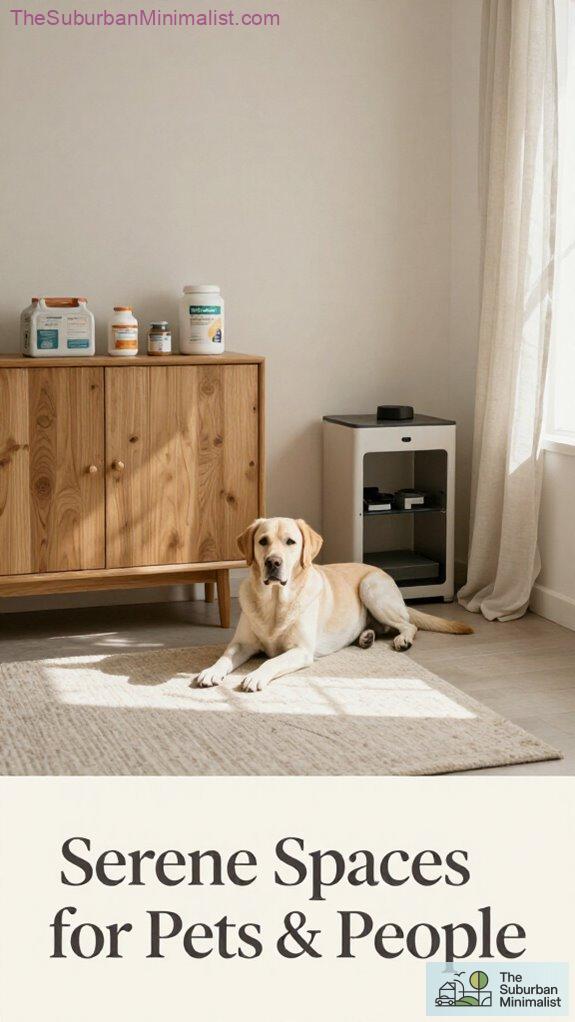
I spent three years fighting my golden retriever’s mud before I stopped—and started designing instead.
My white oak floors were a battlefield. Every rainstorm meant panic. Then I realized: perfection was the real mess.
That’s why I built The Suburban Minimalist. To prove you don’t need sterile spaces to feel calm. You need *smart* ones.
I’m talking sleek pet zones tucked into oak enclosures. Performance velvet sofas that actually handle life. Feeding stations that don’t scream “pet owner.” Hidden storage. Labeled bins. Intentional chaos.
The gap between minimalism and real living? I’m closing it.
Minimalist Pet Organization: My Game-Changing Mud Room Moment
Last winter, I finally admitted defeat with traditional storage. Hooks everywhere. Leashes tangled. Paw prints tracked through my entire open-concept living room—my supposed sanctuary for clean lines and negative space.
I redesigned my entryway with modular cubbies using natural wood and washable performance fabrics. Built-in water bowls. Designated grooming station. Now my dog’s mess stays contained, and my minimal aesthetic actually survives real life.
That day changed everything. Sustainable living with pets means embracing functional design, not sacrificing serenity. It’s about thoughtful organization, quality materials, and accepting that a minimalist home with pets requires intentional space planning—not denial.
Quick Takeaways
- Design outdoor pet zones with durable, stylish materials like white oak and resilient plants for seamless suburban integration.
- Choose modular, pet-resistant furniture with washable covers to blend elegance and functionality in minimalist interiors.
- Use hidden storage solutions like labeled baskets and floating shelves to maintain clean lines and reduce clutter.
- Incorporate sleek feeding stations with stainless steel bowls and concealed kibble storage for tidy, artful spaces.
- Emphasize sustainable materials and natural elements to connect indoor and outdoor living in a calm, cohesive design.
Designate Pet Zones That Fit Your Minimalist Layout
If you’re like me—a woman in her 40s who values calm spaces but also adores her golden retriever—you know the struggle: how do you keep your bio-minimalist sanctuary intact when paws, claws, and curiosity are constantly at odds with sleek white oak floors and monochromatic living rooms?
I solved it by designing intentional Outdoor pet zones—durable, stylish spaces where muddy paws are expected, not edited. I tucked in Pet friendly plants like cast iron and snake varieties that survive both sun and slobber. Incorporating elegant Large White Ceramic Vases can add a touch of sophistication while keeping clutter minimal.
It’s why I created The Suburban Minimalist—real solutions for homes that live beautifully, not just look it. Incorporating mindful family traditions into your space design can create lasting bonds and cherished memories.
Choose Furniture That Serves Pets and Style
Because my golden retriever loves claiming the coziest spot on the couch—and let’s be honest, she’s basically a furry interior designer with zero regard for my linen throw pillows—I’ve learned that pet-friendly furniture doesn’t mean sacrificing style.
What if your decor could embrace both elegance and paws? Urban pet integration is all about smart, seamless choices. I’ve found peace in:
- Sofas with removable, washable covers
- Scratch-resistant, pet friendly materials like performance velvet
- Modular pieces that adapt as needs change
Additionally, selecting sustainable materials can ensure your furniture is both environmentally friendly and durable enough to withstand pet activity.
Why I created *The Suburban Minimalist*? To prove beauty and practicality aren’t mutually exclusive—especially when your dog rules the living room. And by choosing pet-friendly furniture, you can maintain a clutter-free, stylish space that accommodates your furry friend.
Tuck Feeding Stations Into Custom Minimalist Enclosures
Where do you hide the kibble chaos without pretending your home is a showroom?
I tucked my dog’s bowls into a custom white oak enclosure—sleek, hidden, but always accessible. Using pet friendly materials like non-toxic finishes and smooth, wipeable surfaces means clean-up’s a breeze, not a chore. Incorporating Stylish Low Profile Lounge Chairs into the design can also create a relaxed atmosphere that seamlessly blends functionality with style.
Why I created this website, The Suburban Minimalist, was to solve these daily clashes between style and mess.
Organic pet décor doesn’t mean sacrificing beauty for function—it means blending them. The soft curve of the wood, the seamless cutouts for bowls—it’s feeding station as quiet art. Finally, a spot that feels intentional, not like I surrendered my living room to snacks. Incorporating functional design into pet areas elevates the overall aesthetic without clutter.
Store Toys and Grooming Supplies in Hidden, Labeled Bins
Even with the best intentions, pet toys and grooming tools have a sneaky way of multiplying like damp socks in a laundry basket—suddenly you’re tripping over squeaky hedgehogs and detangling spray at 8 a.m. on a school day.
Pet chaos multiplies fast—sudden piles of squeaky toys and tangles at dawn are every pet parent’s reality.
I’ve learned that blending pet fashion with bio-minimalism means taming the chaos with style. Hidden, labeled bins aren’t just practical—they’re a design statement.
My go-tos?
- Linen-covered storage cubes tucked under benches
- Matte black bins with chalkboard labels for organic grooming essentials
- Floating oak shelves with woven bins for collars and toys
Who knew discipline could look this chic?
This is why I created *The Suburban Minimalist*—to prove function and beauty can coexist, even with a husky who thinks he’s a fashion model.
Train Pets to Use Their Spaces: And Keep Them Clean
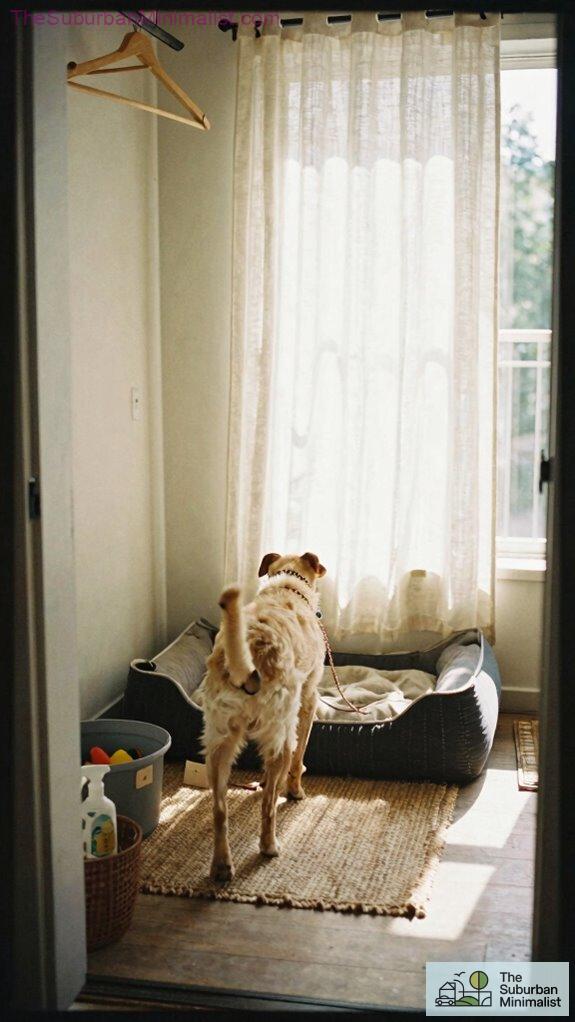
You’ve corralled the squeaky frogs, labeled the bins, and tucked everything into oak-hued nooks—congrats, your entryway finally looks like it belongs in a magazine and not a preschool hallway.
But let’s be real: what good is design if Luna still pees by the door? I’ve used clever pet training techniques—positive reinforcement, a touch of patience—and paired them with smart pet scent control like enzymatic sprays that actually work. Implementing sustainable water storage strategies can also help keep your outdoor spaces tidy and reduce clutter, enhancing your overall minimalism.
Now my dog trots to her oak-raised bed, not the rug. Similarly, embracing minimalism can extend beyond your home decor to your skincare routine—lightening your load and focusing on what truly nourishes your skin.
It’s why I created this website: to blend beauty with real life. Because true style isn’t just clean lines—it’s a clean pet pad, too.
Integrated Pet Feeding Stations
Because I’ve spent years chasing quiet corners in a house full of dog hair, spilled kibble, and the lingering scent of “I meant to clean that yesterday,” I finally redesigned the corner where my dog eats like he’s auditioning for a food fight movie.
Now, with vertical integration, his bowls rise off the floor, and the mess? Minimal. I used pet friendly materials—stainless steel, easy-clean composite—that look sleek, not surgical. Choosing pet-friendly materials helps ensure durability and easy maintenance over time.
This is why I created this website: The Suburban Minimalist. To prove function can be fierce.
You’ll love:
- Wall-mounted feeder shelves
- Hidden storage for extra kibble
- Wipeable, non-toxic finishes that laugh at slobber. Minimalist design ensures the area remains simple yet sophisticated.
Custom Pet Hydration Stations
My dog’s water bowl used to live in the same sad corner as his kibble—plastic, wobbly, and ringed with a slimy halo I pretended not to see.
Now, his hydration station is a sculptural stainless steel fountain, tucked under a floating oak shelf. It purifies, circulates, and actually complements my pet fashion spreads. Top Wooden Pet Crates can also serve as stylish enclosures that blend seamlessly into minimalistic interiors.
I’ll admit, it upgrades my grooming routines, too—no more spilled water tracking to the mudroom.
Wouldn’t you rather admire your pup sipping from something sleek than scrubbing algae? That “why” moment—when form finally met function—is why I created this website: The Suburban Minimalist.
Beauty shouldn’t bow to mess. Not ever.
One way to elevate this minimalist vibe is by incorporating herb garden kits, which add subtle greenery that’s both functional and aesthetically pleasing.
Bespoke Pet Supply Nooks
While I used to stash pet supplies behind cupboard doors like guilty secrets, I now build them into the home with intention—because why should the things that care for my dog feel like clutter? I designed my own bespoke pet supply nook using eco friendly materials and clean lines that match my living space, not fight it. It finally feels like style and function can coexist—imagine that. Incorporating minimalist design principles ensures these solutions remain both functional and visually unobtrusive. Using effortless minimalism helps create spaces that are both calm and practical, making daily routines smoother for both pet and owner. This is why I created The Suburban Minimalist—to share smart solutions that honor both design and daily life.
Suburban Minimalism
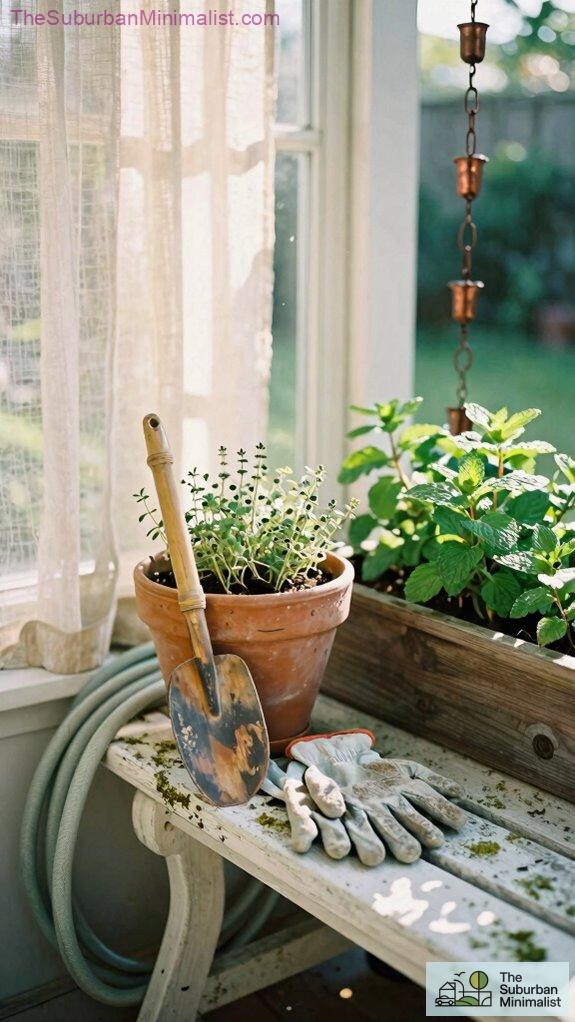
What if the secret to a calmer home isn’t less stuff, but stuff that actually belongs?
I used to think minimalism meant sacrifice—until I embraced suburban minimalism, where design feels alive. I chose eco friendly materials that breathe, like white oak and bamboo, and built quiet corners that hold both life and style.
My garden integration wasn’t an afterthought; it’s where the house meets sky and soil. The copper rain chain, the tiered plant stand—they’re useful, beautiful, necessary.
Funny how curating less helped me find more. Incorporating natural elements like sustainable materials can deepen that connection to the environment and create a truly harmonious space.
That’s why I created this website: The Suburban Minimalist. Not to empty space, but to fill it right.
FAQ
How Do I Choose Pet-Safe Plants for My Bio-Minimalist Garden?
I choose pet-safe plants by prioritizing low maintenance greenery like spider plants and Boston ferns, integrating them into my indoor vertical gardening setup. I check toxicity first, then opt for hardy, air-purifying species that thrive with minimal care, keeping both my space sleek and my pets safe.
Can I Integrate a Cat Tree Into a Minimalist Living Room?
Of course I can—ironic, isn’t it? A cat tree was once eyesore enemy number one. Now, my sleek cat tree integration blends with minimalist furniture coordination using sculptural wood forms, hidden litter nooks, and modern lines that even I didn’t know cats could elevate so well.
What Color Tones Work Best for Pet Accessories in Cool Palettes?
I choose soft grays, matte whites, and muted blues for pet accessories—they blend seamlessly. With color coordination, I elevate accessory accents in cool palettes, merging innovation and elegance so your space stays sleek, functional, and truly mine.
Are There Minimalist Litter Box Solutions for Small Entryways?
Yes, I’ve found sleek, modern designs that blend form and function—compact, covered litter stations with clean lines. These space saving solutions tuck neatly into tight spots, marrying smart engineering with subtle style, so discretion and design go hand in hand without sacrificing a thing.
How Can I Hide Pet Waste Bags Without Compromising Style?
I use a sleek wall-mounted dispenser with discreet storage to keep pet waste bags tidy and within reach. It offers stylish concealment that complements my space—innovative, functional, and perfectly integrated into my daily routine without cluttering the aesthetic I’ve curated.