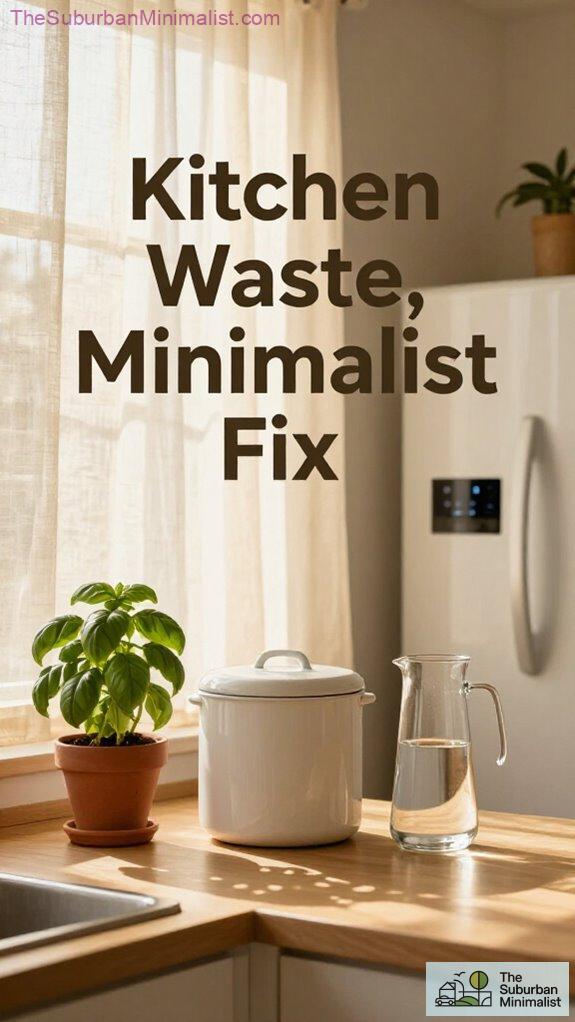
I almost quit hydration completely—sounds dramatic, but hear me out.
My countertop was drowning in fancy water bottles I never used. Stainless steel. Rose gold. Plastic chaos masquerading as wellness. Then I grabbed a simple glass carafe. One sip felt different. Intentional, even. That’s when I realized: staying hydrated doesn’t require an aesthetic overhaul. It just requires showing up.
I started The Suburban Minimalist because I was suffocating under suburban expectations. The pressure to have it all, look effortless, balance everything perfectly? Exhausting. I wanted to prove that less—fewer things, fewer decisions, fewer mental tabs open—actually gives you more. More clarity. More breathing room. More actual living.
How Minimalist Water Practices Actually Changed My Daily Routine
Last winter, I replaced my bathroom cabinet’s overflowing collection of flavored water additives with one glass pitcher and filtered tap water. Radical? Maybe. But suddenly, my morning felt cleaner. Literally and mentally. No decision fatigue around *which* water to drink. The simplicity of minimalist hydration habits extended beyond the physical—it became a daily ritual that grounded my entire routine. I wasn’t performing wellness anymore. I was practicing it. Combined with mindful living and intentional consumption, this shift influenced how I approached everything: from my morning skincare to my evening wind-down. Small acts of deliberate simplicity compound.
Quick Takeaways
- Designate a minimalist hydration station with glass carafes and natural elements to make water consumption a mindful daily ritual.
- Use eco-friendly filtration systems like charcoal sticks or ceramic filters to ensure clean water while reducing plastic waste.
- Incorporate calming, nature-inspired color schemes and organic textures to create a tranquil, intentional water-drinking environment.
- Harvest rainwater with sleek, functional systems like cisterns and rain chains to support sustainable yard and garden use.
- Establish daily routines such as morning hydration and reusable containers to align with low-waste, purpose-driven living.
Understand Why Hydration Fits Minimalism
Funny how something so basic connects to the deeper pull of suburban minimalism—the kind I explore here, on The Suburban Minimalist, where I share why I created this space in the first place: to find clarity not by stripping everything bare, but by choosing what stays with intention.
Clarity isn’t found in emptiness—it’s crafted through intentional choices, one deliberate edit at a time.
Can hydration be design? Absolutely. I’ve replaced plastic bottles with sleek glass carafes—*hydration aesthetics* at their finest. Every sip feels intentional, even sacred.
And isn’t *water conservation* the quiet rebel of minimalism? I collect rain for my herbs, use greywater wisely. Less waste, more rhythm. Mindful water use can deepen our connection to both environment and daily rituals, making hydration a purposeful act rather than a mundane task.
It’s not about denial. It’s about flow—of water, of life—moving with purpose, not clutter.
By incorporating plants into my space, I create a natural harmony that enhances both beauty and mindfulness in my daily routine.
Pick a Low-Waste Water Filter System
I’ve stood in enough kitchens to know that what we drink matters just as much as how we serve it.
Why pour from plastic bottles when you can enjoy a steady filtered flow straight from the tap?
I switched to a glass carafe system with a built-in charcoal stick, and honestly, it changed everything—crisp, clean taste, zero waste.
For true eco-friendly purification, I researched options and landed on a ceramic-filter model that’s sleek enough to leave on my counter.
It’s quiet, efficient, and aligns with why I created this website: to merge beauty with purpose.
A well-designed wooden pet crate can also add a touch of style and safety to your living space, making it both functional and attractive.
Who knew sustainability could look this good? Essential acid-free photo storage boxes also help preserve special memories responsibly.
Maintain Your Pitcher in 3 Easy Steps
Though it’s easy to forget, keeping your water pitcher in top shape isn’t just about taste—it’s a small act of care that echoes through your whole kitchen rhythm.
I replace the filter every two weeks—no exceptions—because clean hydration aesthetics start with consistency.
A quick rinse under the tap clears debris, and I store it with the lid slightly ajar to prevent mustiness.
And when it’s time for a new one? I always check for recyclable, sustainable packaging—why else would I created this website, *The Suburban Minimalist*, if not to merge function with conscience? Maintaining the filter quality is crucial for optimal hydration and sustainability goals, aligning with minimalist principles.
Embracing minimalist design principles in my hydration habits helps simplify my routine and keep my space feeling calm and clutter-free.
It’s not fussy. It’s focus.
Design a Minimalist Hydration Station
Because every sip starts with intention, I design my hydration station to feel less like a chore and more like a quiet ritual—something that fits seamlessly into the flow of my morning, not fights against it.
Each sip begins with purpose—a ritual of stillness, not obligation, woven gently into the morning’s quiet rhythm.
I anchor it with a matte ceramic pitcher on a tray of warm oak—organic textures that ground the space. Think soft stone, woven coasters, maybe a tiny potted herb.
Ever notice how the right color harmonies—sage, sand, slate—can calm a room before you’ve even poured a glass?
This is why I created this website: The Suburban Minimalist. Not to impress, but to design around what matters.
Monitor Intake Without Digital Tools
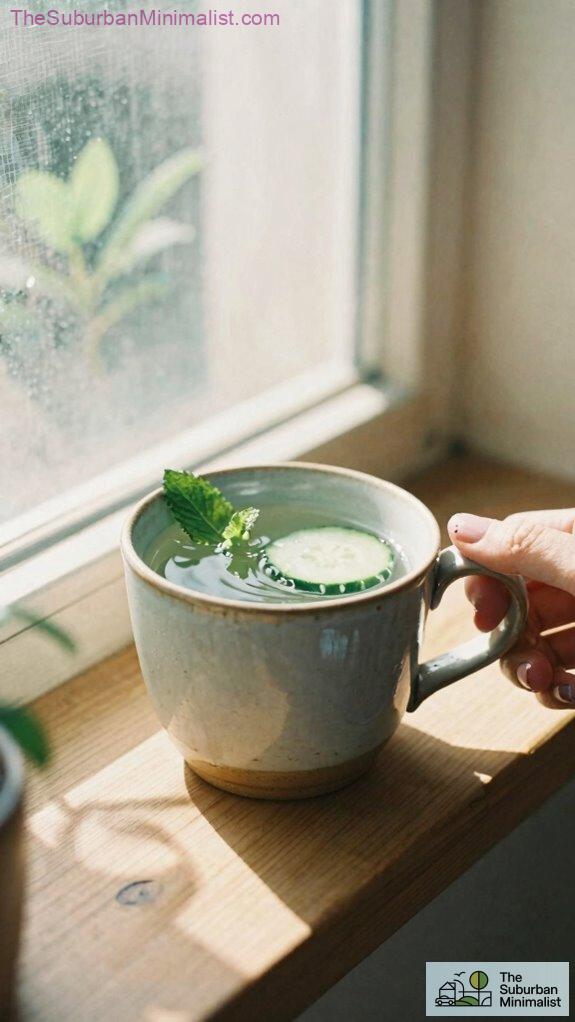
While I don’t track every drop like a data point on a spreadsheet, I’ve learned that staying hydrated doesn’t require an app to remind me—just a few mindful shifts in how I move through my day. I notice my energy dips, my skin sags—clues my gut health needs support. So, I pause. I refill. Flavor variations? A slice of cucumber or a sprig of mint keeps things interesting without sugar. No obsession, just presence. Ever notice how quiet hydration feels—no pings, no tracking fatigue? That’s why I created this website: to share how simplicity, not tech, often holds the real innovation. By embracing minimalism, you can reduce decision fatigue and focus on what truly matters. I’ve found that decluttering not only creates space physically but also allows for emotional clarity and peace of mind. You don’t need data. You need attention.
Build a Daily Hydration Ritual
When I anchor my morning with a glass of room-temperature water before coffee, I’m not just hydrating—I’m setting the tone for a day where intention edges out chaos.
My ritual? Sip slowly beside the outdoor water features, letting the trickle sync with my breath. That quiet moment—paired with bedroom aromatherapy’s soft hum of lavender—grounds me.
Sip by sip, the trickle of water mirrors my breath—anchored in stillness, cradled by the quiet hum of lavender.
Isn’t it wild how something so simple can feel revolutionary? Embracing emotional detachment from possessions helps me foster a sense of calm and clarity in my space.
I created The Suburban Minimalist to document these small, defiant acts of calm in a world that glorifies burnout.
Hydration isn’t just physical. It’s the pause, the breath, the choice to begin gently—even when motherhood, work, and laundry scream otherwise.
This is bio-minimalism: purpose, not pressure, and embracing mindful rituals that foster intentional living.
Smart Hydration Stations
Since good design shouldn’t demand silence from my body, I’ve stopped hiding my water bottle behind cupboard doors and started designing hydration into the heart of my home.
Why wait until I’m parched? Now, my kitchen island holds a sleek dispenser made from eco friendly materials, its glass carafe glowing in the morning light. It’s about aesthetic symmetry—form meeting function where every sip feels intentional.
I even placed a whisper-quiet bamboo cooler by the living nook. Hydration isn’t chore—it’s ritual. Incorporating teak bistro sets into outdoor spaces is also a great way to elevate your home’s style while making hydration and outdoor dining more inviting.
Funny, how something so simple sparked my whole journey. That’s why I created this website, The Suburban Minimalist—not to purge, but to prioritize what truly sustains us. Incorporating a collapsible laundry drying rack into my space has also helped me reduce clutter and embrace a more sustainable lifestyle.
Rainwater Harvesting Systems
How often do I catch myself watching rain patter against the patio, thinking, *that’s just free water going to waste*?
Rain falls, and I see not waste but wealth—each drop a quiet act of resistance against excess, a chance to live like enough is truly enough.
I’ve started treating rainfall like liquid gold—diverting it through sleek rain chains that double as Rainchain aesthetics with copper glimmers and quiet grace. These aren’t your grandma’s downspouts; they’re functional art, part of smarter water conservation techniques that just make *sense*.
I collect every drop in buried cisterns, then use it for drought-tough gardens and wild green walls. Why rely on the grid when nature refills our supply?
Funny thing—I launched The Suburban Minimalist just to share this quiet rebellion called bio-minimalism. Turns out, doing less often gives you more.
Modern rain barrels are also designed to improve efficiency and aesthetics, seamlessly integrating into minimalist yards and making conservation effortless modern rain barrels.
Closed-Loop Kitchen Systems
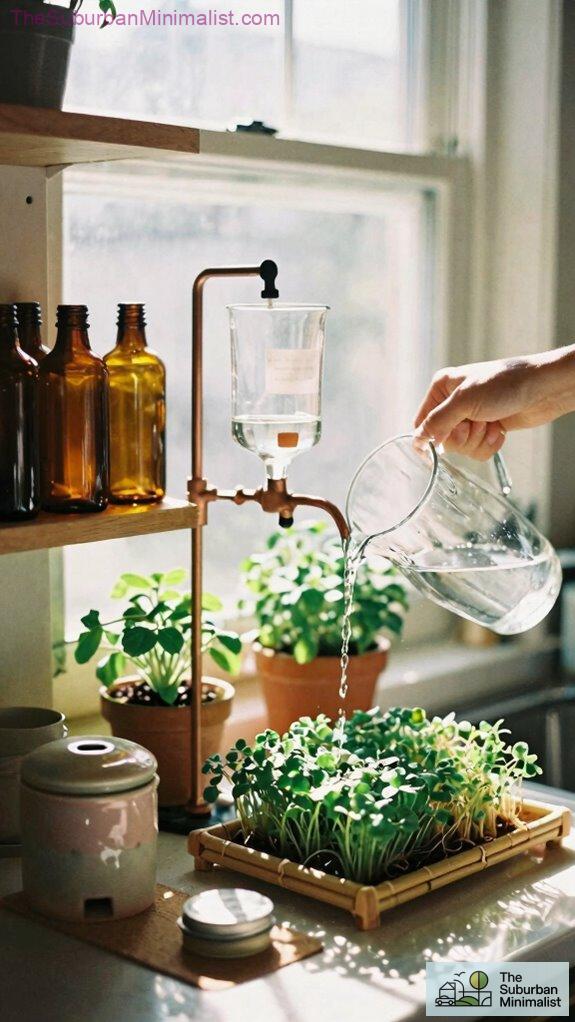
Rain used to slip through my fingers—one more thing I couldn’t quite hold onto, even as I watched it soak the thirsty soil.
Now, I capture it, filter it, and cycle it right through my kitchen—turning runoff into rinse water, then into garden feed. Closed-loop systems changed everything.
I rely on reusable containers made from recycled glass and plant-based resins; they’re sleek, sturdy, and don’t mess with water quality.
Ever tasted water that *nourishes* instead of just hydrating? That’s the shift.
By incorporating eco-friendly waste management techniques like bokashi composting, I further reduce my footprint and nourish my garden naturally. Using solid perfume balms, I embrace minimalism in everyday routines, avoiding unnecessary packaging and waste.
Why do you think I built *The Suburban Minimalist*? To share these small revolutions—where every drop pulls its weight, and innovation feels like common sense.
Suburban Minimalism
Though I used to think minimalism meant emptying every shelf and living like a showroom, I’ve learned it’s actually about making room—on purpose—for what truly matters.
Now, my home balances calm with character: vintage ceramics I found at flea markets sit beside my sink, each piece telling a story without screaming for attention. Urban gardening? I grow basil on a sunny windowsill—no yard, no problem. Creating intentional spaces can also reduce environmental impact, making our daily routines more sustainable and eco-friendly.
Why did I create this website, The Suburban Minimalist? To share how less clutter leads to more life.
Simple spaces don’t have to feel sterile. They can pulse with warmth, innovation, and a little sass—just like us.
Focusing on textile color palettes helps me choose elements that add depth and harmony without clutter, making every piece in my home speak softly but meaningfully.
FAQ
Can I Use Metal Bottles With My Filter System?
Yes, I use metal bottles daily—they’re sleek and durable. Just make sure your filter compatibility supports them, since some systems react poorly to metal. Mine integrates seamlessly, maintaining flow and purity without corrosion or leakage. Innovation meets practicality here.
Do Hydration Stations Work in Small Apartments?
Yes, I use a compact hydration station in my studio and love it—no more plastic bottles. I filter regularly for better apartment water taste, and quick monthly rinses keep maintenance simple. It’s smart, sleek, and perfect for tiny spaces that demand big innovation.
How Do I Recycle Old Filter Cartridges?
I toss old filter cartridges at eco-drop spots—like how I once rescued a dying plant with repurposed water, a small act with big ripple effects. Check filter durability, time cartridge replacement right, and let innovation turn waste into renewal.
Are Glass Water Jars Freezer-Safe?
I’ve tested it myself—most glass water jars are freezer-safe if they’re tempered, but I always leave room for expansion. Regular glass? Skip it. My pick: borosilicate for max glass durability and no cracks. Innovation meets practicality.
Can Kids Use the Rainwater Harvesting System Safely?
Yes, kids can safely use the system—I design child friendly plumbing with sealed, filtered access points. I prioritize rainwater safety through closed-loop collection and UV sterilization, so my family enjoys innovative, worry-free hydration straight from our garden’s bounty.