My pantry used to look like a apocalyptic food hoarding situation. Then I actually counted five nearly-expired pasta boxes.
Clear containers. Smart labels. A compost bin that doesn’t scream “I’m trying too hard.” That’s it. That’s the move.
I’m not some perfect organizing guru (lol, far from it). I just got tired of wasting money—and food—on duplicates I forgot existed. So I started *The Suburban Minimalist* to show you that sustainability doesn’t require perfection. Just honesty.
How I Finally Stopped Food Waste Through Kitchen Minimalism
Last spring, I deep-cleaned my fridge and found three jars of the same pesto, each half-full and forgettable. That moment stung. I realized my “organized” pantry was actually just hidden chaos. I switched to transparent glass containers with dated labels using a simple date-rotation system. Now everything’s visible. Everything’s intentional. The compost chute became my accountability partner—literally watching food waste decrease changed how I shop. It’s not about deprivation; it’s about respect for what I actually consume. Minimalist kitchen organization, food waste reduction, and sustainable living aren’t trendy anymore. They’re just smart.
Quick Takeaways
- Use clear, labeled containers to enhance visibility and prevent food from being forgotten and wasted.
- Apply FIFO stock rotation with color-coded labels to manage expiry dates and reduce spoilage.
- Integrate seamless under-counter compost systems with odor-control features for daily organic waste.
- Choose durable, stackable glass containers that support meal prep and long-term reuse.
- Combine smart appliances and indoor plants to cultivate a low-waste, livable minimalist kitchen.
Start With Pantry Transparency to Reduce Overbuying
Though I used to think a full pantry meant I was prepared, I’ve learned that cluttered shelves actually lead to more waste and less clarity—especially when I can’t see what I already own.
Now, I swear by pantry organization that prioritizes visibility: clear jars, smart labeling, and strategic stacking. When I see every spice, grain, and can, I cook with intention—no more double-buying chickpeas.
Ever tossed fuzzy lentils just because they vanished behind a soup you forgot you bought? Yeah, me too. That’s why food preservation starts with honesty—not just about expiration dates, but what’s truly inside your cabinets.
You can also mindfully streamline your pantry to make thoughtful choices about what you truly need, reducing the likelihood of waste and overbuying. Practicing gradual release helps in letting go of unnecessary keepsakes without feeling overwhelmed.
This shift? Why I created this website: *The Suburban Minimalist*. To find calm, not clutter.
Choose Reusable Containers That Fit Your Life
Since I started paying attention to what actually fits in my life—not just what looks good in a Pinterest flat lay—I’ve stopped buying containers that “should” work and started choosing ones that *do*.
I stopped buying containers that should work and started choosing ones that do—because real life beats pretty photos every time.
How many times have you ruined meal prep because the lids don’t seal, or the shape won’t nest? I’ve been there—stacking bulky, wobbly bins like a kitchen Jenga tower.
Now, I prioritize container durability and real-life fit: rounded corners for scraping, stackable designs, and glass that survives freezer-to-oven chaos.
It’s why I created this website—*The Suburban Minimalist*—to share what actually works.
Spoiler: it’s not the prettiest jar. It’s the one that lasts, fits, and makes tomorrow’s lunch feel effortless.
“`markdown
Since I started paying attention to what actually fits in my life—not just what looks good in a Pinterest flat lay—I’ve stopped buying containers that “should” work and started choosing ones that *do*.
How many times have you ruined meal prep because the lids don’t seal, or the shape won’t nest? I’ve been there—stacking bulky, wobbly bins like a kitchen Jenga tower.
Now, I prioritize container durability and real-life fit: rounded corners for scraping, stackable designs, and glass that survives freezer-to-oven chaos. To make informed choices, I also consider the reliability of my storage solutions, focusing on quality and longevity.
It’s why I created this website—*The Suburban Minimalist*—to share what actually works.
Spoiler: it’s not the prettiest jar. It’s the one that lasts, fits, and makes tomorrow’s lunch feel effortless.
Label Smart: Track Contents and Expiry Dates
How many times have you stood in front of an open fridge, squinting at a container with zero memory of what’s inside—or worse, playing Russian roulette with last week’s leftovers? I’ve been there—why I created this website. The fix? Smart labeling. A quick chalkboard tag or reusable sticker tells me what’s inside and when it needs to go. Expiry tracking isn’t glamorous, but it slashes waste and saves cash. Incorporating elegant wooden display cabinets into kitchen organization can also keep stored items protected and visually appealing. I use glass jars with date-stamped lids and color-coded tape—blue for dairy, green for produce. No more guessing games. Just clarity. Proper labeling and expiry management can also simplify your shopping habits, preventing duplicate purchases. Smart labeling turns chaos into calm. It’s the small hack that keeps my kitchen honest, fresh, and truly minimalist.
Rotate Stock Using FIFO and Visible Storage
Ever open your pantry to find a sad box of quinoa from 2023 lurking behind last night’s leftovers, playing hide-and-seek with your kitchen morale?
I’ve been there—until I embraced FIFO: first in, first out. Now, new groceries go to the back, pushing older items forward where I’ll actually use them.
Visible storage is my secret weapon. Glass jars, bamboo risers, and open shelving mean nothing hides. With smart lighting, even dim corners reveal expiration dates at a glance.
Using visible storage techniques helps me quickly see age and quantity, reducing surprise spoilage. Incorporating a clutter-free environment minimizes cognitive overload, making decision-making easier and less tiring.
And plant integration? A trailing pothos above my pantry reminds me: fresh life belongs front and center.
Funny how simplicity sticks when you design for real life—why I created *The Suburban Minimalist* in the first place.
Integrate Composting Into Your Zero-Waste Kitchen
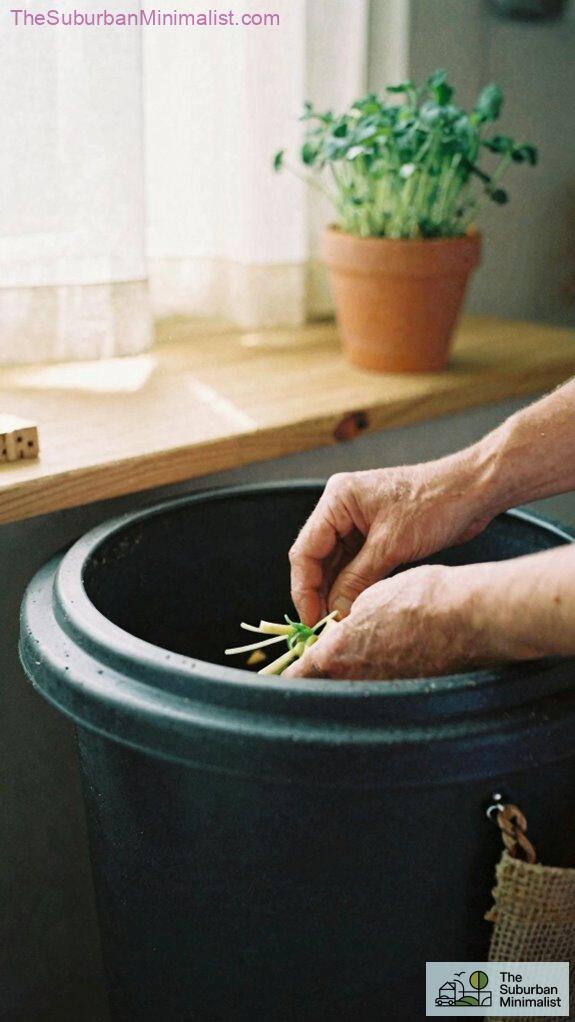
I’ll admit it—my journey toward a zero-waste kitchen didn’t start with composting.
It started when I realized rotting scraps weren’t just smelly—they were a failure of kitchen hygiene *and* food preservation. Now? My automatic compost bin keeps odors sealed, not lurking.
Rotting scraps weren’t just smelly—they were a failure. Now my automatic bin seals in odors, turning waste into quiet transformation.
I save peels for broth, then let the bin do its quiet work. Funny how ditching waste revived my passion for cooking.
Composting isn’t gross—it’s radical renewal. Wooden building block sets also demonstrate how simple, natural materials can inspire creative, sustainable play, aligning with minimalist values. And yes, this is why I created The Suburban Minimalist: to show that true minimalism isn’t emptying your space, but refining your rhythm.
One spoonful of soil at a time. Indoor gardening
Shop Strategically to Support Your Zero-Waste Kitchen
Because every grocery run can either build momentum or quietly sabotage the calm I’ve crafted in my kitchen, I walk into stores with a reusable tote and a clearer mission than ever.
Do I really need that snack bar wrapped in plastic, or can I choose products with eco friendly packaging?
I stick to organic ingredient sources, not just for purity, but because they align with the quiet integrity of my space.
I created The Suburban Minimalist to explore smarter ways to live—like shopping with purpose. It’s not restriction; it’s refinement.
Each choice either adds clutter or clears a path. Why shop any other way?
Sustainable Kitchen Storage Jars
While I once thought mason jars would be my kitchen’s forever solution, I’ve learned that not all glass is created equal—especially when it comes to keeping flour fluff-free or spices vibrant for months on end.
Not all glass is created equal—mason jars may charm, but only the right kind keeps flour fluff-free and spices vibrant long-term
Now, I opt for borosilicate glass with airtight wood-grain lids—durable, leakproof, and quietly elegant. They blend organic textures with practicality, turning even bulk bins into thoughtful displays.
And honestly? A pantry shouldn’t just function—it should feel like *you*.
That’s why I add decorative accents like hand-turned lids or jars with subtle etchings: small joys that make daily routines feel intentional. Additionally, choosing modern smart light switch covers can add a touch of *minimalism* and convenience to your space, enhancing both style and functionality.
This is why I created The Suburban Minimalist—to share how beauty and function aren’t opposites. They’re allies.
Additionally, incorporating wooden pet crates can enhance your space’s aesthetic while providing safe, stylish living for pets.
Compost-Integrated Countertop Design
Turns out, it can. I integrated compost right into my countertop, and honestly, it’s a game-changer. No more trips to the backyard bin with sloshy scraps—this is biophilic design that feels alive, not just eco-friendly. The inlaid oak chute blends seamlessly, like it was always meant to be there, while the soft-close door muffles odors with charcoal filters. It’s sensory integration done right: the grain of the wood under my fingertips, the quiet *whoosh* of waste falling below. Incorporating charming decorative keepsake boxes for treasured memories for compostable items adds a personal touch to the space. Using stylish oak wall hooks for easy hanging of waste bags and tools keeps everything organized and accessible. Why I created this website, The Suburban Minimalist? Moments like this—where function, beauty, and calm collide—so you don’t have to figure it out alone.
Compost-Powered Kitchen Ecosystem
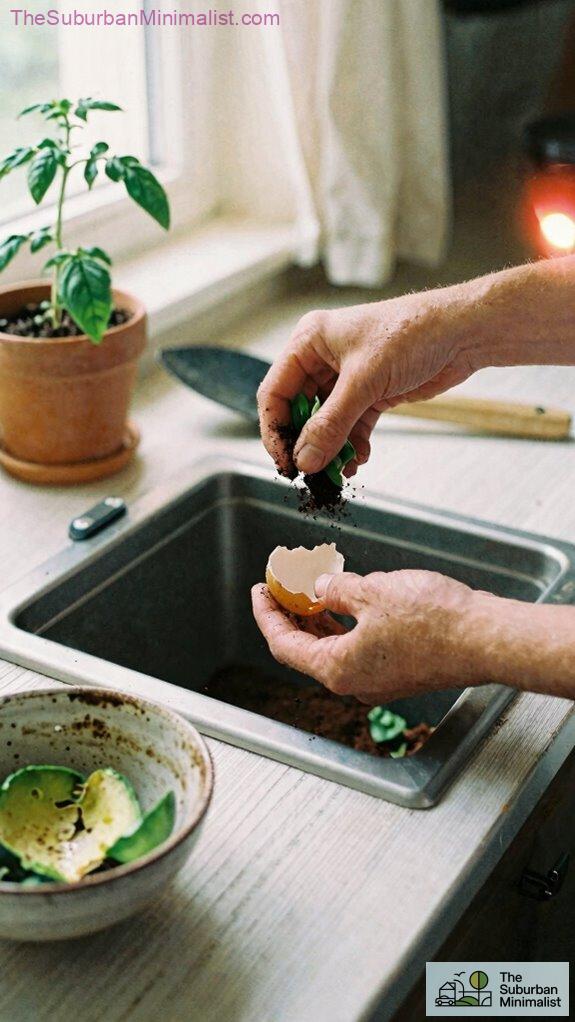
When your kitchen starts running on its own rhythm—where scraps don’t end in a landfill but fuel your next tomato plant—you know you’ve crossed into something richer than just cooking.
I call it *organic mixing*: coffee grounds, eggshells, and wilted basil don’t trash the day—they become tomorrow’s harvest. My compost bin hums quietly under the counter, sleek enough to match my kitchen aesthetics. Incorporating white oak benches, which offer both durability and elegance, further emphasizes a commitment to sustainable design.
It’s not magic. It’s design with purpose.
Why *do* we keep pretending waste is inevitable? I didn’t start The Suburban Minimalist to preach, but to share what works—like turning avocado peels into soil gold while keeping the space beautiful.
You’re in. You’re aware. Now, what if your kitchen didn’t just feed you—but grew with you? Top Cantilever Patio Umbrellas for Stylish Shade
Suburban Minimalism
Because I used to think a clean house meant an empty one, I spent years chasing that cold, museum-like silence—no toys in sight, not a throw pillow out of place, everything hidden behind closed doors.
I used to chase silence with sterile emptiness—blank walls, hidden lives—until I realized warmth isn’t in perfection, but in the quiet hum of a home that breathes and lives.
Now? I crave warmth, not sterility. Suburban minimalism, for me, isn’t about denial—it’s about design that breathes. Minimalist design emphasizes simplicity and functionality, making the space both calming and practical.
Indoor gardening brings life to quiet corners, while smart appliance integration handles the chores quietly, efficiently. Who knew a fridge could track expiry dates or a compost bin could auto-seal?
This is why I created this website: *The Suburban Minimalist*—to share how innovation meets calm, one lush herb pot, a glass water pitcher with filter, and silent software update at a time. You in?
FAQ
What if I Live in an Apartment With No Outdoor Space?
I’ve cut my trash by 70% using indoor composting, even without outdoor space. You can too—just grab a compact bin, focus on recycling essentials, and turn scraps into soil. Smart, sleek solutions make zero-waste living possible anywhere.
Can I Still Compost During Winter Months?
Yes, I compost all winter—my indoor bin with biochar filters handles scraps year-round. For outdoor piles, I insulate with straw and use a tumbler; turning it weekly keeps it active. Cold weather tips: chop small, layer dry materials, and skip water to prevent freezing.
Are Glass Jars Safe for Freezing Foods?
Yes, I freeze foods in glass jars all the time—just leave headspace to prevent cracking. I prioritize food safety and smart freezing techniques, using wide-mouth borosilicate jars that handle temp shifts well, keeping my pantry stocked and waste-free with style.
How Do I Handle Waste From Packaged Pet Food?
I transfer pet food into glass jars and reuse the bags as trash liners. If they’re recyclable packaging, I rinse and recycle them. For compostable materials, I check certifications and toss them in my compost bin to cut waste and keep things innovative.
Is Minimalist Storage Suitable for Large Families?
Yes, I’ve found minimalist storage works for my large family when I prioritize storage organization and smart recycling methods—we use modular bins, label everything, and rotate supplies seamlessly, so even busy households can live cleanly and sustainably with innovative, scalable systems.