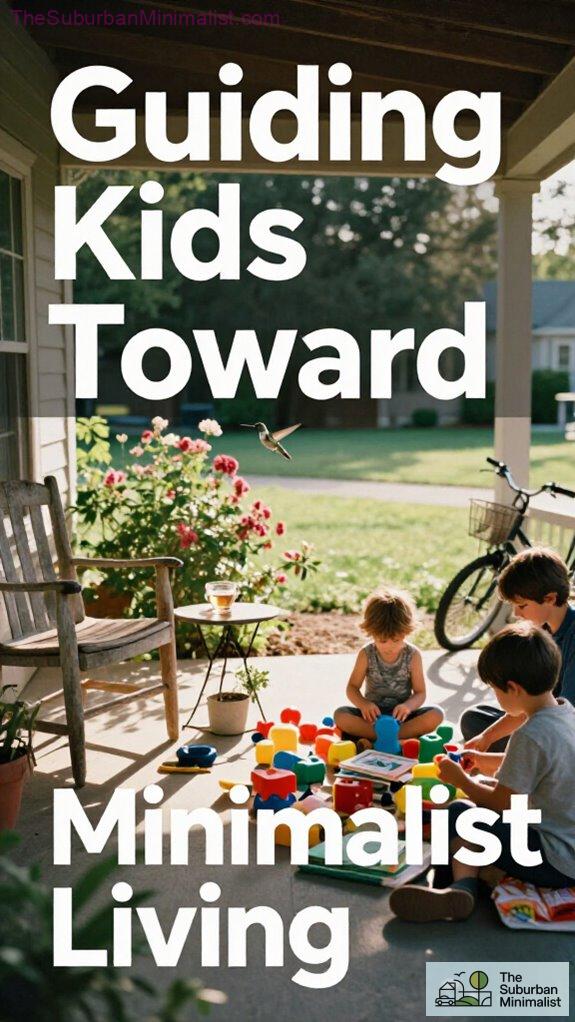
My kids’ summer closet used to be a dumpster fire—literally.
I’d spend mornings excavating through piles of stuff they’d never wear. So I got ruthless: audit everything, keep only what actually gets touched, rotate strategically. Clear bins, color blocks, done.
That chaos? It sparked The Suburban Minimalist. Because warm, functional homes shouldn’t require a PhD in organization.
Want less morning friction and actual closet peace?
—
Building a Capsule Wardrobe: My Honest Journey to Simplification
Last September, I attempted my first capsule wardrobe experiment—you know, that trendy minimalist thing where you own like twelve outfits that magically work together. Spoiler: it didn’t work initially. I kept gravitating toward my comfort pieces, old staples that didn’t fit the aesthetic I’d planned. Then I realized something crucial: sustainable minimalism isn’t about restriction. It’s about intention. I ditched items that made me feel blah, kept basics I actually reached for, and built a functional, curated collection. No performance, just authenticity. Capsule wardrobes work when they reflect your actual lifestyle—not some Instagram fantasy. That’s when wardrobe minimalism transforms into genuine freedom.
Quick Takeaways
- Audit and categorize family wardrobes by color harmony, functionality, and seasonal needs to streamline summer outfit planning.
- Use labeled bins, rotating color-block sections, and clear storage to enable easy mix-and-match and quick outfit checks.
- Implement weekly closet scans and small, regular audits to remove unused items and prevent clutter buildup.
- Design calm, minimalist spaces with clean lines, textures, and intentional decor to foster serenity and quick dress routines.
- Balance practicality with style by prioritizing breathable summer clothing, emotional ease with possessions, and mindful organization for simplicity.
Identify and Prioritize Summer Wardrobe Needs
So, where do I even start when summer’s heat starts sneaking in and my closets feel like they’ve quietly auditioned for a cluttered play? I want to identify and prioritize summer wardrobe needs with simple, honest steps. Personal color harmony guides what stays, what goes, what layers work best in bright sun. Fabric durability matters for daily wear and family life, not just fashion fantasies. Considering low light indoor plant shelves can also inspire better organization and use of space to keep essentials accessible and clutter-free. I ask myself: what pieces spark confidence, what items rotate, and which outfits survive spill incidents? Incorporating mindful family routines helps in maintaining a balanced and clutter-free wardrobe space. This approach, born from The Suburban Minimalist, keeps routines calm, wardrobes nimble, summers invigoratingly streamlined.
Audit Each Family Member’s Closet Quickly and Fairly
Auditing each family member’s closet is less about shoving everything into bins and more about seeing where our daily rituals live. I start with a quick scan, noting items that disappear into seasons and those that linger. Do we reach for the same shirts or swap in a fresh trio for summer heat?
This is where seasonal wardrobe swapping happens, a breeze when I track items with a wardrobe digital inventory. I ask myself: what truly sparks joy, what’s worn, what’s staging shelves for future reuse? Minimalist decision making helps me maintain clarity and efficiency, reducing the overwhelm that often accompanies clutter. It’s practical, reflective, and oddly meditative—like a small reset I created for The Suburban Minimalist.
Create a Simple, Seasonal Organization System
Creating a simple, seasonal organization system means keeping what works visible, accessible, and easy to swap as the weather shifts. I’ve learned that a flexible rack, labeled bins, and a shallow drawer for quick-change outfits keep mornings calm and creative. Incorporating some indoor plants can also add freshness and style to your wardrobe area, enhancing the overall ambiance.
Have you noticed how a few vintage accents can spark a whole wardrobe story, while seasonal color palettes guide what goes forward or back?
- Clear, labeled bins for tops, bottoms, and active wear
- A rotating color-block section for easy mixing
- A dedicated space for seasonal accessories
- A small, welcoming mirror for quick checks
- Rotating display with 3 favorite outfits
Implement Easy Access, Clean-Down Routines
Ever notice how a messy zone can steal your morning energy before you’ve even had coffee? I do, and I’m chasing easy wins. I implement easy access, clean-down routines that keep drawers neat and minds calm. Seasonal fabric swaps become rhythmic habits, not chores, as I rotate lightweight layers for heat and shade. Embracing boho minimalist fashion influences my choices, making wardrobe organization feel effortless and inspiring. Mood boosting accessories sparkle like tiny rituals, lifting mood between chores. Incorporating smart storage solutions helps me maximize space and maintain order more effortlessly. I tell myself this: simplicity isn’t deprivation; it’s clearer mornings and braver choices.
This mindset—born from The Suburban Minimalist—flows through my home, guiding you toward calmer, more inventive wardrobe care. Ready to start?
Maintain a Lightweight, Reusable Decluttering Cadence
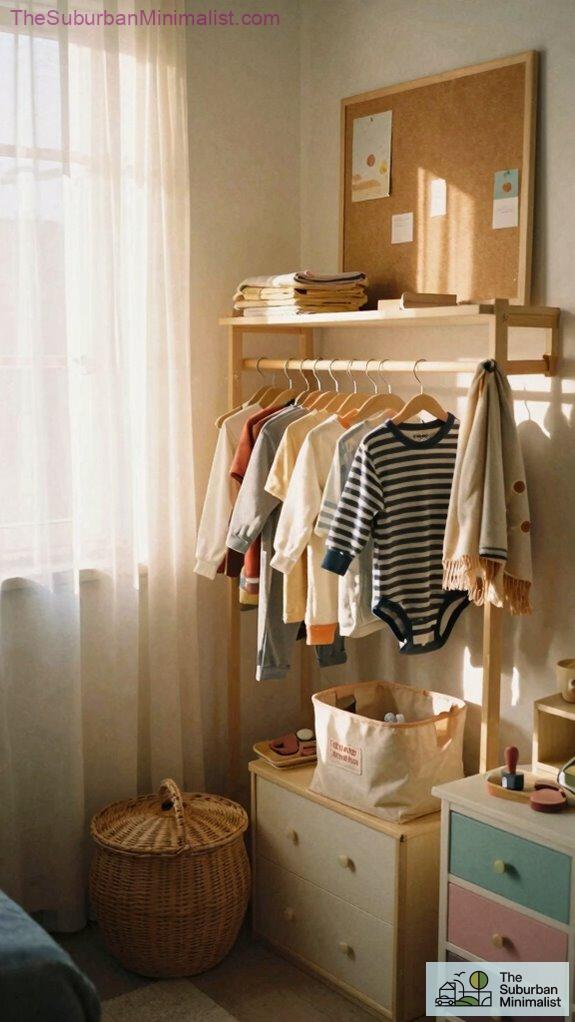
Maintaining a lightweight, reusable decluttering cadence isn’t about heroic weekly marathons; it’s about small, repeatable rhythms that keep clutter from creeping back in. I’ve learned to tune my habits like a capsule wardrobe, swapping in what fits the season and storing away what doesn’t. Sometimes, it’s helpful to consider that worn-out shoes and boots are better suited for decluttering tips than holding onto items that no longer serve their purpose. Do you feel that tug of order when you glance at the closet door? Here’s how I stay curious and calm.
- A quick weekly scan to remove what’s unused
- Switch seasonal fabric storage before heat hits
- Rehang, refold, and label with gentle humor
- Repurpose 1 item per month
- Journal understanding from each declutter moment, including recognizing clutter accumulation triggers.
Compact Shoe Storage Unit
The compact shoe storage unit is more than a piece of furniture; it’s a tiny ambassador for calm in a busy hallway. I love how it whispers order, inviting sneaker organization without shouting.
Envision shoes lined like tiny guests awaiting tea, each pair purposeful, even playful. This is shoe decor with function, not a fashion show.
I built compartments that breathe, labels that glow softly, and a slot for last-minute sneakers I’d forgotten I owned. Incorporating seasonal clothing solutions can help optimize space and reduce clutter during transitions between seasons. Wondering if it fits your cluttered entry? It does, quietly.
This is how I curate space, a habit born from The Suburban Minimalist, organically, honestly.
Windowed Toy Closet Trick
I’m always surprised how a little transparency can change everything, so I fumbled with a windowed toy closet first and watched the room breathe. I pause, then smile at Toy display becoming a story you can see.
A windowed toy closet makes the room breathe with story and clarity.
I reach for storage bins, labeling softly, so chaos becomes curiosity.
- A peekable shelf that invites little hands
- Clear bins that reveal what’s inside without tugging
- Color-coded lids for quick choices
- Soft, friendly fonts on labels
- A small basket for stay-put treasures
Ever wonder why I created this website The Suburban Minimalist? It isn’t perfection, it’s playful clarity, plainspoken and hopeful. When decluttering keepsakes, practicing practical steps for gradual release helps us cherish memories without feeling overwhelmed, making the process sustainable.
And just like stylish wall-mounted yoga mat racks keep your space tidy and accessible, clever storage solutions like these transform clutter into calm.
Doorway Mudroom System
Pivoting from the windowed toy closet showed me how a simple doorway can carry more meaning than a doorframe suggests.
I envision a doorway mudroom system that nods to artful display while staying practical. Do you crave stations that welcome tiny boots and raincoats with style, not clutter? I do.
Material selection matters—slender oak shelves, woven baskets, and slim hooks create calm through rhythm and texture. Incorporating minimalist design principles helps maintain a clutter-free environment that feels intentional and peaceful.
Rolling craft carts offer a versatile solution for organizing supplies and keeping spaces tidy during busy seasons.
This is about balance, not busywork. I’ve learned to curate space like a small gallery, a nod to The Suburban Minimalist, yet naturally woven into daily rituals.
Ready for a seamless summer?
Suburban Minimalism
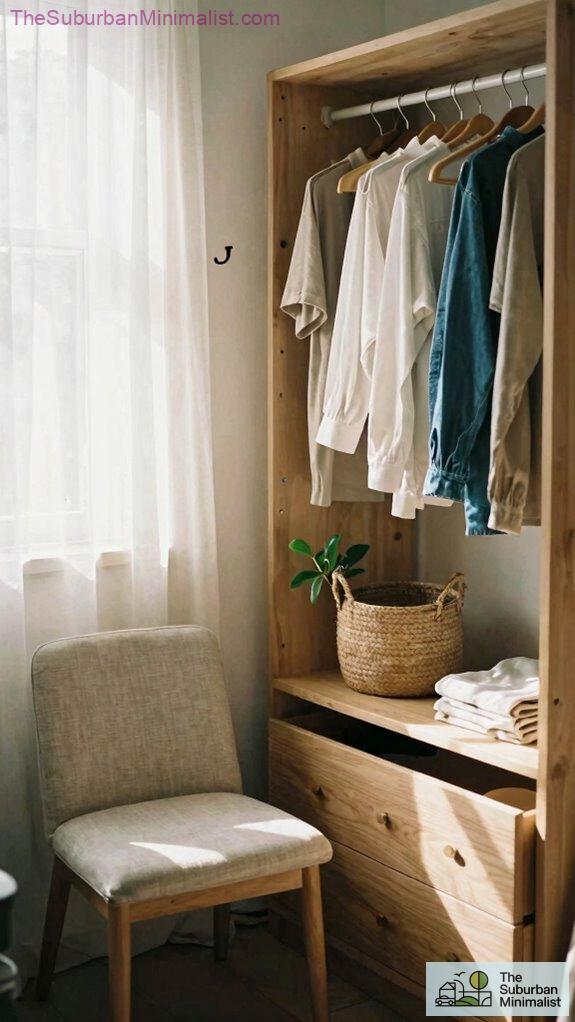
Suburban Minimalism isn’t about stripping life down to white walls; it’s about making room for what matters, with style that still feels like home. I notice how a single Sustainable fabric chair can anchor a room, while an Artistic display keeps conversation alive. Incorporating a calm color palette can enhance a soothing, cohesive atmosphere throughout your space. Do you feel that pull toward calm, even when life speeds up? I do, and I’ve learned to curate with intention, not perfection. This approach forgives my mistakes and invites playful tweaks. Maybe that’s why I created this website, The Suburban Minimalist—to share how restraint becomes warmth, how space becomes memory, and how summer wardrobes breathe easy. Maintaining a clutter-free aesthetic often involves a mindful approach to emotional attachment, helping us let go without guilt.
FAQ
How Can We Balance Style and Practicality for Everyone’s Summer Needs?
I balance summer fashion and casual comfort by layering breathable pieces, versatile silhouettes, and quick-access essentials, so everyone stays cool. I prioritize innovation with modular outfits, stain-resistant fabrics, and adaptable silhouettes for every activity. Summer fashion meets casual comfort, effortlessly.
What Quick-Check Tools Speed up Each Closet Audit?
I’d say: use a quick-check toolkit—clipboards, color labels, and a timer, like a vintage sundial staring at a smart fridge. It accelerates clothing rotation and closet categorization while you stay relentlessly innovative and calm.
How to Customize a Seasonal System for Varying Activity Levels?
I customize a seasonal system by mapping activity levels to outfits, prioritizing quick-access rotation and energy-aware planning, so you’ll have seasonal rotation and activity specific outfits ready, adaptive, innovative, and effortlessly stylish for every day.
What’s the Best Way to Track Clothing Changes Month-To-Month?
I track clothing inventory monthly, then plan an outfit rotation that adapts to activities and weather. I use a simple log, note changes, and iterate; this keeps creativity flowing while preserving efficiency and innovation in my wardrobe.
How Can We Automate Maintenance Without Extra Effort?
I’ll keep it simple: I automate maintenance with smart prompts and sensors, so clothing rotation runs itself and storage optimization happens passively, like clockwork. You’ll enjoy effortless organization, confident innovation, and a streamlined wardrobe experience.
Summary
This summer, our closet feels like a calm harbor after a playful storm, and I’m grateful for that ease. Do you feel it too—the way a simple system releases spontaneous trips and slow Sundays? If my family can live in a lean capsule, so can yours. I started The Suburban Minimalist because I crave honest, practical calm in a busy world. Let’s keep trimming, labeling, and breathing in rhythm with the seasons, together.